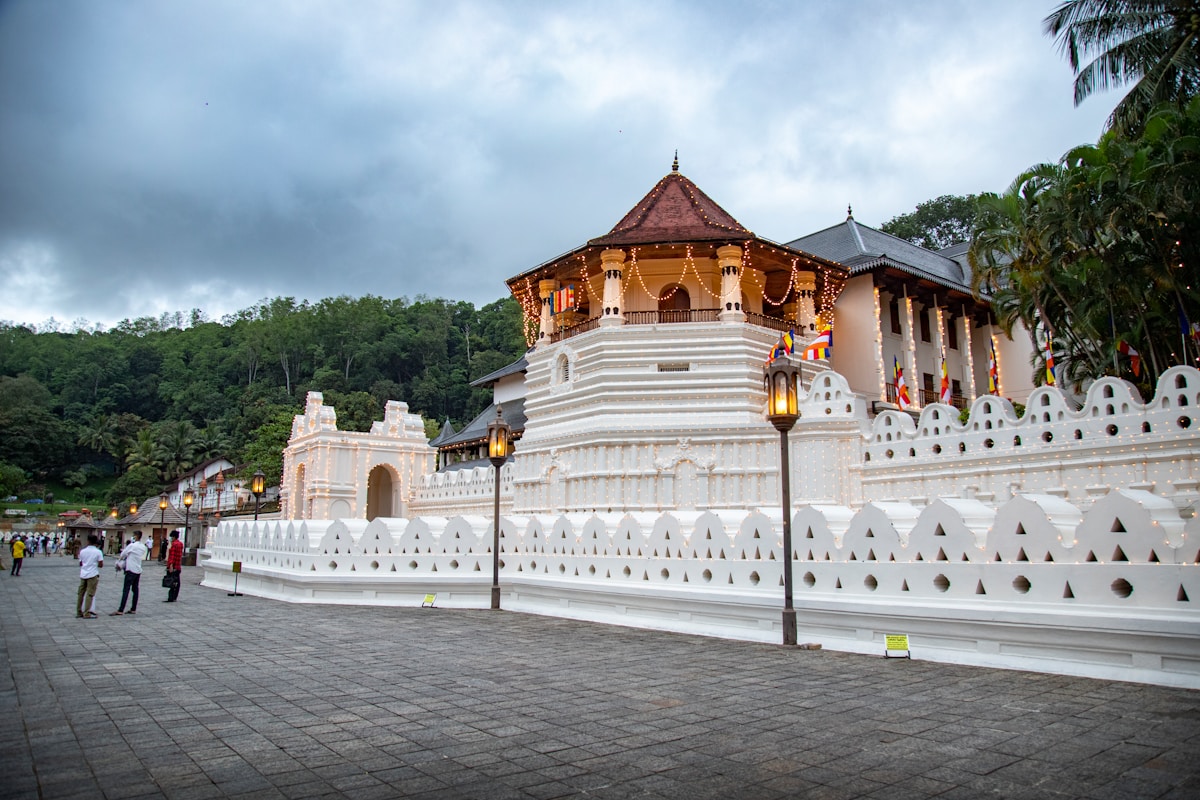
Dambulla: Sri Lanka's Cave Temple Town
Dambulla UNESCO cave temples: 150+ Buddha statues, 2,100 sq m of painted ceilings, entry LKR 1,500, with transport from Sigiriya and Polonnaruwa.
Guides for Dambulla
Overview
Dambulla is a road junction town in the Matale District of Sri Lanka’s Central Province. It sits at the intersection of three major routes: south toward Kandy (75km), east toward Sigiriya (20km), and north toward Anuradhapura (65km). Most visitors pass through Dambulla as part of a Cultural Triangle circuit rather than using it as a primary base.
The town’s significance is entirely tied to its Cave Temple complex - the Golden Temple of Dambulla, a UNESCO World Heritage Site. The caves contain the largest and most significant collection of cave temple art in Sri Lanka: 150+ Buddha statues, images of gods, kings, and figures from Buddhist mythology, and around 2,100 square metres of painted ceilings - among the most extensive surviving cave mural programmes in Asia.
The Dambulla Cave Temple
The cave temples are carved into the southern face of a granite outcrop 160 metres above the town. Five caves (numbered 1–5) are accessible to visitors, containing statues and murals dating from the 1st century BCE through to the 18th century. Some of the painted ceilings have been continuously maintained and repainted throughout this period; others retain fragments of older layers beneath.
Cave 1 - Devaraja Lena (Cave of the Divine King)
The smallest of the five caves, dominated by a large reclining Buddha figure - 15 metres long - carved from the rock. Ananda, the Buddha’s devoted attendant, is depicted at the feet. The cave has a natural water seep in the ceiling that drips into a stone basin; the monks have collected and used this water continuously for centuries.
Cave 2 - Maharaja Lena (Cave of the Great Kings)
The largest and most spectacular cave, roughly 52 metres long with a ceiling reaching 7 metres. Contains 56 Buddha images, figures of Hindu gods Vishnu and Ganesha, and images of Kandyan kings. The ceiling murals here are the most extensive in the complex - painted in rich reds, yellows, and blues, covering every surface with narrative scenes from the Buddha’s life and Jataka tales. Two stone statues of Kandyan kings (Nissankamalla and Vattagamani Abhaya) stand in the cave - unusual given that depictions of rulers within Buddhist shrine rooms are rare.
Caves 3, 4, and 5
Cave 3 (Maha Alut Viharaya, the New Great Temple) was built in the 18th century during the Kandyan period and contains 56 more Buddha images and a reclining Buddha. Cave 4 (Pachima Viharaya) is smaller with a few reclining and seated images. Cave 5 (Devana Alut Viharaya) is the most recent addition, containing a large reclining Buddha and images of local deities.
Entry and Visiting
Entry fee: Around LKR 1,500 for foreigners. Tickets are purchased at the base of the hill.
Hours: 7am–7pm daily. Best visited early morning (7–9am) when the caves are cooler, the light through the cave openings is most atmospheric, and crowds are thinner. Guided tours of the Dambulla cave temples are available if you want expert commentary on the murals and iconography.
Dress code: Covered shoulders and knees are required. Shoes must be removed before entering the cave area at the top. The path up the rock is partially in sun - wear sun protection.
The climb: From the parking area to the cave entrance takes around 15–20 minutes on a paved path with steps. Not strenuous, but warm in the midday sun.
The Painted Ceilings
The ceilings of Caves 1 and 2 are the primary artistic achievement of the site. Continuous horizontal bands of paintings cover the full extent of the cave ceiling - the Jataka tales (547 stories of the Buddha’s previous lives) depicted in sequence, narrative panels from the life of the Buddha, and scenes of the first missionary journeys to Sri Lanka. The scale and quality of execution place Dambulla in the same category as the Ajanta Caves of India.
The pigments are largely derived from natural minerals - red from iron oxide, yellow from ochre, white from kaolin, black from charcoal - with later layers using synthetic pigments added during Kandyan-era repainting. The continuity of the site as an active place of worship means the murals have been maintained, which also means some sections have been over-painted multiple times.
Dambulla Economic Centre
On the outskirts of Dambulla town, the Dambulla Economic Centre is one of Sri Lanka’s largest wholesale produce markets, handling a significant proportion of the island’s vegetable and fruit distribution. At its most active in the early morning (from around 4am), it’s a working wholesale market rather than a tourist attraction - but the scale and variety of produce on display is impressive if you pass through.
Trucks arrive from across the island through the night. By 7–8am trading is winding down. Not a reason to make a special trip, but if you’re in Dambulla early and have time, it’s worth a brief detour.
Using Dambulla as a Base
Most visitors to the Cultural Triangle stay in Sigiriya (20km east) rather than Dambulla, as Sigiriya has more guesthouse options and is closer to both the rock fortress and Minneriya National Park.
That said, Dambulla has:
- More ATMs than Sigiriya
- Broader supermarket and shopping options
- Several midrange guesthouses and a couple of resort properties outside town
- A central location for reaching Anuradhapura and Polonnaruwa as well as Kandy and Sigiriya
If you’re doing a full Cultural Triangle circuit and want one central base, Dambulla or its immediate surroundings work reasonably well. Sigiriya is 20 minutes east; Anuradhapura is 65km north (about 75 minutes); Polonnaruwa is about 90 minutes east.
Practical Information
- ATMs: Available in Dambulla town. Stock up here before heading to Sigiriya.
- Fuel: Petrol stations in Dambulla town. Less available further east toward Sigiriya.
- Food: Basic rice and curry restaurants throughout the town. The area near the cave temple entrance has several tourist-focused restaurants.
- Getting there: From Kandy by bus (75 minutes, LKR 100–150). From Sigiriya by tuk-tuk or taxi (20 minutes). No direct train - the nearest station is in Matale or Habarana.
Search hotels in Dambulla on Booking.com - compare guesthouses, hotels, and resorts with verified guest reviews.
More in Dambulla
Dambulla is the western gateway to the Cultural Triangle. From here, Sigiriya is only 20km east - and climbing the Sigiriya rock fortress is the most popular activity in the area. The Minneriya elephant gathering happens at Minneriya National Park, 30km east of Dambulla, from August to October. Anuradhapura is 65km north (about 75 minutes), while Polonnaruwa is around 90 minutes east. For a structured circuit of all the cultural sites, read the Ancient Ruins of the Cultural Triangle guide and the 10-day Cultural Triangle itinerary.
Frequently Asked Questions
- How many caves are in the Dambulla Cave Temple and what is inside them?
- Five caves are accessible to visitors. Cave 2 (Maharaja Lena) is the largest and most impressive - 52 metres long with 56 Buddha images and ceiling murals covering every surface. Cave 1 has a 15-metre reclining Buddha carved from the rock. In total the complex contains over 150 Buddha statues and around 2,100 square metres of painted ceilings.
- How much does the Dambulla Cave Temple entry cost?
- Around LKR 1,500 for foreigners. Tickets are purchased at the base of the hill. The climb from the parking area to the cave entrance takes 15–20 minutes on a paved path with steps.
- What time should I visit the Dambulla Cave Temple?
- Best visited 7–9am when the caves are cooler, the light through the cave openings is most atmospheric, and crowds are thinner. The site opens at 7am daily and closes at 7pm.
- How far is Dambulla from Sigiriya and Anuradhapura?
- Sigiriya is 20km east of Dambulla (about 30 minutes). Anuradhapura is 65km north (about 75 minutes). Polonnaruwa is roughly 90 minutes east. This central position makes Dambulla a useful base for a Cultural Triangle circuit.
- Is Dambulla or Sigiriya better as a base for the Cultural Triangle?
- Most visitors prefer Sigiriya for guesthouse options and proximity to both Sigiriya Rock and Minneriya National Park. Dambulla has more ATMs, broader supermarket options, and a slightly more central position for reaching Anuradhapura and Kandy as well.
- What is the Dambulla Economic Centre?
- One of Sri Lanka's largest wholesale produce markets, on the outskirts of town, handling a significant proportion of the island's fruit and vegetable distribution. It is most active from around 4am and winding down by 7–8am. Not a tourist attraction, but worth a brief detour if you are in Dambulla early.
Book an experience
Top experiences in Dambulla
Explore the best tours and activities in Dambulla , with instant confirmation and free cancellation on most bookings.
Planning to visit? Browse hotels in Dambulla, free cancellation on most bookings.