Kalpitiya is a specialist destination. People come here for three specific activities: kitesurfing on the lagoon, dolphin watching on the open sea, and diving or snorkelling on Bar Reef. The Kalpitiya travel guide gives the full context; this page focuses on each activity in practical detail.
If you are not here for one of those three things, the remote peninsula with its sand, wind, and minimal infrastructure may feel like a long way to come. If you are, it is one of the more satisfying activity destinations in Sri Lanka. Kitesurfing lessons and dolphin watching trips at Kalpitiya can be reserved before you arrive.
Kitesurfing at Dutch Bay
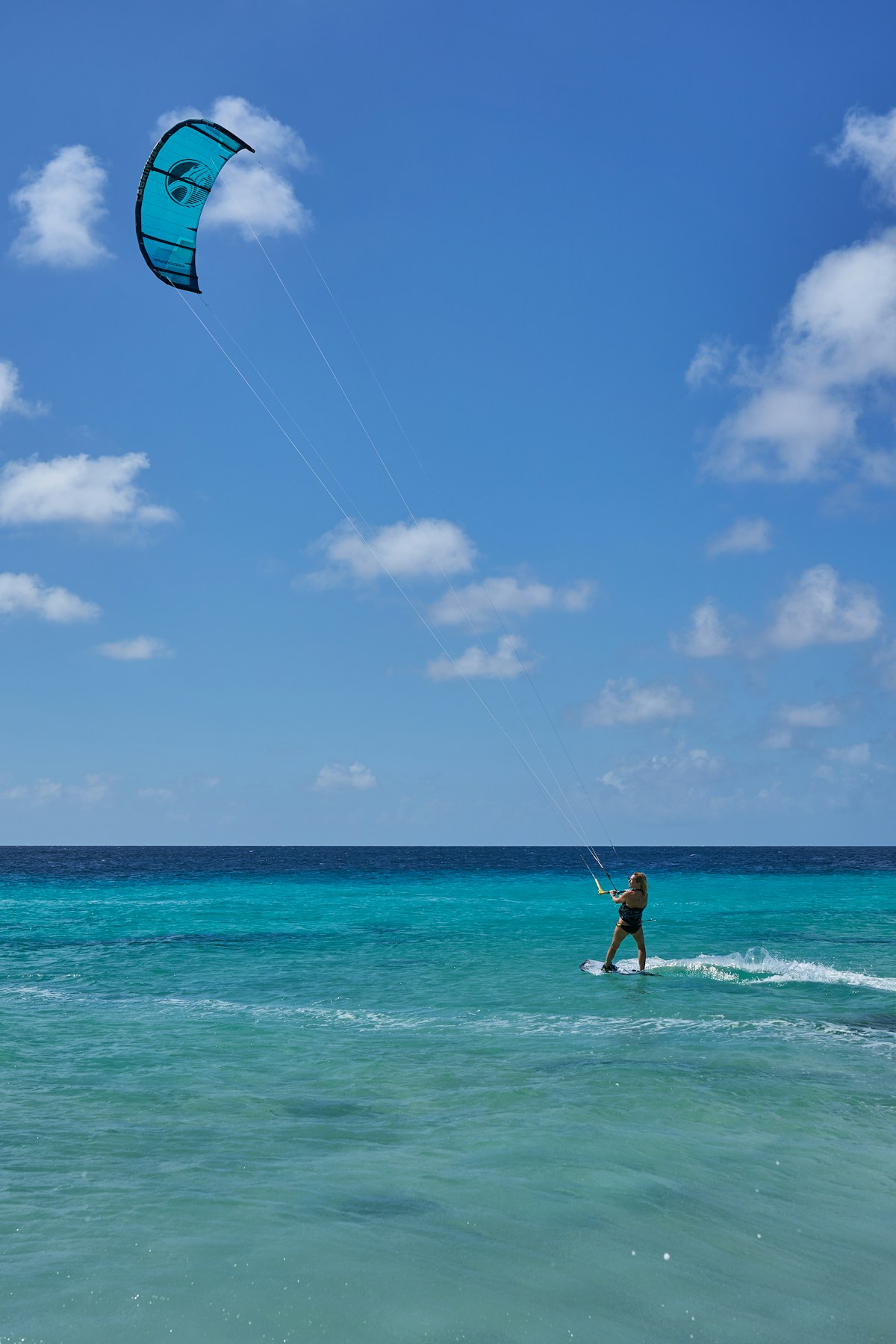
The Puttalam Lagoon between Kalpitiya Peninsula and the mainland provides some of the best flatwater kite conditions in South Asia. The southwest monsoon (May–October) drives consistent 18–25 knot winds across the lagoon surface, with the water depth and fetch making for controllable, beginner-friendly conditions.
Dutch Bay is where almost all instruction happens - the majority of kite schools are concentrated along the beach road here, within walking distance of the launch area.
Learning to Kite
Most schools in Kalpitiya offer structured beginner programmes spread over 3–4 days. A typical beginner course gives you 8–12 hours of water time across several sessions, starting with kite control on land and progressing to body dragging and riding.
Typical costs as of 2026:
- 1-hour introductory lesson: USD 50–70
- Full beginner course (8–10 hours): USD 200–300
- Equipment hire per session: USD 30–50 (included in most course packages)
The flat water is genuinely forgiving for beginners - wipeouts in the lagoon are less violent than ocean-break kiting. Most people with reasonable coordination can ride independently within 10–15 hours of instruction.
Intermediate and Advanced Kiting
The open water between the peninsula and the outer islands has stronger, more variable conditions than the lagoon. Experienced kiters use this for jumps, tricks, and more technical riding. Several schools offer intermediate coaching packages; a few advanced kiters come specifically for the open-water conditions.
The kite season runs May–October; many schools and camps close or reduce to skeleton staffing in November. Confirm your chosen camp’s operating schedule before booking.
Dolphin and Whale Watching
The waters off Kalpitiya’s western coast are among the most reliably productive dolphin-watching spots in Sri Lanka. Spinner dolphins are the most commonly encountered species - pods of 200–1,000 animals are typical during the season, and encounters within a few hundred metres of the boat are common.
The season is November to April, when the northeast monsoon calms the west coast swell. During the main kite season (May–October), the sea is rougher and dolphin trips are less comfortable, though sightings still happen.
Boat trips are arranged through accommodation. A half-day boat for 4–8 people costs approximately LKR 5,000–8,000 as of 2026. Shared departures (individual spots on a larger boat) are sometimes available from mid-season December.
Departure time is typically 6–6:30am to catch the dolphins during their most active feeding period. Budget 3–4 hours for the full trip including travel time to the feeding grounds.
The same waters sometimes produce pilot whales, Risso’s dolphins, and occasional blue whale sightings. Blue whale encounters are less predictable here than from Mirissa in the south, but they do occur, particularly February to April.
Bar Reef Marine Sanctuary
Bar Reef covers approximately 307 hectares about 12km west of the peninsula, making it one of the largest coral reef systems in Sri Lanka. The reef is within a designated Marine Protected Area - no fishing, coral collection, or anchoring on live coral is permitted.
The reef supports healthy populations of reef sharks (whitetip and blacktip), green and hawksbill sea turtles, eagle rays, and diverse reef fish. Visibility is typically 15–25 metres from October through March.
Snorkelling: The reef is accessible in 3–6 metres of water at some sections. Snorkelling trips are arranged through accommodation. Expect approximately LKR 3,000–5,000 per person including transport, snorkel gear hire, and guide as of 2026.
Diving: Dive trips including full equipment hire cost approximately USD 50–80 per person as of 2026. PADI-certified instructors operate from several camps. PADI Open Water certification courses are available at some properties.
Lagoon Boat Trips
Beyond kiting and diving, the Puttalam Lagoon itself is worth exploring by boat. The flat water, mangrove sections, and small offshore islands are accessible on simple motorboat trips arranged through accommodation.
A lagoon boat tour with an operator costs approximately LKR 3,000–5,000 per boat (4–6 people) for 2 hours as of 2026. The islands off the peninsula’s eastern coast are low-lying strips of sand - good for a stop and swim in calm conditions.
Practical Notes
- Kite season (May–October) and dolphin season (November–April) are largely inverse - plan your visit around which activity matters most
- ATMs: none on the peninsula. Bring cash from Puttalam (25km south) to cover your full stay as of 2026
- Sunscreen: essential. The lagoon and open sea reflect intense UV even on overcast days; the wind makes it easy to underestimate exposure time
- Book kite camps and accommodation 2–4 weeks in advance during peak kite season (June–September)
Search hotels in Kalpitiya on Booking.com - compare all options and filter by area, rating, and price.
Planning Your Sri Lanka Trip?
- Book tours & activities in Kalpitiya
- Find hotels in Kalpitiya
- Travel insurance for Sri Lanka
- Get a Sri Lanka eSIM
- Find flights to Sri Lanka