Negombo is not a food destination in the way that Colombo or Galle are, but it has ingredients that make it genuinely worth eating well here: a lagoon that produces king prawns of real quality, a fish market that operates before dawn, and a Catholic fishing community whose food traditions have centuries of history behind them. The Dutch Burgher heritage adds a layer that appears nowhere else in Sri Lanka - lamprais, breudher bread, and pickle preparations that reflect four centuries of colonial exchange.
Most visitors treat Negombo as a stopover before or after an early flight from Bandaranaike International Airport. That’s reasonable, but it undersells what the town does with its seafood. The Lewis Place tourist strip has the restaurant density; the food culture is in the market area, the local canteens, and the Catholic family restaurants that have been serving the same prawn curries for decades.
What to Eat in Negombo
King Prawns
The Negombo lagoon’s defining ingredient. The lagoon system - stretching 50km along the coast - produces king prawns that have supplied Colombo’s restaurants for generations. In Negombo itself, they’re fresher and cheaper than anywhere inland. The standard preparation is prawn curry: coconut milk base, curry leaves, green chilli, and a tight spice balance that lets the prawn flavour show. Grilled or butter-fried versions are available at the more tourist-facing restaurants. A prawn curry at a mid-range local restaurant costs approximately LKR 700–1,200 as of 2026.
Fresh Lagoon Fish
The lagoon and nearby coast yield mullet, snapper, and sea bass alongside the prawns. Ask at any restaurant what came in that morning. Simple preparations - grilled whole with lime and rice, or in a light Sri Lankan curry - are generally the best option. Avoid heavily sauced or crumbed presentations at tourist restaurants where the fish is older.
Crab Curry
Crab curry is common on Negombo menus and the quality is high for the same reason as the prawns - short supply chain from the lagoon. The preparation is a dark, coconut-based curry with a dense spice mix. Crab is priced by weight; check before ordering. A full crab curry portion typically costs LKR 1,200–2,500.
Lamprais
Negombo’s most distinctive dish and an artefact of Dutch colonial history. Rice cooked in stock, a meat curry (usually beef or chicken), frikkadels (small spiced meatballs), a vegetable preparation, and sambols are wrapped together in banana leaf and baked - the leaf infuses everything with a faint green, grassy flavour. The result is different from anything else in Sri Lankan cooking. Lamprais appears on menus at a few established restaurants in Negombo, particularly on Lewis Place and in Wattala. It also appears from home bakers, particularly on Sundays.
Short Eats and Breakfast
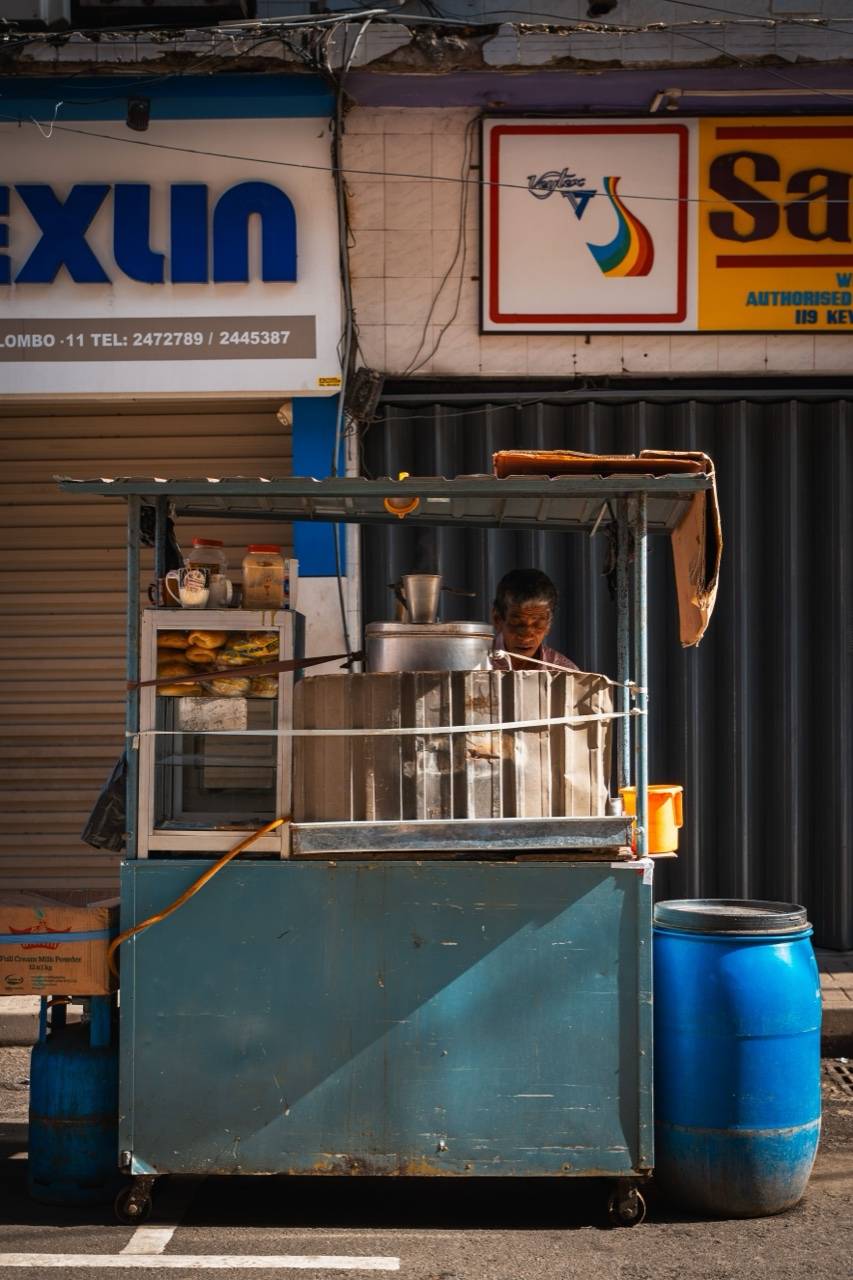
Near Negombo’s market and bus stand, bakeries and tea shops sell Sri Lankan short eats from early morning: fish rolls, cutlets, samosas, and vadai (fried lentil fritters) for LKR 60–150 each. String hoppers with coconut milk and a dhal curry are a typical local breakfast, available from specialist spots from around 6:30am. For travellers with an early flight, a string hopper breakfast from a local shop is significantly better than airport food.
Breudher
The Dutch Burgher sweet bread, traditionally eaten at Christmas and Easter. A rich, yeasty bread flavoured with spices, sometimes with candied peel or dried fruit. It is a Negombo Burgher family tradition rather than a widely sold commercial product - you are most likely to encounter it through a local contact or at a community gathering, but it occasionally appears in the better bakeries around the Dutch Canal area.
Where to Eat in Negombo
Lellama Fish Market
Not a restaurant, but the essential starting point for understanding Negombo’s food. The market on the lagoon’s edge operates from around 5:30am. Fishing boats unload, ice is packed, and wholesale buyers move through quickly. By 7am the trading is largely done. It is one of Sri Lanka’s most active and photogenic markets. Come before 6:30am for the full atmosphere. Cash only if you want to buy.
Lord’s Restaurant
One of Negombo’s longest-running restaurants, on Lewis Place. Serves Sri Lankan seafood, prawn curries, and some international options. Consistent quality maintained over many years. The prawn curry and fresh fish dishes are the strongest orders. LKR 800–2,000 per person with a drink.
Bijou Restaurant
Well regarded by both local residents and visitors. The menu is wider than most local restaurants - seafood, rice and curry, and some Western dishes in a proper sit-down setting. Prawn dishes are particularly well executed here. More food-focused than atmosphere-focused; the cooking is the point. LKR 700–1,800 per person.
Local Canteens Near the Market
The streets around the Dutch Canal and the fish market have small canteens that serve the fishing community and market workers. Rice and curry, string hoppers, and short eats at LKR 300–500 - the honest local price without tourist margin. No English menus; point at what others are having. The food is Sri Lankan coastal cooking at its most direct.
Sunday Lamprais Sources
A small number of home bakers and community kitchens in the Dutch Burgher community produce lamprais on Sundays. Asking at a local guesthouse or one of the established Lewis Place restaurants for a current recommendation is the most reliable way to find it. It does not keep - eat it fresh.
Negombo Food Tours and Fish Market Experiences
Negombo’s food story is inseparable from its fishing industry, and the Lellama fish market is one of the most active on the island - but navigating it independently before dawn requires knowing where to stand, what to expect, and how the auction process works. A Negombo food or market tour typically starts at Lellama before 6:30am, when the night boats are still unloading; moves to a local breakfast spot for hoppers or string hoppers with the fishing community; and then covers the history of the Catholic fishing tradition that has shaped what Negombo eats. Some tours include a cooking component - preparing a prawn or crab curry from market-fresh seafood. For first-time visitors to Negombo with only one or two days, a morning market tour is the single most efficient way to understand why the city’s seafood tastes different from anything on the Colombo tourist strip.
Practical Notes
- Lellama fish market runs 5:30–9am; come before 6:30am for the best atmosphere
- Card acceptance is patchy throughout Negombo; carry LKR for all local canteens, market stalls, and smaller restaurants
- Lewis Place restaurants are significantly more expensive than eating a few streets inland - comparable food at local canteens is half the price
- Seafood prices change with the catch and season; check before ordering, especially for crab and lobster
- Negombo is frequently an overnight before an early airport departure - if you arrive late, the hotel option is fine; if you have a full evening, Lewis Place and the canteen streets are worth exploring
- During Christmas and Easter, the Burgher community celebration food (breudher, lamprais) is at its most visible
Planning Your Sri Lanka Trip?
- Book tours & activities in Negombo
- Find hotels in Negombo
- Travel insurance for Sri Lanka
- Get a Sri Lanka eSIM
- Find flights to Sri Lanka