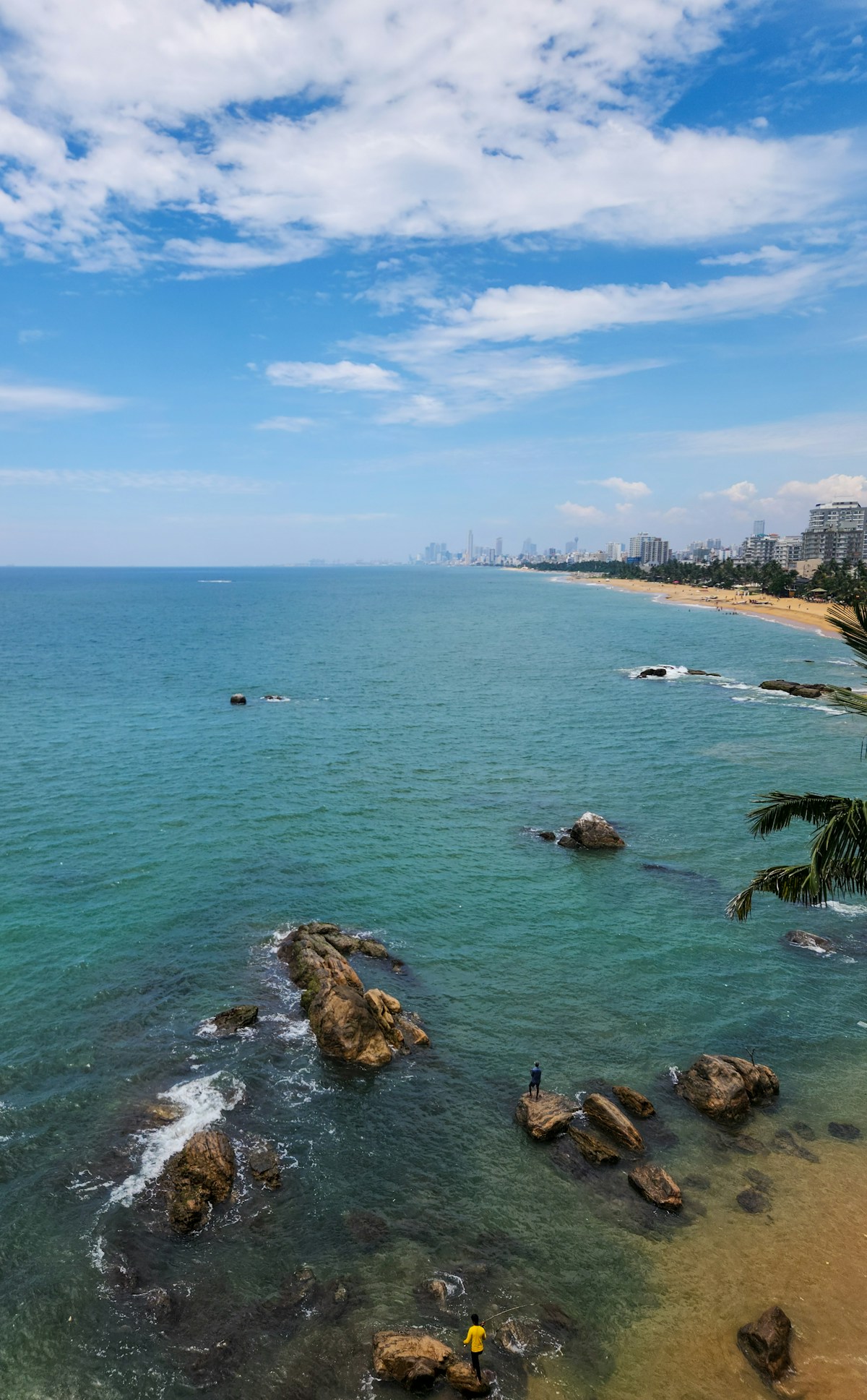
Unawatuna is 6km east of Galle on the southern coast - close enough to combine with a Galle Fort visit but distinct in character. The main bay is sheltered by headlands on both sides, giving calmer water than most of the open south coast beaches, which makes it practical for swimming when conditions on other beaches are less predictable. The town has grown into a strip of restaurants, dive schools, and guesthouses behind the beach.
Search hotels in Unawatuna on Booking.com
Unawatuna Main Beach
The main bay is a 1km horseshoe of sand facing southwest, sheltered at each end by rocky headlands. The shape keeps wave action low for most of the year - children and non-swimmers can enter the water comfortably in the central section of the bay. Snorkelling tours and guided beach activities at Unawatuna are bookable in advance.
Snorkelling: The eastern end of the bay, toward the Jungle Beach headland, has a coral reef in 2–5m of water with fish life including parrotfish, butterflyfish, and occasional reef sharks in the deeper water beyond the reef edge. The water clarity in this section is better than the beach’s mid-section, which can be cloudy after boat traffic. Enter from the beach at the east end and swim out to the reef markers.
Beach bars and facilities: A row of restaurants and beach bar operators backs the full length of the beach. Sunbeds for hire at LKR 300–500 per day, typically with a minimum food or drink order. The standard is informal - no fixed prices and haggling is acceptable. Fresh grilled fish, rice-and-curry, and cold Lion beer are available at every operation.
Crowds: December through March is the busiest period. The bay can get congested - particularly Sunday afternoons when domestic visitors arrive from Galle and Colombo. Weekday mornings are quieter. July and August also see significant European visitor traffic.
Swimming safety: Generally safe November–April in the central section. There is some current at the western opening of the bay - avoid swimming in that direction. During July–September the southwest monsoon increases wave energy; check conditions locally before entering. Lifeguards are not consistently present.
Jungle Beach
Twenty minutes east of Unawatuna on foot, Jungle Beach is the best snorkelling beach within easy reach of the town. The route: walk east along the beach to the rocky headland, follow the path up and over (a 10-minute climb through forest, past the Japanese Peace Pagoda turnoff), and descend to the cove on the far side. A tuk-tuk from Unawatuna to the Jungle Beach turnoff takes 5 minutes (LKR 300–500).
The cove is smaller than the main bay - roughly 150m of sand bounded by rock on both sides. The water is shallow close in but drops to 5–10m quickly. Snorkelling from the rocks on either side of the cove gives access to fish-dense coral sections. Reef sharks (harmless whitetip reef sharks) are sometimes spotted in the deeper water.
No facilities: There are no beach bars, food stalls, or toilets at Jungle Beach. Bring water, snacks, and sun protection. The path from Unawatuna gains some elevation - wear footwear suitable for a rocky trail.
Crowds: Far fewer visitors than the main beach. Even at the height of peak season, Jungle Beach is significantly quieter than Unawatuna. Arrive before 10am for the best chance of having the cove largely to yourself.
Japanese Peace Pagoda
Not a beach but visible from the eastern headland path and worth the detour. The pagoda was built by Japanese Buddhist monks of the Nipponzan Myohoji order in the 1970s as part of a global peace monument campaign (similar pagodas exist in London’s Battersea Park, Milton Keynes, and Hiroshima). The structure sits on the headland at 40m elevation with a 270-degree view: Unawatuna Bay to the west, Jungle Beach cove to the east, and the open Indian Ocean south.
The turn-up from the main beach path is signed. The climb takes 20 minutes at a moderate pace. The pagoda is a working Buddhist site - remove shoes before approaching the main structure.
View at sunset: The headland faces southwest - ideal for watching the sun set over Unawatuna Bay and the Galle lighthouse in the distance. Worth timing the Jungle Beach visit to return via the pagoda at 5pm.
Coconut Beach (Dalawella)
2km west of Unawatuna along the coastal road, Dalawella is a small beach known primarily for a rope swing suspended from a coconut palm at the water’s edge - popular for photography and genuinely fun to use at high tide. A basic café operates on the beach.
The beach itself is narrower than Unawatuna and lacks the bay’s sheltering headlands, making it less suitable for extended swimming. Worth a 30-minute visit if you have a tuk-tuk and are heading toward Galle (Dalawella is on the road), but not worth a dedicated trip.
Tuk-tuk from Unawatuna to Dalawella: LKR 200–300.
Practical Information
| Beach | Distance from Unawatuna | Facilities | Snorkelling |
|---|---|---|---|
| Main Beach | - | Bars, sunbeds, restaurants | East end |
| Jungle Beach | 20 min walk east | None | Excellent |
| Dalawella | 2km west by road | Basic café | Limited |
Best swimming season: November–April. July–September monsoon brings stronger waves - not dangerous at Unawatuna’s sheltered bay but uncomfortable for casual swimming, and Jungle Beach can be rough.
Getting to Unawatuna: 6km east of Galle. Tuk-tuk from Galle Fort: LKR 400–600. Local bus from Galle bus station: LKR 40 (25 minutes). Trains stop at Unawatuna station 1km from the beach.
Planning Your Sri Lanka Trip?
- Book tours & activities in Unawatuna
- Find hotels in Unawatuna
- Travel insurance for Sri Lanka
- Get a Sri Lanka eSIM
- Find flights to Sri Lanka