Weligama is the most accessible surf spot in Sri Lanka for beginners and those returning to surfing after time out of the water. The bay is wide, shallow, and sheltered by headlands, producing long rolling waves that are slow enough to catch easily and forgiving when you fall.
The Wave
Weligama Bay faces southwest and catches the Indian Ocean groundswell during the November–April season. The wave breaks over sand and gently slopes, which means wipeouts are soft and you can stand up in waist-deep water after a fall. There is no reef underneath - it’s one of the safest breaks in the country. Surf lessons and guided surf experiences at Weligama are bookable in advance through local operators.
On a good swell day (typically December–February when swells from the south Atlantic arrive), the waves run 1–3 feet. Occasionally bigger. The wave shape is consistent rather than powerful - it’s not going to challenge experienced surfers, but for someone riding their first or fifth wave, it’s close to ideal.
Surf Lessons
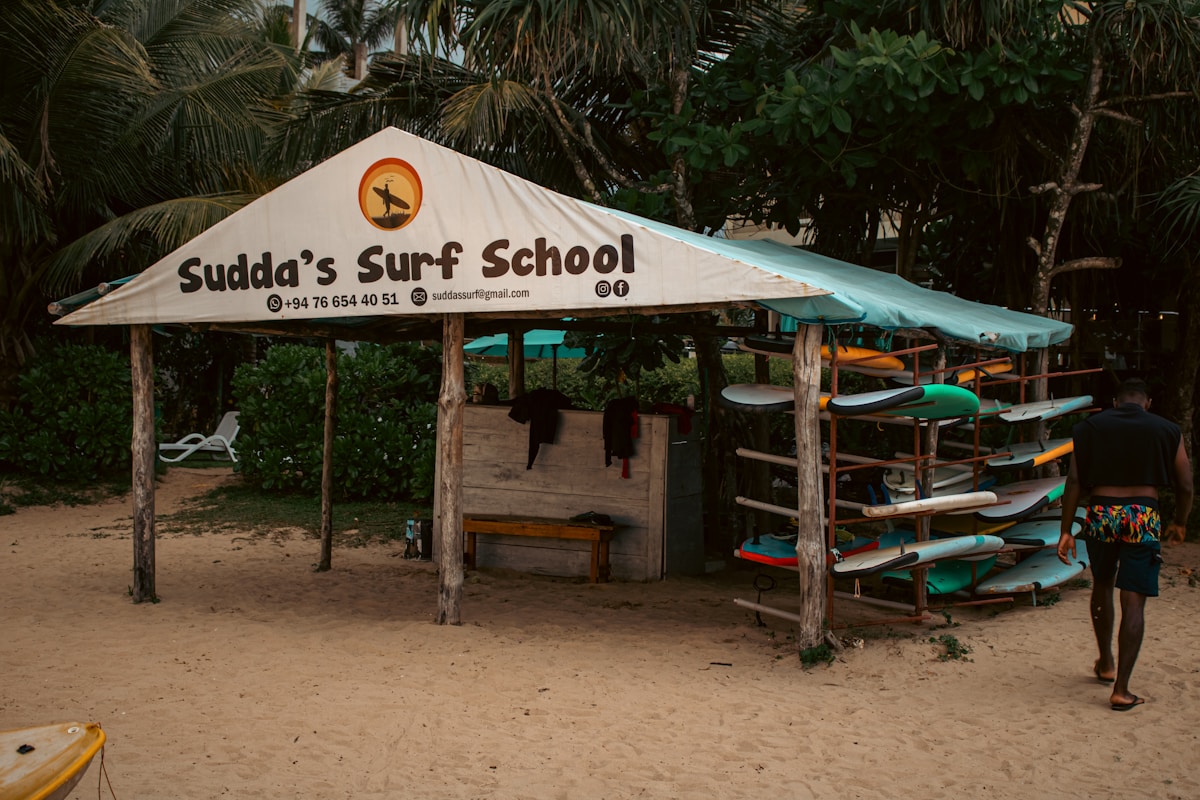
Surf schools line the beach road at Weligama. Competition keeps prices competitive: expect to pay $20–30 for a 1.5–2 hour lesson including board and rash vest. Most schools offer packages - three lessons spread over three days makes a noticeable difference compared to a single session.
Instructors at reputable schools get in the water with you. Avoid schools where the instructor stays on the beach and shouts. The better approach is to have someone wade beside you, correct your positioning on the board, and push you into waves until you can do it independently.
For children: Weligama is a good option - the shallow, sandy break is safe, the waves are small, and several schools have experience teaching kids from around 6–7 years old.
Board Hire
If you already know how to surf and just need equipment, board hire on the beach runs LKR 800–1,200 per day for a longboard or foam board. Shortboards and fish shapes are less common here - Weligama doesn’t really produce the kind of wave that rewards high-performance surfing.
Wetsuit: not needed. Water temperature hovers around 27–29°C year-round.
Season
The south coast surf season runs November to April. Outside this window, the southwest monsoon (May–October) brings onshore winds and choppy conditions to Weligama - not ideal for surfing. During this period the east coast (Arugam Bay) is the better option.
Peak months at Weligama: December–February, when the swell is most consistent and conditions are cleanest in the morning before the afternoon sea breeze picks up.
Beyond Beginners
If you’ve been surfing for a while and want more challenge, Weligama is a staging post rather than a destination. The wave simply doesn’t offer much beyond the longboard/beginner category. Move west to Hikkaduwa for a beach break or head east to Mirissa’s Secret Beach for alternative options, though both are less consistent than Weligama.
Arugam Bay on the east coast (May–October) is the next logical step for anyone who has outgrown Weligama and wants a proper point break.
Getting There and Around
Weligama is on the main coastal road (A2), 35km east of Galle and 30km west of Tangalle. The town centre and beach are within walking distance of each other. Tuk-tuks connect the beach to guesthouses further from the waterfront.
From Galle: tuk-tuk (~LKR 1,500–2,000, 45 min) or local bus (LKR 80, 1 hr). From Mirissa: tuk-tuk 15 min (LKR 400–600).
Staying in Weligama
Accommodation is concentrated along the beach road and on the hill above the bay. Budget rooms from $15–30; midrange $50–100. Many guesthouses advertise direct on the beach and have connections with local surf schools.
Book ahead December–February when the south coast fills up.
Search hotels in Weligama on Booking.com
Planning Your Sri Lanka Trip?
- Book tours & activities in Weligama
- Find hotels in Weligama
- Travel insurance for Sri Lanka
- Get a Sri Lanka eSIM
- Find flights to Sri Lanka