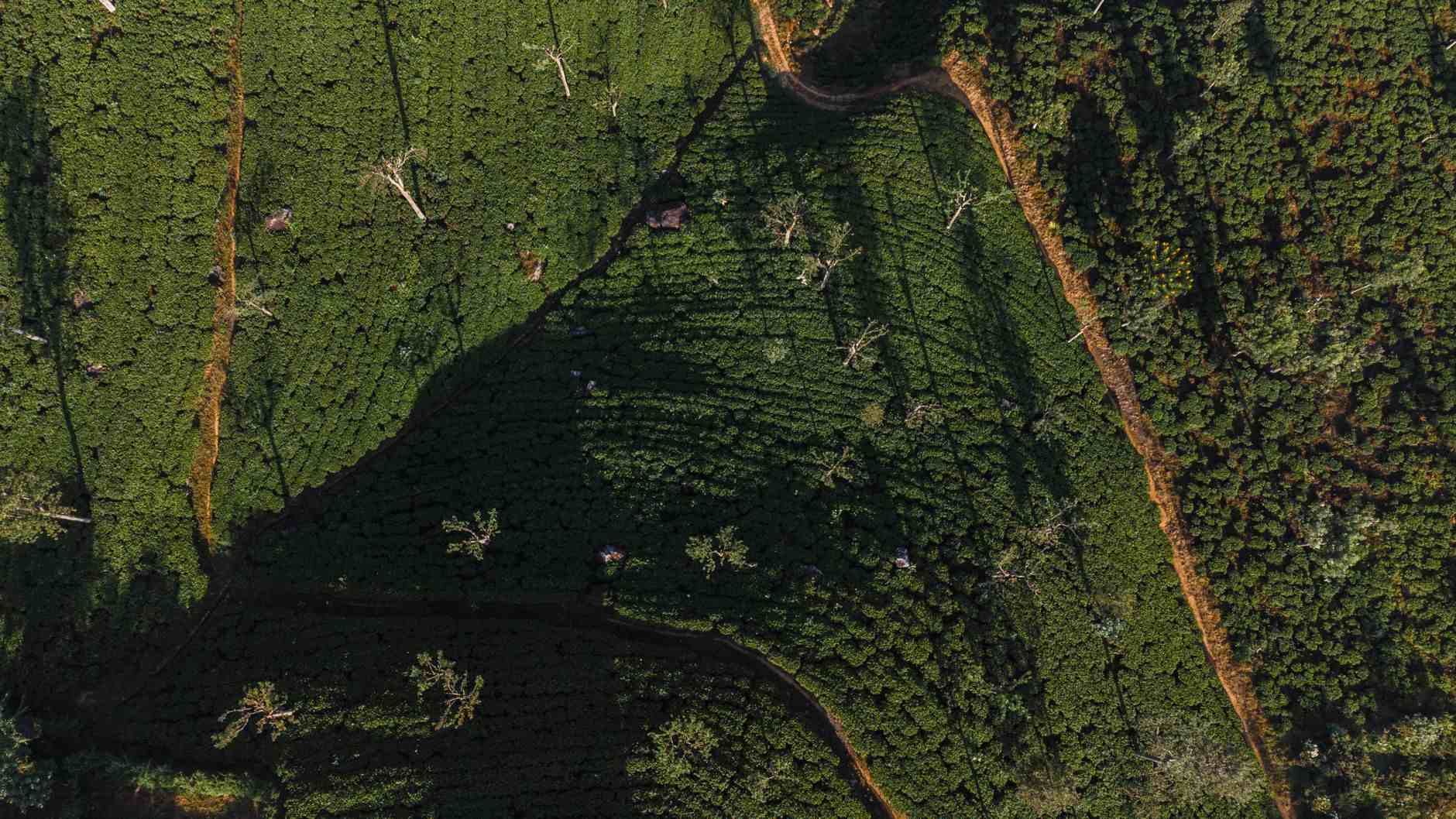
Sri Lanka packs an unusual concentration of photographic subjects into a small island: ancient rock fortresses, colonial harbour towns, terraced tea hills that glow a dozen shades of green depending on the season, and one of the highest densities of leopards in the world. The light is generous - golden hour genuinely golden, monsoons clearing to crystalline skies - and the distances are manageable enough to plan a serious photography trip around several different landscapes within two weeks.
Here’s where to go, when to be there, and how to approach each subject.
Sigiriya Rock Fortress
The 200-metre volcanic plug rising above the jungle north of Dambulla is Sri Lanka’s most iconic image. Photographing it well requires more planning than simply arriving and pointing upward.
The classic foreground: The water gardens and reflecting pools at the base of the rock face east. In the early morning (7–9am), these pools mirror the rock face directly - a horizontal line of calm water doubling the fortress above. This is the shot. Arrive at gate opening (7am) and walk directly to the south reflecting pool before the tour groups arrive. Entry fee: USD 30 per person (as of 2026), which remains valid for the ascent.
From the top: The summit platform gives a 360° view of the jungle plains, with the Pidurangala ridge to the north and the Minneriya reservoir glinting to the east in the morning. Wide-angle (16–24mm) for the landscape panoramas; a short telephoto (85–135mm) for pulling in distant water features and isolated trees. Ascent takes 45–60 minutes through the Lion’s Paw gateway and past the fresco cave galleries.
From Pidurangala Rock: A strong alternative view of Sigiriya that many photographers prefer. From the summit of Pidurangala (a 30-minute climb from the Pidurangala Rock Temple, entry approximately LKR 500), you look directly at the Sigiriya fortress at the same elevation - giving a profile view rather than a base-looking-up angle. This is particularly dramatic at sunrise when the fortress catches the first direct light and the jungle below is still in shadow. Pidurangala is also less crowded and costs significantly less than Sigiriya itself.
Best time: October–April for reliable dry weather on the Cultural Triangle. Avoid late May through August when the north receives significant rain.
Tea Country: Nuwara Eliya and Ella
The central highlands produce some of Sri Lanka’s most commercially reproduced images - tiered plantations, Tamil tea pickers in bright saris, colonial bungalows misted in cloud. The reality is accessible and genuinely beautiful.
Nuwara Eliya area: The Mackwoods Labookellie estate (on the A5 road from Nuwara Eliya toward Kandy) is the most visited plantation for photography due to its accessible hillside terraces and organised tea pickers’ photography sessions. Entry is free; picking sessions can be photographed respectfully from a distance. The overcast mornings common here give diffuse, even light that renders the green of the bushes at their richest - avoid midday shooting when shadows become harsh.
Nine Arches Bridge (Ella): The colonial-era stone viaduct near Ella is one of the most photographed sites in the country. The classic composition positions the bridge in a slight curve, framed by jungle on either side. The best position requires a 10-minute walk from the Ella train station on a track signposted toward the bridge. Trains pass 5–8 times daily; check the Sri Lanka Railways timetable (or the Scenic Sri Lanka app) for approximate times. Position yourself at least 20 minutes before the scheduled crossing. Use a shutter speed of at least 1/500s to freeze the train without motion blur; a focal length of 70–135mm fills the frame well from the opposite embankment.
Little Adam’s Peak (Ella): The 30-minute ascent from Ella town to Little Adam’s Peak gives elevated views across the Ella gap toward Badulla. The tea fields on the approach are richest in colour during the green-flush season (February–April and September–October). Sunrise from the summit is straightforward to time - it rises roughly east, so face that direction from the top platform.
Ethical considerations for tea estate photography: Tea pickers work long days under physical conditions. If you want close-up portraits, ask through a local guide and compensate the workers (LKR 500–1,000 per person for a dedicated portrait session is appropriate). Photographing from a respectful distance without acknowledgement is generally tolerated but builds no relationship. The best portraits here come from connection, not from being invisible.
Galle Fort
The UNESCO-listed Dutch colonial fort at Galle is both a living town and a well-preserved historic streetscape. The combination of white-washed colonial buildings, small lanes, and the Indian Ocean backdrop gives a Mediterranean quality unusual in South Asia.
Dawn on the ramparts: The eastern ramparts overlook the Old Town rooftops and the lighthouse. At sunrise the sky over the Galle Cricket Ground (outside the fort to the north) turns a distinctive pink-orange. Position yourself on the Fort Point (north-east corner) by 6am. Wide-angle for the roofscape panorama; telephoto to isolate the lighthouse or Dutch Reformed Church spire.
The lighthouse in blue hour: The Galle lighthouse (built 1939, at the western edge of the fort) photographs best in the 20 minutes before sunrise and after sunset. Silhouette it against the pastel sky to the east or use a longer exposure to catch the lighthouse beam rotating.
Street photography inside the fort: The main commercial lanes (Dutch Hospital, Pedlar Street) are active from 8am but genuinely photogenic from early morning when residents are going about their day without tourist crowds. A standard zoom (24–70mm) or a fast 35mm prime works best for street work. The light in the narrow lanes is best in the mid-morning when the sun angles between buildings without direct overhead glare.
Entry: Free. The rampart walkway is open and public. Photography is unrestricted throughout the historic fort area.
Yala National Park: Leopard Photography
Yala’s Block 1 has one of the highest densities of leopards in the world - an estimated 35–45 individuals in an area of approximately 141 square kilometres. Sightings are not guaranteed but are among the most likely of any destination globally.
Logistics: Yala requires an approved jeep and tracker. Self-driving is not permitted. All visitors must enter with a licensed safari operator. Game drives run from 6–10am and 3–6:30pm daily; the morning drive is generally more productive for leopard sightings. Entrance fees: approximately USD 15 per person plus a vehicle fee of approximately USD 15 per jeep (as of 2026). Jeep hire including driver and tracker ranges from LKR 12,000–20,000 for a half-day depending on operator.
Photography setup for leopards:
- Minimum focal length: 300mm. A 100–400mm or 200–600mm zoom gives the flexibility to fill the frame at varying distances.
- Aperture: f/5.6–f/8 to keep the animal sharp with the jeep vibration factored in; image stabilisation on the lens helps significantly.
- Shutter speed: minimum 1/500s to freeze movement; 1/1000s if the animal is moving.
- ISO: 800–3200 in the shadowed vegetation where leopards rest during morning hours.
Positioning: A good tracker positions the jeep for light before the animal. The ideal is morning light from behind the camera onto the leopard’s face. Jeep distance must stay at the guide’s instruction - responsible operators maintain respectful distance from animals, particularly mothers with cubs.
Ethical wildlife photography: Never encourage guides to approach closer than the animal’s comfort distance. Leopards on kill sites are particularly stressed - long lenses from farther away are always preferable to pressure for a closer frame. Yala’s leopard population is under study by conservation teams; stress from vehicle crowding measurably affects their behaviour.
Best season: February–July when the dry season concentrates wildlife around water sources, making sightings more predictable. The park is usually closed during August–September for the monsoon period. Confirm dates with your operator before booking. Search Yala safari options on GetYourGuide.
Elephants at Minneriya and Udawalawe
Minneriya National Park: Famous for “The Gathering” - a seasonal concentration of several hundred wild Asian elephants around the Minneriya Tank as it recedes in the dry season (June–October). The numbers at peak can reach 200–300 individuals and the photographic scale is unique in Asia. Entry and jeep hire logistics mirror Yala. Best photography during the late afternoon gathering when the herds move from the jungle to the water’s edge in directional light.
Udawalawe National Park: More reliable for elephant sightings year-round than Minneriya. The open scrubland landscape gives better visibility than the forested zones at Yala or Minneriya. This is also easier terrain for photography - flatter ground means less jeep tilt, steadier shots.
Pinnawala Elephant Orphanage (caution): Pinnawala near Kandy is one of Sri Lanka’s most visited tourist sites, but it operates as a commercial elephant riding and bathing facility. Working conditions for the elephants have been documented as problematic by wildlife welfare organisations. We recommend Udawalawe’s transit home (a genuine rescue facility) over Pinnawala for anyone concerned about animal welfare in their photography choices.
Beaches: Mirissa and the South Coast
The south coast arc from Unawatuna to Mirissa offers beach photography that’s strongest in the early morning before wind picks up and before the beach chairs are deployed.
Mirissa Whale Point: Blue whale sightings from Mirissa whale watching boats (departing approximately 6:30am, returning by midday) run November–April. Entry to the boat costs approximately USD 50–70 per person. For photographing whales, a 400–600mm telephoto is necessary; 300mm is borderline. Whale diving sequences happen fast - pre-focus on the area of water where the boat crew is pointing before the animal surfaces.
Unawatuna bay at sunrise: The compact bay faces south-east. In the 30 minutes after sunrise the golden light catches the fishing boats anchored offshore and the palm-lined beach. The Rumassala headland to the east blocks direct sunrise but creates a gradual glow across the bay. Reach the beach by 6:30am to avoid the tourist infrastructure being set up.
Practical Photography Tips
Climate and light: Sri Lanka has two monsoon seasons affecting different parts of the island. The south-west monsoon (May–September) affects the south and west coasts, while the north-east monsoon (October–January) affects the north and east. Schedule your itinerary to be in the dry zone of whichever season you visit - the Cultural Triangle (Sigiriya, Anuradhapura, Polonnaruwa) receives less rain overall and tends to be the most reliably photographable zone year-round.
Camera protection: Humidity in the lowlands can cause lens fogging when moving from air-conditioned vehicles to outdoor environments. Allow 10–15 minutes for equipment to acclimatise. Carry silica gel packets in your camera bag and replace them every 2–3 days in the wet season.
Memory and power: 240V power standard (Type D, G plugs). Bring a multi-adapter. Cards and batteries should be carried as hand luggage when flying.
Temple photography etiquette: At Buddhist temples (the majority of Sri Lanka’s major sacred sites), footwear must be removed. No photography of people in prayer without consent. Sacred objects - Buddha statues, bodhi trees, relics - should never be photographed with a person’s back turned to them. Dressing modestly (covering shoulders and knees) is required at most temple sites.
Engaging with locals: Sri Lankan people are generally warm toward cameras and curious about being photographed. A brief interaction before raising the camera almost always improves the portrait. Tamil communities in the tea country are sometimes more reserved - take the time to build rapport through your guide or local contact before photographing.
Sri Lanka is compact enough that a single three-week trip can encompass everything from highland tea mist to jungle leopards to colonial harbour light. The variation is extraordinary, and the challenges are manageable. Come with a telephoto for the wildlife, a wide-angle for the temples, and the patience to wait for the light.
Search hotels in Sri Lanka on Booking.com - compare hotels and guesthouses across Sri Lanka.
Plan Your Trip
✈️ Book your flights to Sri Lanka 🛡️ Get travel insurance 📱 Stay connected with an eSIM 🚗 Rent a car