Sri Lanka's Cultural Triangle: Ancient Cities and Sacred Sites
Book an experience
Book this activity
These are the top-rated activities for this area — book ahead to lock in your preferred date.
The Cultural Triangle is an informal name for the region of central northern Sri Lanka containing the island’s most significant ancient monuments: the ruined cities of Anuradhapura and Polonnaruwa, the rock fortress of Sigiriya, and the cave temples of Dambulla. These four UNESCO World Heritage Sites form a rough triangle with Sigiriya at the centre, each within 1–2 hours of the others.
Together they document over 2,000 years of Sri Lankan civilisation — from the founding of the first kingdom at Anuradhapura in the 4th century BCE through the hydraulic engineering achievements of Polonnaruwa in the 11th–12th centuries CE.
Anuradhapura
Sri Lanka’s first capital, established in the 4th century BCE and continuously inhabited until 993 CE. The sacred city covers 40 square kilometres and contains more than 200 significant monuments — though most visitors cover the central complex, which is manageable in a half to full day.
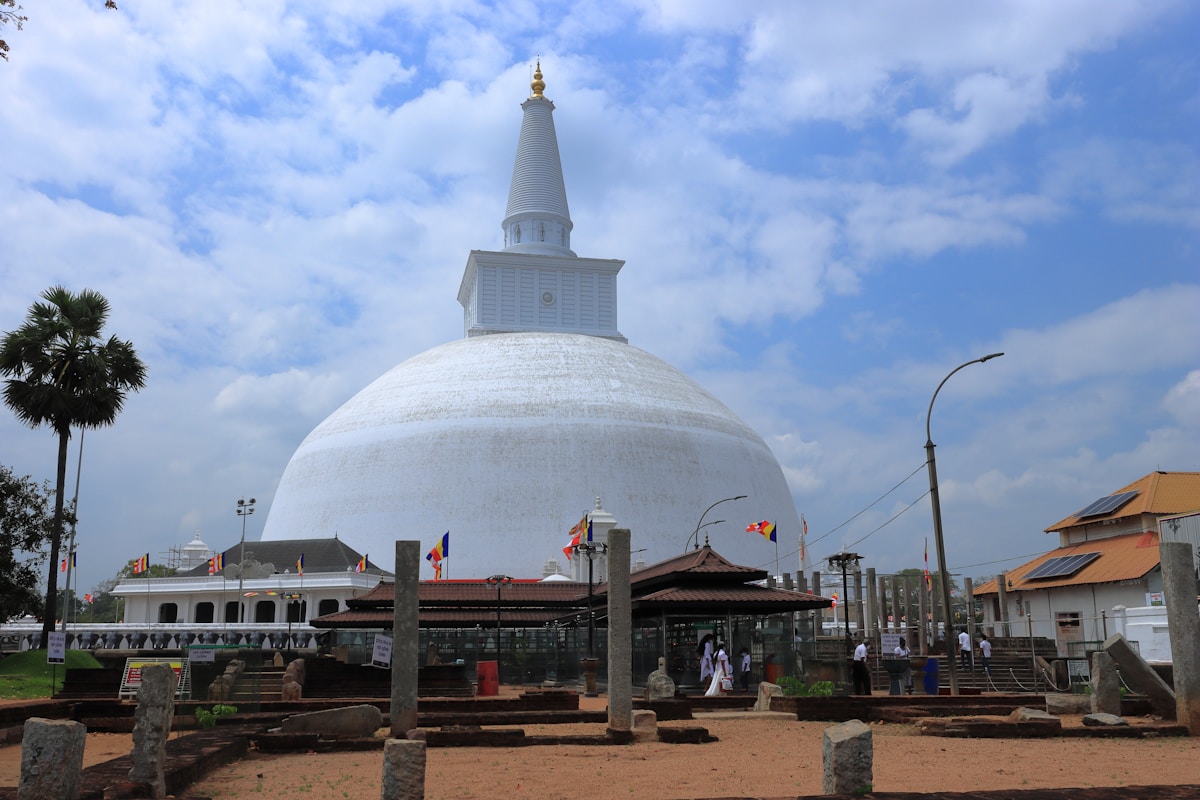
The dagobas (stupas): three of the largest brick structures in the ancient world are here. The Ruwanwelisaya (or Ruwanweli Maha Seya) is the most striking — a massive white dome 91 metres high, fully restored and still an active pilgrimage site. The Jetavanaramaya was the tallest structure in the ancient world after the Egyptian pyramids when built in the 3rd century CE. The Abhayagiri Dagoba is in partial ruin but imposing in scale.
The Sacred Bodhi Tree (Sri Maha Bodhi): a fig tree grown from a cutting of the original Bodhi Tree under which the Buddha attained enlightenment, planted in 288 BCE according to chronicles — making it the oldest documented tree in the world. The tree is enclosed in a white-walled courtyard and receives hundreds of pilgrims daily. Access requires modest dress and the removal of shoes.
The Isurumuniya Temple: a rock temple with a famous carved panel — the “Isurumuniya Lovers” — showing a royal couple in a style that combines Indian and indigenous influences. The temple is small but the carving alone is worth the stop.
Entry: the archaeological site requires a Cultural Triangle Round Ticket or single-site ticket. Foreigners: approximately USD $25 per site, or a combined ticket covering Anuradhapura, Polonnaruwa, Sigiriya, and Dambulla for $50. The combined ticket is worthwhile if you’re visiting more than two sites.
Getting around: Anuradhapura’s sacred city is spread over too large an area to cover on foot. Bicycle hire is the standard approach (available from guesthouses; approximately LKR 300–500/day). Tuk-tuks can also be hired by the half-day.
Polonnaruwa
Sri Lanka’s second ancient capital, flourishing from the 10th to 13th century CE under a succession of Sinhalese and Chola Tamil kings. Polonnaruwa is more compact than Anuradhapura and better preserved — most of the major monuments are walkable from each other.
The Quadrangle (Dalada Maluwa): the royal ceremonial centre, containing the Vatadage (a circular relic house with concentric rings of pillars), the Hatadage (the original tooth relic shrine), and several other temples. The Vatadage is one of the finest examples of Sinhalese architecture — the seated Buddha figures at each compass point are particularly well-preserved.
Rankoth Vehera: a red-brick dagoba 55 metres high, the largest in Polonnaruwa. Less restored than Anuradhapura’s stupas, which makes it feel more archaeological.
Gal Vihara: the most visited single monument in Polonnaruwa — four colossal Buddha figures carved directly from a single granite face. The reclining figure is 14 metres long; the standing figure reaches 7 metres. The workmanship, dated to the 12th century, is extraordinary.
Parakrama Samudra: the great irrigation tank built by King Parakramabahu I in the 12th century. At 2,400 hectares, it was the largest man-made reservoir in the ancient world. It still irrigates the surrounding plains today. The sunset view from the bund with the dagobas beyond is one of the better photographs in the Cultural Triangle.
Entry: same Cultural Triangle ticketing as Anuradhapura (approximately USD $25 single site).
Sigiriya
Sigiriya (180-metre granite monolith, 5th-century palace ruins) is the most internationally recognised site in the Cultural Triangle. The climb, frescoes, and summit views make it the single most visited paid attraction in Sri Lanka.
For the full Sigiriya guide including the ascent route, timing, fitness level, and the Pidurangala alternative — see our dedicated Sigiriya guide.
Dambulla Cave Temple
Dambulla sits 17km south of Sigiriya and is often combined on the same day. Five interconnected natural caves at the base of a rock outcrop have been converted into temple shrines — the complex contains 153 Buddha statues and murals covering 2,100 square metres of cave ceiling and walls, dating from the 1st century BCE to the 18th century CE.
Cave 2 (Maharaja Viharaya) is the largest and most impressive — a single cave space with dozens of standing and seated Buddhas, reclining figures, and paintings covering every surface. The scale and density of imagery is unlike anything elsewhere in Sri Lanka.
Entry: LKR 1,500 (foreigners). Remove shoes at the base of the stairs; dress modestly. The caves are at the top of a 150-metre climb; allow 45 minutes to 1.5 hours for the site.
Planning a Cultural Triangle Visit
Recommended duration: 3 days covers all four sites at a reasonable pace. One day each for Anuradhapura and Polonnaruwa; half a day each for Sigiriya and Dambulla (combinable in one full day).
Base towns: Habarana or Sigiriya village for Sigiriya and Polonnaruwa; Anuradhapura has its own accommodation. Many travellers base themselves in Habarana and day-trip to all sites.
Best order: Anuradhapura → Polonnaruwa → Sigiriya + Dambulla. This follows chronological history loosely and logistically works well from north to south.
Heat: the Cultural Triangle is in the dry zone and is significantly hotter than Kandy or the south coast. Start early (7am at each site), carry water, and plan to be indoors by noon.
Combined with Minneriya: Habarana-based travellers can combine a morning at Sigiriya or Polonnaruwa with an afternoon elephant safari at Minneriya or Kaudulla — this is the single most time-efficient itinerary combination in the region.
Frequently Asked Questions
- How many days do I need to visit the Cultural Triangle?
- Three days covers all four main sites at a reasonable pace — one day each for Anuradhapura and Polonnaruwa, and a full day combining Sigiriya and Dambulla.
- What does a Cultural Triangle combined ticket cost?
- A combined ticket covering Anuradhapura, Polonnaruwa, Sigiriya, and Dambulla costs approximately USD $50 for foreigners. Individual site tickets are around $25 each, so the combined ticket is worthwhile if you're visiting more than two sites.
- What is the best base town for the Cultural Triangle?
- Habarana is the most central base — it's within easy reach of Sigiriya, Polonnaruwa, and the Minneriya elephant safari. Anuradhapura has its own accommodation and is best visited from there directly.
- What is the most impressive site in Sri Lanka's Cultural Triangle?
- This depends on interest. Sigiriya is the most internationally recognised. Gal Vihara at Polonnaruwa — four colossal Buddha figures carved from a single granite face — is considered the finest ancient sculpture on the island. Anuradhapura is the most historically significant, with the world's oldest documented tree.
- In what order should I visit the Cultural Triangle sites?
- The recommended order is Anuradhapura first, then Polonnaruwa, then Sigiriya and Dambulla together. This follows the sites' chronological history and works logistically from north to south.
- Can I combine the Cultural Triangle with an elephant safari?
- Yes — Habarana-based travellers can combine a morning at Sigiriya or Polonnaruwa with an afternoon elephant safari at Minneriya or Kaudulla National Park. This is the most time-efficient itinerary combination in the region.
Ready to explore?
Browse hundreds of tours and activities. Book securely with free cancellation on most options.
Browse on GetYourGuide →We may earn a small commission — at no extra cost to you.