Colombo: Pettah Market, Gangaramaya and Galle Face
Complete guide to Colombo: Fort district, Pettah market, Gangaramaya Temple, Galle Face Green, top neighbourhoods, and day trips from Sri Lanka's capital.
Guides for Colombo
Quick Overview
Colombo is Sri Lanka’s largest city and its commercial hub. It sits on the western coast, with the Indian Ocean visible from Galle Face Green at the city’s edge. Most visitors pass through Colombo at the start or end of a trip - it’s where Bandaranaike International Airport (BIA) lands, and it’s the natural staging point for anywhere else on the island.
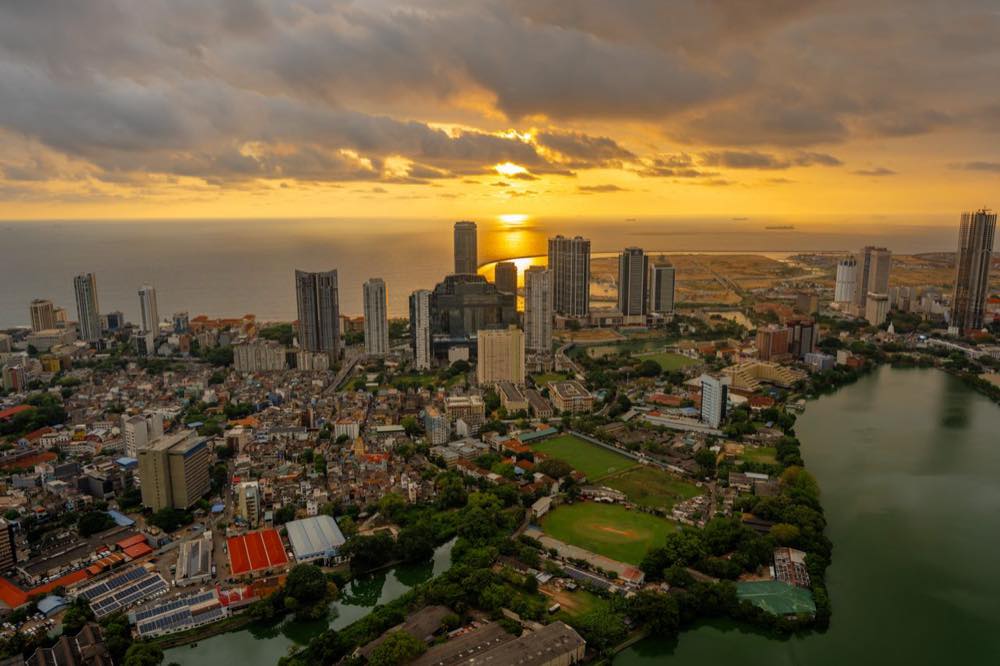 Colombo at sunset, seen over Beira Lake.
The city has a population of around 750,000 in the city proper and roughly 2.3 million in the greater metropolitan area. It’s not the most photogenic capital in Asia, but it has genuine character: colonial-era buildings alongside glass towers, Buddhist temples next to mosques and Hindu kovils, and a food scene that rewards anyone who looks past the tourist menus.
Colombo is also more compact than it first appears. The main sights - Fort, Pettah, Galle Face, Gangaramaya Temple - can be covered in a day or two, which is roughly as long as most visitors spend here.
When to Visit
Colombo is on the wet southwest coast. The southwest monsoon (May–September) brings heavy rain, though it rarely causes full-day downpours - more likely afternoon thunderstorms. The best weather runs November through March: warm, lower humidity, and mostly dry. April and October are shoulder months with changeable conditions.
The city operates year-round. Unlike the cultural triangle or the hill country, Colombo has no real low season for activities - the rain just makes sightseeing less comfortable.
Getting to Colombo
From the airport: Bandaranaike International Airport (BIA) is 30km north in Katunayake. Journey time to central Colombo depends heavily on traffic: 45 minutes at quiet times, up to 90 minutes in morning or evening rush hours. An official metered taxi from the airport ranks costs around LKR 2,500–3,500 to Fort or Colombo 3. For a hassle-free arrival, pre-book a private transfer from Colombo Airport - confirmed price, meet-and-greet, and no haggling on arrival. Uber and PickMe also operate from the airport. There is no train line directly from BIA to Colombo city centre, though there is a station at Katunayake useful for onward connections to Negombo.
By train: Colombo Fort station is the main rail terminus. Trains arrive from Kandy (3 hrs), Galle (2–2.5 hrs), Negombo area, and the north. The train from Kandy to Fort is one of the more scenic rail journeys in South Asia.
By bus: Long-distance buses terminate at Bastian Mawatha bus terminal (near Pettah) for intercity routes. Expressway buses from Galle and the south use a separate terminal.
By road: The Southern Expressway (E01) runs from Galle to Colombo in around 2 hours. The Central Expressway links Colombo toward Kandy (partly complete as of 2026, saving around 45 minutes on the old road).
Neighbourhoods
Colombo’s postal areas double as neighbourhood names, which makes navigation easier once you understand the system.
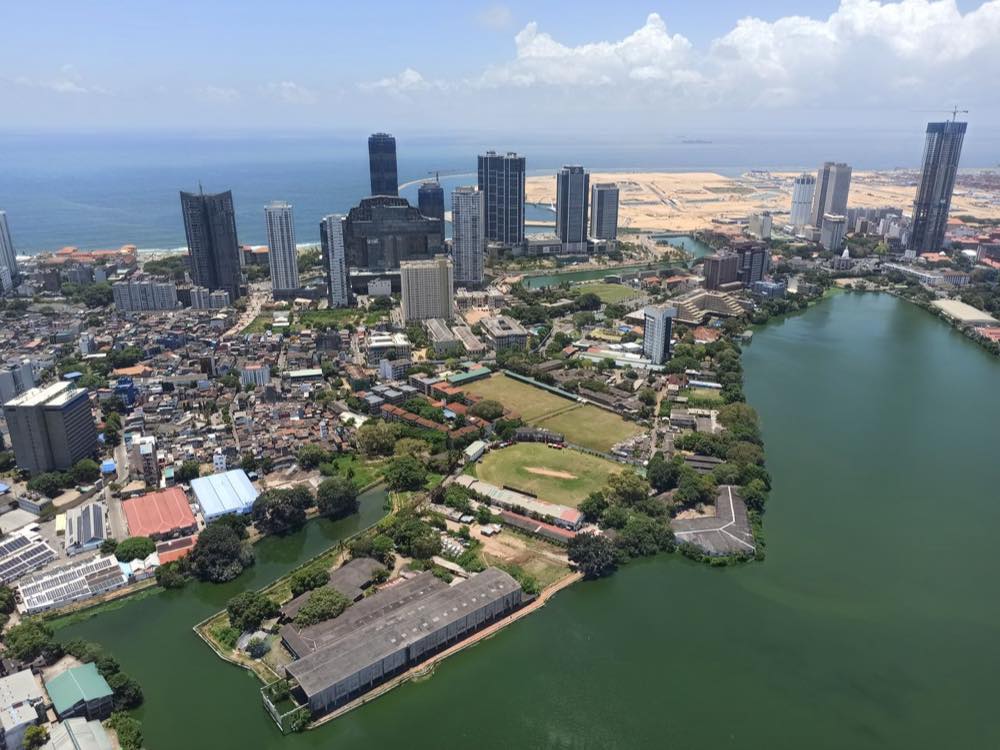 Beira Lake with the towers of central Colombo behind.
Colombo 1 - Fort: The old colonial core, named after a Dutch fort that no longer stands. Government buildings, banks, and the Colombo Port occupy this area. The Lighthouse Clock Tower, the former GPO, and the President’s House are all here. Feels semi-deserted on weekends.
Colombo 11 - Pettah: Immediately east of Fort, Pettah is Colombo’s main bazaar. Each street specialises: electronics, fabric, hardware, food. It’s loud, crowded, and functional - not set up for tourists but interesting to walk through. The Jami Ul-Alfar mosque (built 1909) is worth seeing.
Colombo 3 - Kollupitiya: The neighbourhood most visitors end up in. Walking distance to Galle Face Green, good restaurant options, many midrange to luxury hotels, and reasonably easy to navigate. This is the practical base for most stays.
Colombo 7 - Cinnamon Gardens: Colombo’s quieter, leafier quarter. Wide roads, colonial bungalows, Viharamahadevi Park, and the National Museum. Less commercial than Kollupitiya, and a short tuk-tuk ride from most things.
Colombo 4 & 5 - Bambalapitiya and Havelock Town: Mix of residential and commercial, good for local restaurants. Wellawatte (Colombo 6) has a strong Tamil community and some of the best Jaffna-style curry restaurants in the city.
Mount Lavinia: Technically a separate suburb 12km south of Fort, not a Colombo number. Has a beach (calmer than the city) and a string of hotels along the coast.
Top Attractions
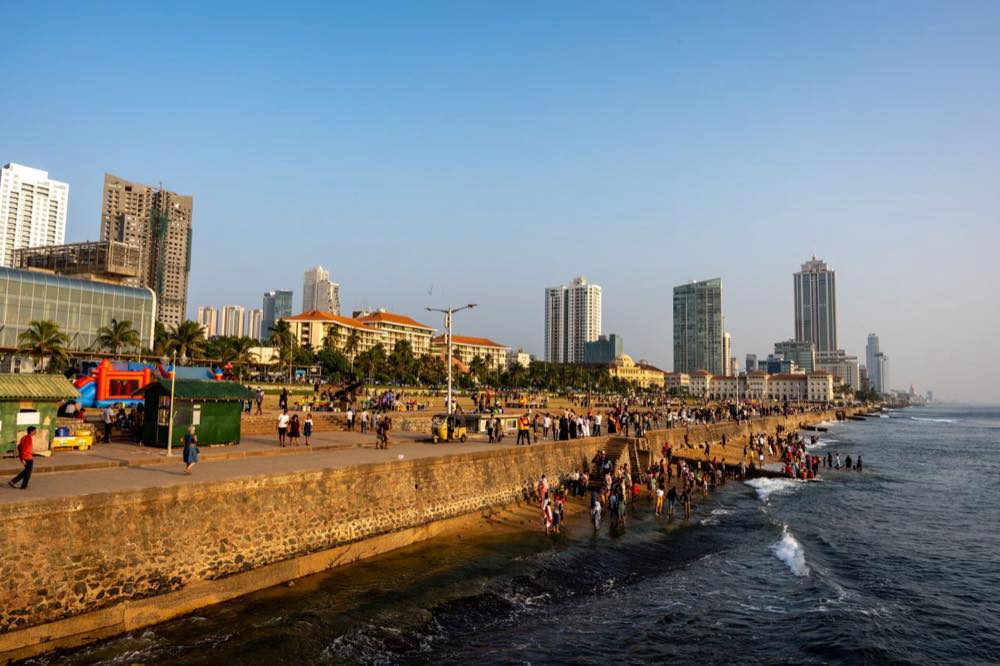 Galle Face Green fills up at sunset.
Gangaramaya Temple: One of the most important Buddhist temples in Colombo, a short walk from Beira Lake. The complex includes a shrine room, a museum stuffed with donated objects (ranging from antique Buddha images to donated luxury cars), and a floating temple on the lake. Entry to the grounds is free; the museum costs around LKR 500. Most active on poya (full moon) days.
Galle Face Green: A 500-metre stretch of seafront promenade between Colombo 3 and the ocean. In the evenings, it fills with kite flyers, snack vendors, families, and couples. The Indian Ocean faces west here, making it one of the few spots in Colombo with a real sunset view. The Galle Face Hotel - Sri Lanka’s oldest luxury hotel - sits at the southern end and is worth a drink even if you’re not staying there.
Beira Lake: A large lake in the centre of the city, bordered by Gangaramaya Temple, a small Buddhist island temple (Seema Malaka), and a handful of cafés. Boat rides are available on the lake. At night it’s lit up from the surrounding hotels.
Colombo National Museum: Sri Lanka’s largest museum, located in Cinnamon Gardens. The colonial building (1877) houses exhibits on Kandyan royal regalia, prehistoric Sri Lanka, masks, and the island’s natural history. Entry around LKR 1,500 for foreigners. Worth 1.5–2 hours.
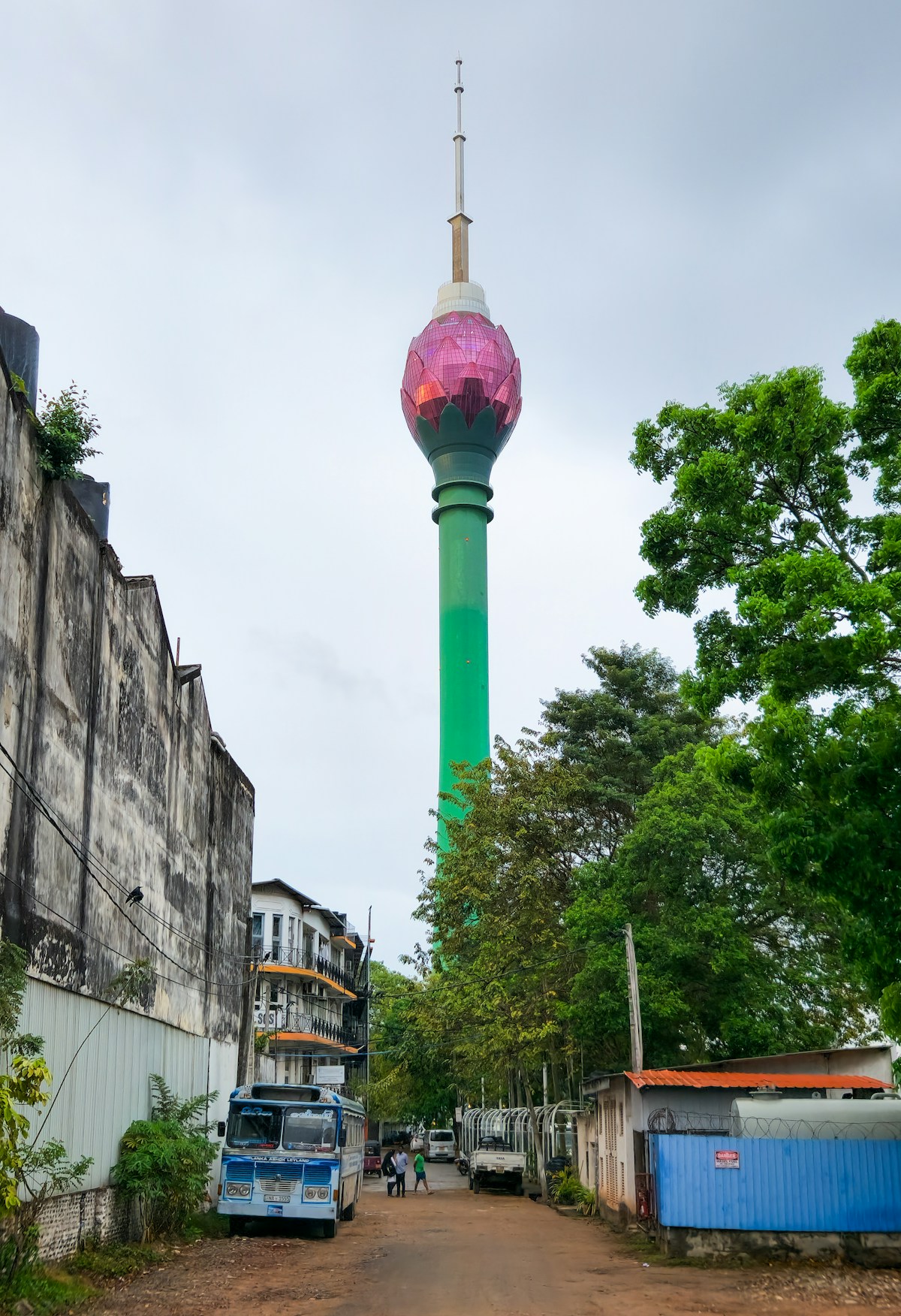
Lotus Tower: The tallest structure in South Asia at 356m, completed in 2019. A telecommunications tower with observation decks and a revolving restaurant. Entry to the observation floor costs around LKR 2,000 for foreigners. Views across the city on clear days.
Old Dutch Hospital: A restored colonial warehouse in Fort, now a shopping and restaurant precinct. Houses the Ministry of Crab restaurant and several other dining options. Atmospheric in the evenings.
Colombo City Centre Mall: Adjacent to Beira Lake, this is the city’s main modern shopping mall. Useful for air conditioning, supermarkets, food courts, and international brands.
Viharamahadevi Park: Colombo’s main public park, named after the mother of King Dutugamunu. Large open lawn, flowering trees, and a golden Buddha statue. Popular on weekends with local families.
Getting Around
Colombo traffic is consistently difficult. The road network wasn’t built for the volume of vehicles it now carries. Budget extra time for any journey.
Tuk-tuks: The fastest way to navigate for short hops. Negotiate the price before you get in (or use the meter - drivers are technically required to use it). Short rides within a neighbourhood should cost LKR 100–200. Cross-city rides LKR 300–600.
Uber: Works well throughout Colombo. Usually cheaper than negotiated tuk-tuk rates for longer distances. The app is reliable and widely used by local residents.
PickMe: Sri Lanka’s local ride-hailing app. Often slightly cheaper than Uber. Works on Android and iOS. Tuk-tuks, cars, and bikes available.
City buses: Cheap (LKR 10–50 for most routes) but crowded and confusing if you don’t know the route numbers. Practical once you’ve identified your route; not recommended for first-time navigators.
Walking: Fort and Pettah are walkable if you have heat tolerance and are comfortable in traffic. Colombo 3–7 is walkable, and some people prefer walking the stretch between Kollupitiya and Cinnamon Gardens. Heat is the main limiting factor - carry water.
Driving: Not recommended for visitors. Traffic is heavy, road markings are sometimes unclear, and parking near central attractions is difficult.
Day Trips
Negombo (40 min north): Easy day trip - or just stop there on arrival before heading to Colombo. Fishing village atmosphere, Dutch canal, St Mary’s Church, good seafood.
If you’d rather have someone else handle the logistics, guided tours from Colombo cover Negombo, Pinnawala, and the most popular excursions with transport included. For the wider island, see our best tours in Sri Lanka guide, or browse all Sri Lanka tours.
Pinnawala Elephant Orphanage (90 min): Worth planning around the feeding and bathing sessions at 10am and 2pm. Entry around $15 USD. In Kegalle District off the Colombo–Kandy road.
Galle (2 hrs south via expressway): Doable as a day trip. The old fort town is compact and walkable. Take the expressway; the old coastal road is slower and less scenic.
Kandy (3–4 hrs): Better as an overnight given travel time. If you want the train, allow 3 hours.
Sigiriya (3.5–4 hrs): Long for a day trip but some visitors manage it with an early start by private vehicle.
Where to Stay
Colombo 3 (Kollupitiya) is the most practical base for most visitors. Colombo 2 (Fort) suits business travellers. For a quieter, more residential feel, Colombo 7 (Cinnamon Gardens) is a good option. Budget guesthouses start from USD $20–35; midrange options run $60–120; luxury hotels (Shangri-La, Galle Face Hotel, Hilton Colombo) from $150–300+.
See our full Colombo accommodation guide for area-by-area breakdowns.
Digital Nomad in Colombo
Colombo is the most functional city for remote workers in Sri Lanka. The best coworking spaces - CO-LAB Colombo (Colombo 5), Impact Hub Colombo (Colombo 3), and TRACE Expert City (Maradana) - offer hot desks from approximately LKR 2,500/day as of 2026. Fibre broadband in coworking spaces and good apartments runs 50–100 Mbps reliably.
Monthly costs for a nomad in Colombo run approximately $1,200–1,800 including a furnished apartment, coworking, and food. Colombo 3 and 5 offer the best balance of price, convenience, and cafe options. For full details on coworking spaces, neighbourhoods, and practical tips, read the Digital Nomad Guide to Colombo.
FAQ
Is Colombo safe? Colombo is generally safe for tourists. Petty theft occurs as in any large city, but violent crime against visitors is rare. Keep bags secure in Pettah markets and on crowded buses.
Do I need a visa? Citizens of most countries need an Electronic Travel Authorisation (ETA) before arrival. Apply online at eta.gov.lk. Cost is USD $20 for tourism. Some nationalities receive free visas - check the official list before applying.
What currency is used? Sri Lankan Rupees (LKR). ATMs are widely available in Colombo. As of mid-2026, USD 1 ≈ LKR 300. Most hotels accept cards; smaller restaurants and tuk-tuks are cash only.
How long should I spend in Colombo? One to two days covers the main sights. Three days if you want a slower pace or plan to do day trips. Most visitors use Colombo as a transit point rather than a destination in itself.
More in Colombo
- Where to Eat in Colombo
- Day Trips in Colombo
- Digital Nomad Guide in Colombo
- Getting Around in Colombo
- Things to Do in Colombo
- Where to Stay in Colombo
Related Guides
- Colombo food guide - best restaurants by neighbourhood and cuisine type
- Colombo airport guide - arrivals, transport, and what to do on a short layover
- Negombo vs Colombo - which is the better base near the airport?
- Galle vs Colombo - colonial fort town vs commercial capital
- Sri Lanka visa guide - ETA, costs, and application process
- Pinnawala Elephant Orphanage - 90-minute day trip on the Kandy road
Upcoming Events in Colombo
Navam Perahera
colombo
Navam Perahera 2027, 11–12 February. Elephants, dancers, and drummers circle Beira Lake - one of Colombo's most-visited annual Buddhist processions.
Book an experience
Top experiences in Colombo
Explore the best tours and activities in Colombo , with instant confirmation and free cancellation on most bookings.
Planning to visit? Browse hotels in Colombo, free cancellation on most bookings.