Search hotels in Horton Plains on Booking.com
Horton Plains is a high-altitude plateau at 2,100–2,300 metres in Sri Lanka’s Central Province. It is the centrepiece of the Horton Plains National Park guide, a UNESCO World Heritage Site, and one of the few places in South Asia where you can walk to the edge of an 870-metre cliff in a cloud forest. Almost everything visitors do here is centred on the park’s circular trail and what it connects.
The logistics are straightforward: arrive at the gate by 6:30am, walk the 4.5km circuit, spend time at World’s End and Baker’s Falls, and leave before the midday heat. The $30 entry fee is steep by Sri Lankan standards but the park justifies it. Guided Horton Plains tours including transport from Nuwara Eliya are available to book in advance.
World’s End
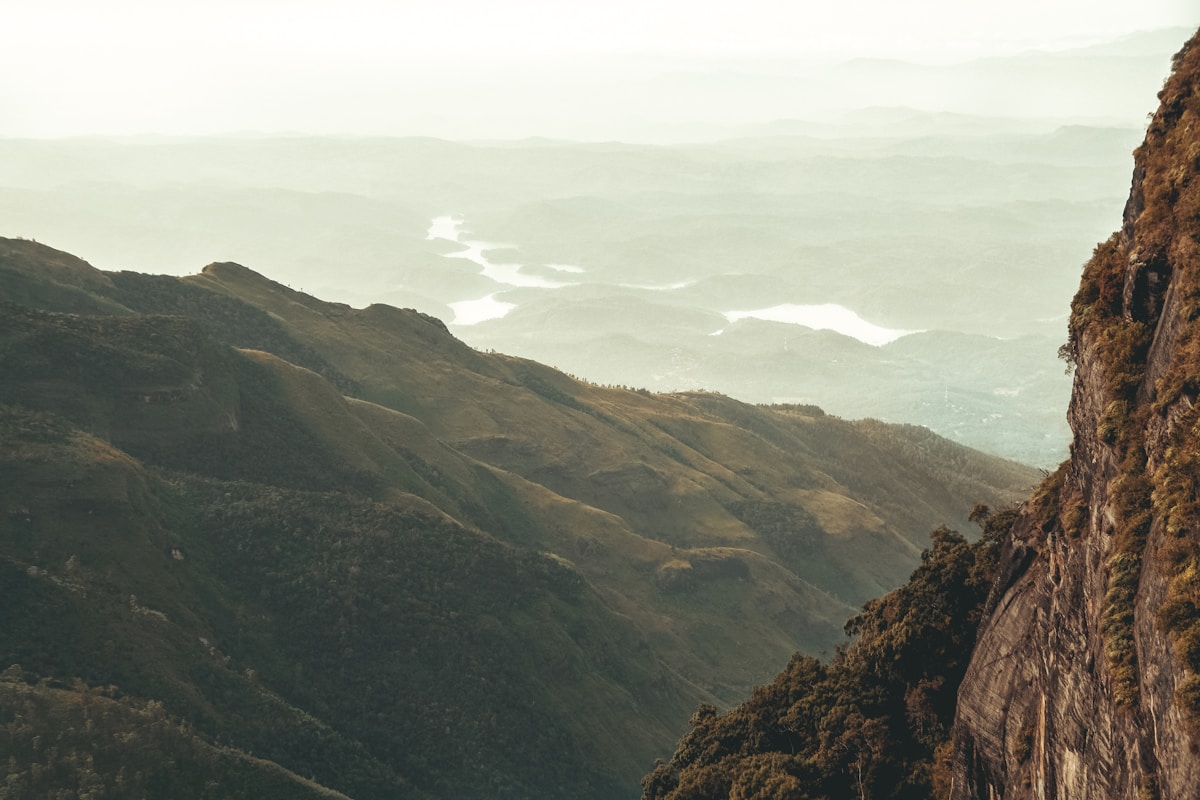
World’s End is the escarpment at the southern edge of the Horton Plains plateau where the land drops abruptly by 870 metres to the dry zone lowlands below. On a clear morning, the view extends toward the southern coast. The drop is dramatic and properly impressive even by global standards.
The viewing point is fenced with a safety barrier and designated observation area. The walk from the park entrance to World’s End is approximately 2km, taking 45–60 minutes at a comfortable pace on the flat plateau trail.
The critical rule: arrive early. Cloud - the persistent mist generated by the altitude and the warm lowland air below - typically covers the escarpment by 9am. After cloud arrives, visibility at the edge drops to a few metres and the view disappears. Most visitors who miss the window see only grey. Most who arrive before 7am see clearly.
The cloud often lifts again in the early afternoon, but this is unreliable. Do not plan around the afternoon window.
Baker’s Falls
Baker’s Falls is a 20-metre waterfall on the Belihul Oya river within the park, approximately 30 minutes from the park entrance along the circular trail. It is typically the second stop after World’s End on the clockwise circuit.
The falls are surrounded by cloud forest - the vegetation here is denser and wetter than the open grassland of the plateau. The area is cool and the sound of the water audible well before the falls are visible. The path descends slightly to reach the viewing point above the falls.
Baker’s Falls is less dramatic in scale than World’s End but adds a different character to the walk - forest, rather than open plateau. Allow 20–30 minutes at the falls before continuing on the circular return path to the park entrance.
The Circular Trail in Full
The 4.5km circuit is well-marked and flat for most of its length. The standard direction is clockwise - World’s End first, then Baker’s Falls, then the return along the park’s northern edge through open grassland.
The trail passes through three distinct environments:
- Open patana grassland: the plateau’s primary ecosystem, dominated by grass and low scrub. Sambar deer are common here, often visible in groups grazing near the trail.
- Cloud forest patches: areas of dense forest with mosses, ferns, and mist. The Sri Lanka whistling thrush - heard as a clear, bell-like call before it is seen - is most commonly found in these sections.
- Bogs and wet areas: the plateau has several boggy sections that serve as water sources for wildlife. These areas are often productive for birdwatching.
The full circuit takes 2–3 hours at a comfortable pace with stops.
Wildlife and Birdwatching
Horton Plains is one of Sri Lanka’s best birdwatching sites. The park protects 21 endemic bird species - more than almost anywhere else in the country.
The Sri Lanka whistling thrush is one of the most sought-after species: a large, dark-blue thrush with a melodic whistle that carries clearly across the cloud forest. The yellow-eared bulbul is common and conspicuous, often seen in the open grassland sections. The Sri Lanka blue magpie is present but requires more searching.
Sambar deer are frequently seen in groups of 3–8 animals on the open plateau sections. They are comfortable with human presence and allow close approach. Purple-faced langur monkeys are typically encountered at forest edges, particularly in the first kilometre from the park entrance.
Leopard are present in the park but sightings during the day are unusual. Track evidence (paw prints, scat) is relatively common near the boggy areas.
What to Bring
The plateau is cold in the early morning - 8–12°C at the gate at 6am, with wind at the escarpment edge making it feel colder. A light jacket and a wind layer are essential. Temperatures rise through the morning as the sun climbs.
Bring your own water (at least 1.5 litres per person) and food. There are no facilities inside the park. The walk involves no significant exertion but the altitude increases fluid requirements.
Practical Notes
- Entry fee: approximately USD 30 per person for foreign visitors as of 2026 - bring cash
- Park opens at 6am; the early morning window for clear views is 6–9am
- The trail is easy walking - no special equipment needed; standard trainers are adequate
- Photography is permitted; no flash photography in forest areas
- The park may close during heavy rain in the monsoon period (May–September); check locally before making the journey
Planning Your Sri Lanka Trip?
- Book tours & activities in Horton Plains
- Find hotels in Horton Plains
- Travel insurance for Sri Lanka
- Get a Sri Lanka eSIM
- Find flights to Sri Lanka