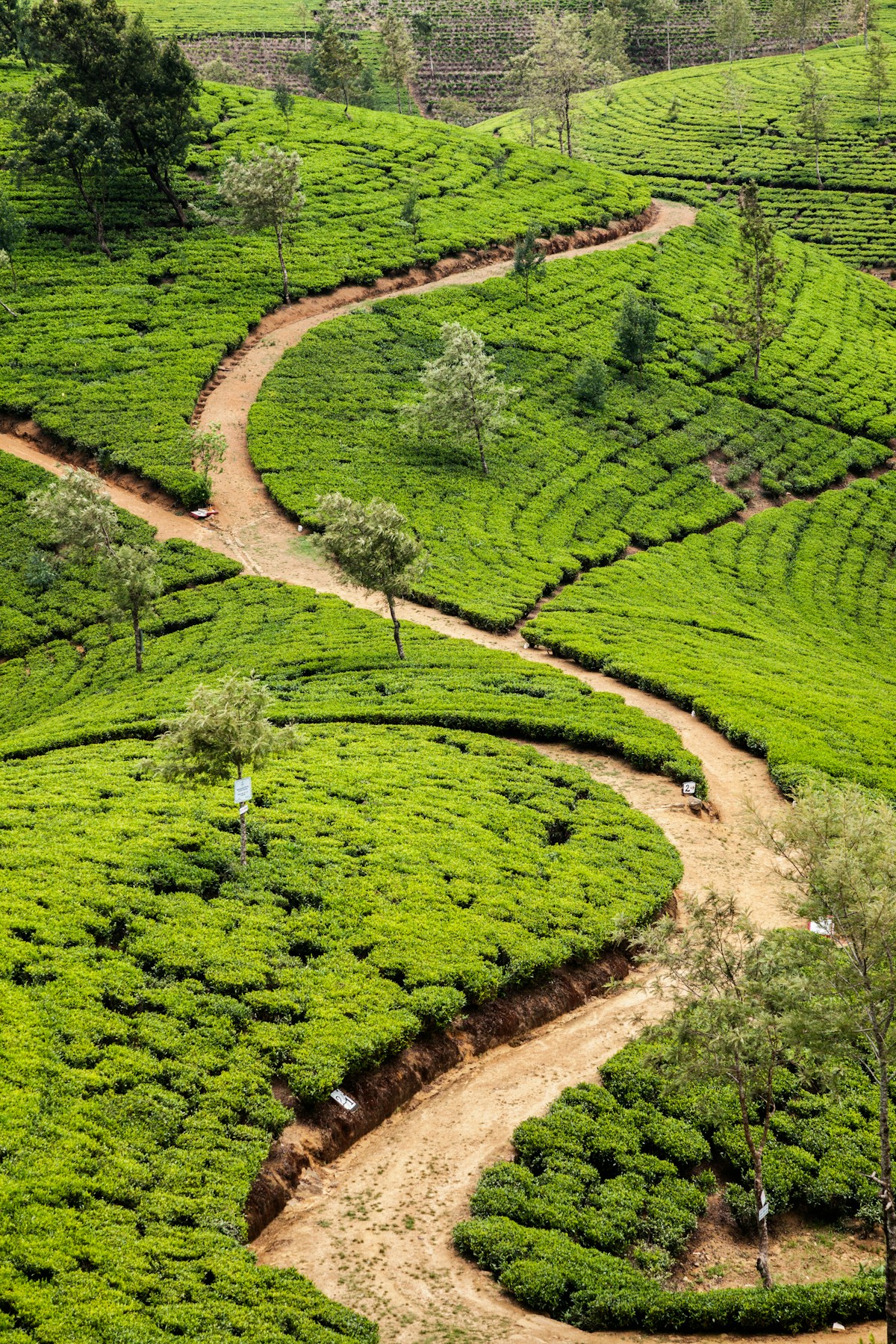
Nuwara Eliya sits at the heart of Sri Lanka’s high-grown tea region. Elevations above 1,200m slow the growth of the Camellia sinensis plant, reducing the yield but concentrating the flavour - the result is what tea traders classify as “high-grown Ceylon tea,” which commands the highest prices on international markets. The hills around the town are almost entirely under tea cultivation, and several estates are open to visitors. Tea plantation tours and guided experiences in Nuwara Eliya are bookable in advance through local operators.
Why This Region Produces Distinctive Tea
Tea quality in Sri Lanka is graded by elevation. Low-grown tea (below 600m) is processed quickly and has a stronger, more robust character. High-grown tea, produced in the Nuwara Eliya region at 1,600m and above, develops more slowly due to the cooler temperatures and high mist. The temperature variation between day (around 18–20°C) and night (7–12°C) stresses the leaf and produces a more complex, lighter-bodied tea with what tasters describe as a delicate, almost floral quality.
The climate here - consistent mist, high rainfall, and well-drained volcanic soil - has made this the benchmark region for Ceylon tea since the estates were established in the 1860s and 1870s by British planters after the collapse of coffee production.
Estates Open to Visitors
Pedro Tea Estate
Pedro Tea Estate is 3km from Nuwara Eliya town, making it the most accessible estate for visitors on foot or by tuk-tuk. The estate has been producing tea for over 150 years. Factory tours run daily from around 8am to 5pm. Entry is free; the standard arrangement is to purchase a small amount of tea at the end of the tour, which guides expect. The tour takes approximately 30–45 minutes.
Damro Labookellie Tea Centre
Damro Labookellie sits on the A5 main road between Nuwara Eliya and Kandy, making it a natural stop for travellers in either direction. It is well-set-up for visitors - the tea centre has a restaurant with views over the estate, and entry and tea tasting are free. It receives the most tour group traffic of any estate in the area, which makes it busy at mid-morning. Coming early or in the afternoon reduces the crowds.
Bluefield Tea Gardens
Bluefield is on the Hatton Road, smaller and less visited than Pedro or Labookellie. The estate offers factory tours and is a better choice for those who want to avoid the larger groups. The setting is less developed, which some visitors prefer.
Mackwoods Labookellie
On the Kandy road north of Nuwara Eliya, Mackwoods is another long-established estate with a tea lounge for visitors. Free entry and tea tasting; the lounge has good hillside views.
What to Expect on a Factory Tour
Tea factory tours follow the same sequence at all estates because the process is standardised.
Withering: Freshly picked leaves are spread on wire mesh trays and air-dried for 12–18 hours to reduce moisture content and make the leaves pliable.
Rolling: The withered leaves are fed through rolling machines that break the cell structure and begin the chemical reactions that develop flavour.
Fermentation/Oxidation: The rolled leaves are spread on tables and left to oxidise, which is the process that turns them from green to the brown-black colour of black tea. For green tea, this step is skipped.
Drying: The oxidised leaves pass through hot-air dryers to halt the fermentation and reduce moisture to around 3%.
Sorting and Grading: The dried leaves are sifted through machines that separate them by particle size into grades: OP (Orange Pekoe), BOP (Broken Orange Pekoe), and dust grades used in tea bags.
The whole process from picking to packaged tea takes 24–30 hours. Most factory tours show all stages if production is running; quieter periods may show fewer active machines.
Buying Tea Directly from Estates
Estates sell tea directly from small shops on site. Prices are fair, though not dramatically cheaper than shops in Colombo or Nuwara Eliya town - Ceylon tea is produced under a commodity market structure, so the price difference is modest. The advantage of buying at source is freshness and variety: estates carry their full range of grades, including some grades not distributed widely.
The Nuwara Eliya town market also has several tea shops selling a range of estate teas, and competition means prices are reasonable.
The Tea Pickers
The workforce on the estates is almost entirely Tamil - descendants of workers brought from South India by British planters in the 19th century to work the tea estates. This community, referred to as Indian Tamils or Up-Country Tamils, is distinct from the Sri Lankan Tamil community on the north coast. They remain one of the most economically marginalised groups in Sri Lanka, living in estate housing (line rooms) with limited access to services.
When visiting estates, be respectful when photographing workers in the field. Many workers are used to tourists photographing them, but asking permission before pointing a camera at individuals is common courtesy. Some estates prohibit photography of workers in production areas; follow their guidelines.
Planning Your Sri Lanka Trip?
- Book tours & activities in Nuwara Eliya
- Find hotels in Nuwara Eliya
- Travel insurance for Sri Lanka
- Get a Sri Lanka eSIM
- Find flights to Sri Lanka