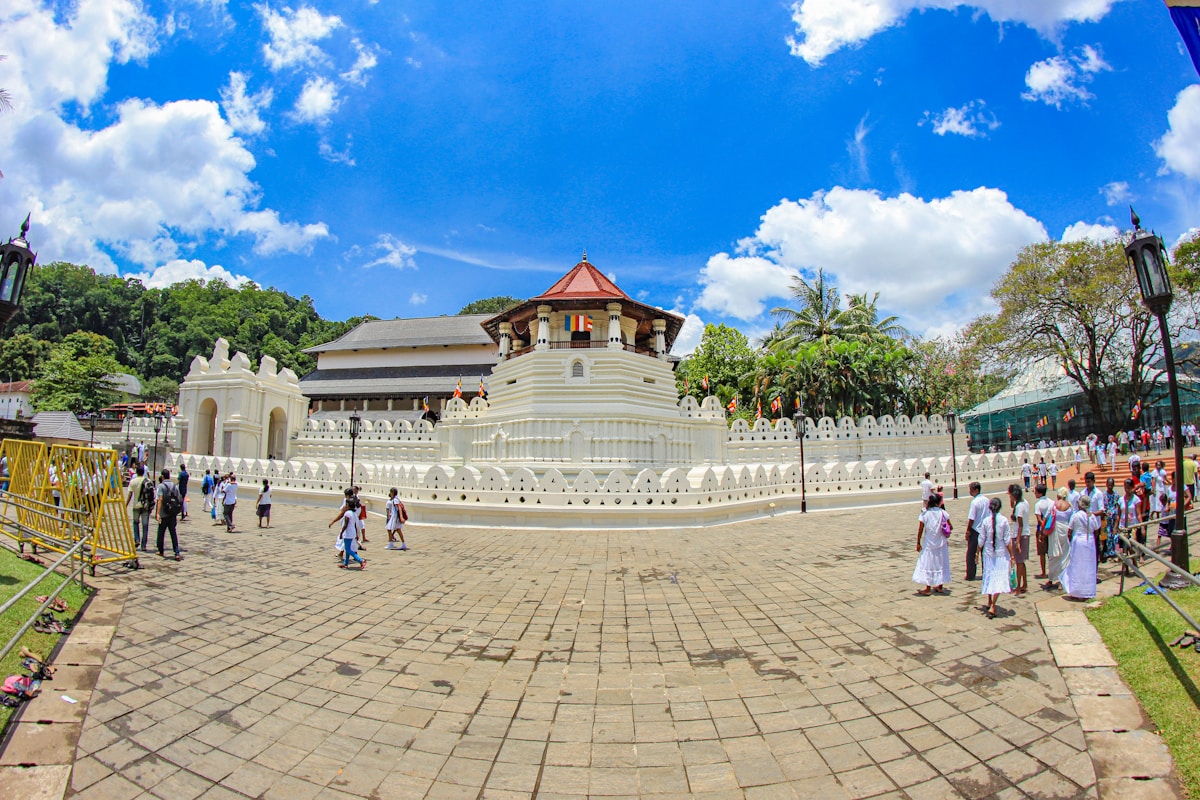
Polonnaruwa: Gal Vihara, Vatadage and Parakrama Samudra
Guide to Polonnaruwa - the UNESCO medieval ruins, Gal Vihara rock Buddhas, Parakrama Samudra, Vatadage, and how to visit from Sigiriya or Kandy.
Guides for Polonnaruwa
Overview
Polonnaruwa was Sri Lanka’s second ancient capital, replacing Anuradhapura in the 11th century CE after Chola invasions from South India drove the Sinhalese court south. The Polonnaruwa Kingdom reached its peak under King Parakramabahu I (1153–1186 CE), who unified the island, constructed an enormous irrigation reservoir (Parakrama Samudra), and built a city of palaces, shrines, and monasteries on a scale not seen again in Sri Lanka’s history.
The city was abandoned in the 13th century following subsequent invasions and has been a ruin site since. UNESCO designated it a World Heritage Site in 1982.
Polonnaruwa is about 230km from Colombo (4–5 hours by road) and 90km from Sigiriya (about 90 minutes). Unlike Anuradhapura - which spreads across a very large area - Polonnaruwa’s main monuments are concentrated in a manageable circuit that can be covered in a single day. This makes it one of the more visitor-friendly ancient sites in Sri Lanka.
Getting There
From Sigiriya (Most Common Route)
About 90km east of Sigiriya, around 90 minutes by road. Polonnaruwa is commonly combined with Sigiriya as part of a Cultural Triangle circuit. Many visitors use a hired vehicle to move between the two, stopping at Polonnaruwa for a full day before continuing.
From Kandy
About 145km, around 2.5–3 hours by road. Doable as a long day trip from Kandy; more comfortable as an overnight.
From Colombo
Around 4–5 hours by road (230km). The same distance by train: Polonnaruwa does not have its own major railway station, but Hingurakgoda station (6km from the site) is served by some services. Check the Sri Lanka Railways schedule for current connections.
By Bus
Buses run from Kandy, Colombo, and Dambulla to Polonnaruwa town. From the bus station in Polonnaruwa town, a tuk-tuk to the archaeological park entrance takes about 10 minutes.
The Archaeological Site
The main monument complex is entered from the museum (the Polonnaruwa Museum is at the entrance road, before the monuments themselves). Ticket checkpoints are at multiple points within the site. A bicycle hired in town (LKR 300–400 per day) is the most efficient way to cover the circuit.
Entry: A Cultural Triangle ticket (approximately USD $25 for foreigners) covers Polonnaruwa along with Anuradhapura and Dambulla. Individual site tickets are also available. Check current pricing at the entrance.
Opening hours: 7am–6pm daily.
Time required: A focused visit covering all major monuments takes 5–6 hours. A relaxed full day covers everything including the museum, lakeside ride, and outlying monuments.
Key Monuments
Gal Vihara
The finest surviving example of rock-cut sculpture in Sri Lanka and one of the most impressive in Asia. Four colossal figures are carved directly from a single granite face - one seated Buddha in meditation (4.6m high), a standing Buddha (6.9m), another seated Buddha within a decorated shrine chamber, and a reclining Buddha 14.7m long representing the Buddha’s passing into parinirvana.
The standing Buddha is 15 metres high - the tallest ancient standing Buddha figure in Sri Lanka. The skill of execution is remarkable: the facial details, the folds of the robes, the mudras (hand gestures), all carved from the living rock at this scale.
Gal Vihara was carved during the reign of Parakramabahu I in the 12th century. Remove shoes well before the monument area. Photography is permitted.
Time: 30–45 minutes; longer if you want to study the carvings closely.
Parakrama Samudra
The vast artificial lake (technically a reservoir, or “sea”) built by King Parakramabahu I in the 12th century. Its construction required linking three earlier reservoirs into a single system covering 2,400 hectares. The embankment (bund) stretches 14km in length. The lake still functions as an irrigation reservoir supplying paddy cultivation across the surrounding district.
The archaeological park lies along the eastern shore of the lake; the museum and main entrance are also on this side. A cycling path runs along the bund and provides good views across the water.
The Statue on the Bund: A large standing granite figure on the northern embankment, sometimes called “Parakramabahu” - though scholars debate whether it depicts the king or a sage. Whatever its subject, it’s worth a brief stop.
Royal Palace of Parakramabahu
The ruins of the royal palace complex, immediately inside the entrance road. The main palace (Vejayanta Prasada) would have stood seven storeys tall - the brick walls still rise to around 10 metres in some sections, with slots for wooden floor beams still visible. The complex includes audience halls, subsidiary buildings, and the Audience Hall, which retains carved lion figures at the stairway.
Time: 20–30 minutes.
Vatadage
A circular relic house - a uniquely Sri Lankan architectural form - with four entrances guarded by moonstones and flanked by guardstone carvings. Four seated Buddha figures face the cardinal directions. The carved moonstones at the entrance steps are among the best preserved in Sri Lanka (the example at the northern entrance is widely reproduced).
The Vatadage likely dates from the reign of Parakramabahu I. The circular plan - a dagoba at the centre surrounded by columns and a roofed walkway - represents one of the most elegant architectural solutions in ancient Sri Lankan building.
Time: 20–30 minutes.
Rankoth Vihara
The largest stupa at Polonnaruwa and the fourth largest in Sri Lanka overall, at 55 metres high. Built in the Anuradhapura style by Nissankamalla (late 12th century). The stupa is in reasonable condition, with the dome shape intact and the surrounding precinct clear.
Time: 15–20 minutes.
Lankatilaka Image House
A 7-storey brick shrine - the outer walls still standing to most of their original height, the interior open to the sky (the wooden roof long gone). A large standing Buddha image, now headless, fills the inner chamber. The brickwork of the outer walls shows detailed pilaster decoration and miniature roof forms repeated up the facade. The scale and quality of construction make it one of the most impressive structural ruins at Polonnaruwa.
Time: 15–20 minutes.
Kiri Vihara
A well-preserved dagoba stupa (similar form to those at Anuradhapura), with white plaster partially intact. Less visited than Rankoth Vihara and adjacent to Lankatilaka - a natural stop when visiting both.
Polonnaruwa Museum
Located at the entrance road before the main monument complex, the museum covers the history of the Polonnaruwa Kingdom with exhibits including bronze statues, decorative stonework, moonstones, and a scale model of the ancient city. One of the better-organised site museums in the Cultural Triangle.
Time: 45–60 minutes. Worth visiting before the monuments to establish context.
Practical Information
Bicycle hire: Available from shops near the monument entrance, LKR 300–400 per day. The monument circuit is flat and manageable; hire is essential. Guided tours of the Polonnaruwa ancient city are also an option for structured visits with historical commentary.
Heat: Polonnaruwa is in Sri Lanka’s dry zone and can be very hot between 10am and 3pm. Start by 7–8am. Carry 2+ litres of water.
Dress code: Covered shoulders and knees throughout the site. Remove shoes at all shrine precincts.
Accommodation: Polonnaruwa town has several guesthouses and small hotels (USD $20–60). Most visitors stay in Sigiriya or Habarana (35km west) for the surrounding area’s lodges, using Polonnaruwa as a day trip.
Nearest ATM: Polonnaruwa town. Stock up before entering the site.
As a day trip from Sigiriya: 90 minutes each way. A private vehicle is needed (no direct public transport). Leave Sigiriya by 7am, spend the day at Polonnaruwa, return by 5–6pm. Combine with a stop at Minneriya National Park (on the route) if timing allows.
Search hotels in Polonnaruwa on Booking.com - compare all options and filter by area, rating, and price.
More in Polonnaruwa
Polonnaruwa is the eastern anchor of the Cultural Triangle. Sigiriya is 35km west - the most visited site on the circuit and the best base for multiple-day exploration. Dambulla’s cave temples are 90 minutes west. Anuradhapura, the oldest ancient capital, is 100km northwest - full day from Polonnaruwa. Minneriya National Park is on the Habarana–Polonnaruwa road and sees the famous elephant gathering from August to October. For a structured Cultural Triangle circuit covering all sites, see the Ancient Ruins of the Cultural Triangle guide and the 10-day Cultural Triangle itinerary.
- Ancient Ruins in Polonnaruwa
- Where to Eat in Polonnaruwa
- Day Trips in Polonnaruwa
- Where to Stay in Polonnaruwa
- Sigiriya travel guide
- Ancient ruins of the Cultural Triangle
- 10-day Cultural Triangle itinerary
Related Guides
- Minneriya elephant gathering - on the Habarana–Polonnaruwa road; world’s largest elephant gathering August–October
- Sigiriya vs Polonnaruwa - full comparison: rock fortress drama vs archaeological depth
- Sri Lanka safari comparison guide - Minneriya and Kaudulla parks accessible from Polonnaruwa
- Temple etiquette guide - dress codes and behaviour rules at Polonnaruwa’s active shrines
- Sri Lanka photography guide - Gal Vihara is one of the best photography subjects in Sri Lanka
Frequently Asked Questions
- How long does it take to visit the Polonnaruwa ruins?
- A focused visit covering all major monuments takes 5–6 hours. A relaxed full day covers everything including the museum, lakeside cycling, and outlying monuments. Most visitors spend one night in the area - enough to arrive, visit the ruins the next morning, and move on.
- What is the entry fee for Polonnaruwa ancient city?
- Approximately USD $25 for foreigners, which covers all monuments and the Polonnaruwa Museum. A Cultural Triangle ticket covers Polonnaruwa, Anuradhapura, and Dambulla and may offer better value depending on your itinerary. Check current pricing at the entrance.
- What is the best way to get from Sigiriya to Polonnaruwa?
- Polonnaruwa is about 90km east of Sigiriya, around 90 minutes by road. There is no direct public transport between the two sites - a private vehicle or hired driver is the standard approach. Many visitors use Polonnaruwa as a full day and then move on.
- What is Gal Vihara?
- Gal Vihara is the most celebrated monument at Polonnaruwa - four colossal Buddha figures carved directly from a single granite face, including a 15m standing Buddha and a 14.7m reclining Buddha. Carved in the 12th century, the craftsmanship is considered among the finest in ancient Asia. Remove shoes at the monument area.
- Is Polonnaruwa better than Anuradhapura for a day visit?
- Polonnaruwa's monuments are more compact and concentrated than those at Anuradhapura, making it easier to cover in a single day. The structures are also better preserved. Anuradhapura spreads across a much larger area and requires more time. For a first-time visitor with limited time, Polonnaruwa is often the more rewarding day visit.
- What is the Rankoth Vihara at Polonnaruwa?
- Rankoth Vihara is the fourth largest stupa in Sri Lanka at 55 metres high, built by King Nissanka Malla in the late 12th century. It is well-restored, surrounded by monastery ruins, and worth the short detour - less visited than Gal Vihara and a more peaceful stop.
Book an experience
Top experiences in Polonnaruwa
Explore the best tours and activities in Polonnaruwa , with instant confirmation and free cancellation on most bookings.
Planning to visit? Browse hotels in Polonnaruwa, free cancellation on most bookings.