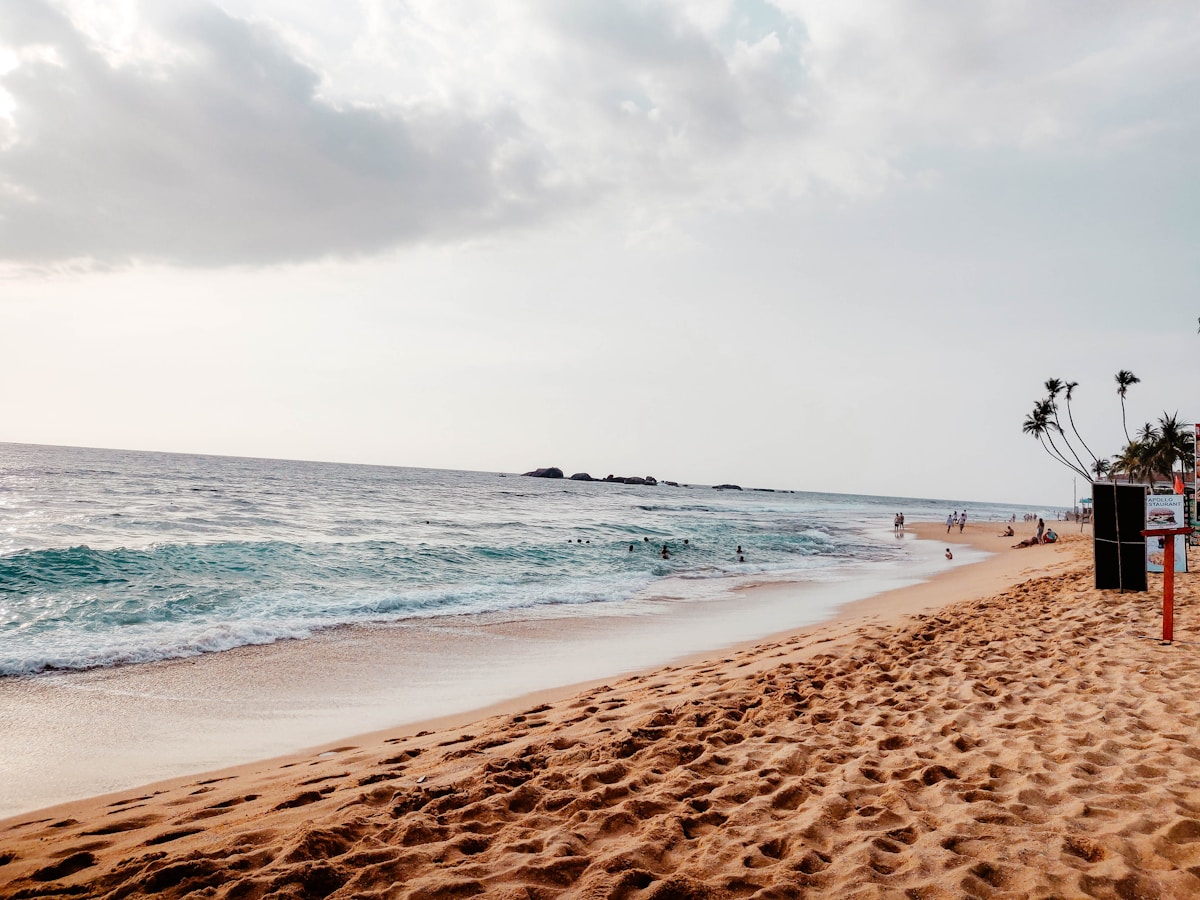
Trincomalee’s beaches are some of the best in Sri Lanka, and almost entirely on the east coast’s own timetable. The dry season runs April to September - the opposite of the west and south coasts - which makes Trincomalee an excellent destination when Galle and Mirissa are being hammered by the southwest monsoon. Water temperatures are warm year-round, typically 28–30°C. Guided tours from Trincomalee covering Pigeon Island and the east coast beaches can be booked in advance.
Nilaveli Beach
Nilaveli is 16km north of Trincomalee town along a straight coastal road, and it is arguably the finest beach on the entire east coast. The water is consistently calm during the dry season, turquoise in the shallows, and clear enough to see the bottom well out past waist depth. The beach is long - several kilometres of sand - with low development and very few crowds even in peak season.
Pigeon Island: The primary draw beyond the beach itself is Pigeon Island National Park, a short boat ride offshore. Boats are available for hire directly on the beach: shared boat around LKR 1,500–2,000 per boat (typically holds 4–6 people), snorkelling gear rented separately for LKR 300–500. There is also a national park entry fee, currently around $15 for foreign nationals.
The reef around Pigeon Island has two notable sections. One consistently hosts blacktip reef sharks - small, shy, and extremely common; they are not a danger but are impressive to swim alongside. The other section has coral formations in better condition than most reefs in Sri Lanka, though there has been bleaching damage. Morning is the best time to go for clearer water and calmer conditions.
Accommodation at Nilaveli: A handful of guesthouses and small resorts run along the beach road. Budget rooms start around $25–35 during peak season; midrange rooms with AC and a sea view run $60–120. Most properties close or reduce service between October and March when conditions deteriorate.
Getting there: Tuk-tuk from Trincomalee town to Nilaveli costs LKR 600–900 one way. Some guesthouses arrange airport or station pickups.
Uppuveli Beach
Uppuveli is 6km north of Trincomalee, sitting between the town and Nilaveli. It is more accessible, more social, and has the widest range of accommodation on the east coast. The beach has a working fishing village character - boats anchor in front of the beachside restaurants, and the morning catch is visible early.
The beach itself is good for swimming in the dry season, though marginally less pristine than Nilaveli. The main draw here is the atmosphere: there is a strip of restaurants and bars along the beach road, and sunset from Uppuveli on a clear evening (late April to August) is excellent.
Accommodation: Uppuveli has the most options. Budget guesthouses from $20 a night, midrange options with AC and gardens from $45–100. Several places are close enough to walk to the beach.
Food and drink: Several beachside restaurants serve fresh seafood, rice and curry, and cold beer. Prices are tourist-market rates - LKR 1,200–3,000 per meal at a sit-down restaurant. Eating further back from the beach brings prices down sharply.
Getting there: Tuk-tuk from Trincomalee town, around LKR 350–500. Regular three-wheelers run this route throughout the day.
Marble Beach
Marble Beach is 19km south of Trincomalee, on the far side of China Bay. This area was historically part of a military zone, which has kept the beach in better condition than most. The sand is white and fine, the water calm and shallow for a good distance out, and there is essentially no tourist infrastructure - no restaurants, no sun beds, no noise.
In theory, the China Bay area requires permission to enter. In practice, this is rarely enforced for beach visitors, though the situation can change. Ask at your accommodation in Trincomalee before making the trip.
Bring everything you need: water, food, sunscreen. There is nowhere to buy anything at the beach. A tuk-tuk from town costs around LKR 700–1,000 return, and you will need to arrange a pickup time.
Foul Point Beach
Foul Point is south of Trincomalee town, in the opposite direction from Uppuveli and Nilaveli. It is a local beach rather than a tourist destination - Sri Lankan families come here on weekends, and the infrastructure is basic. The beach is pleasant enough, the water swimmable in calm conditions, and the setting around the old lighthouse gives it some character.
It is not worth a dedicated trip but is a short tuk-tuk ride if you are curious about what the east coast looks like without the tourist overlay.
Practical Information
Season: All beaches are best April–September. The northeast monsoon from October to March brings rough seas and can make swimming dangerous on the open coast. The lagoon-side beaches are somewhat calmer year-round but less interesting for swimming.
Water temperature: Consistent 28–30°C year-round, occasionally lower in January–February.
Sun protection: The east coast sun is intense from late morning. Apply sunscreen before leaving accommodation, not on the beach. The reflection off white sand accelerates burning.
Rip currents: Less common on the east coast than the west during dry season, but still present at certain points. Watch for warning flags and ask locally before swimming at any unfamiliar stretch.
Search hotels in Trincomalee on Booking.com - compare all options and filter by area, rating, and price.
Planning Your Sri Lanka Trip?
- Book tours & activities in Trincomalee
- Find hotels in Trincomalee
- Travel insurance for Sri Lanka
- Get a Sri Lanka eSIM
- Find flights to Sri Lanka