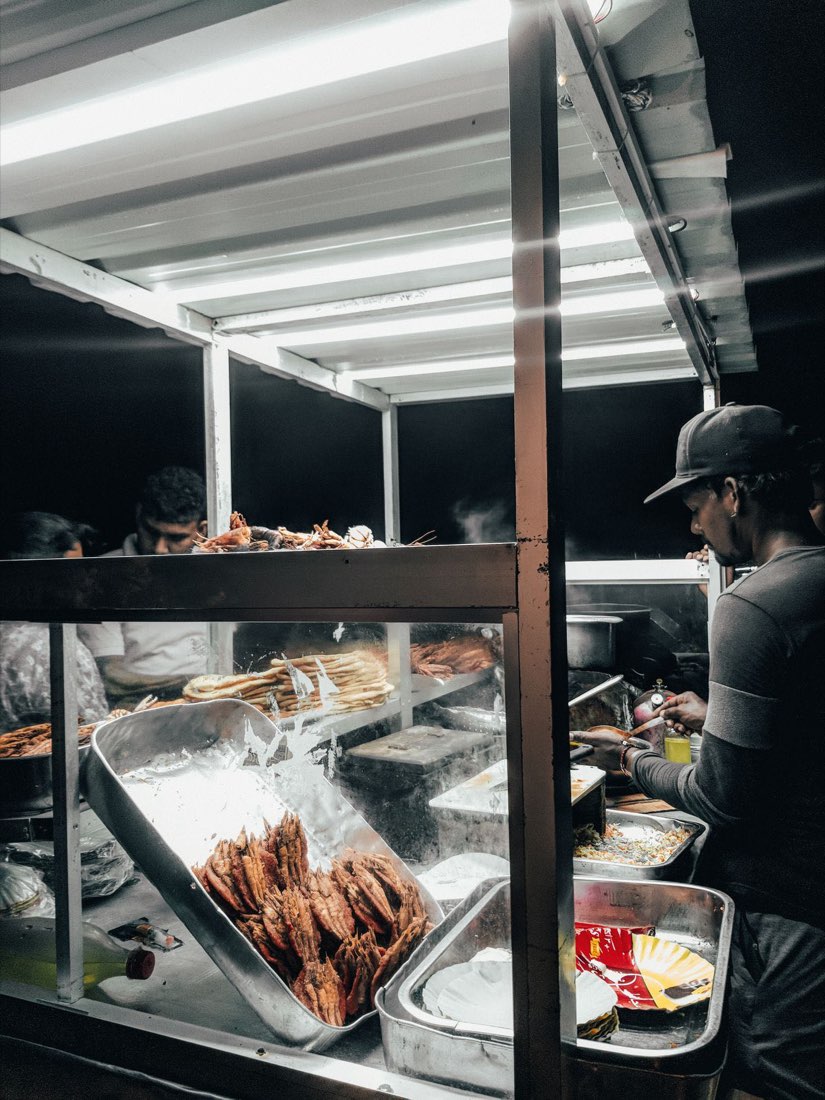
Trincomalee sits on one of the finest natural harbours in Asia, and that geography shows up directly on the plate. The town and the beaches north of it - Nilaveli and Uppuveli - are among the best places in Sri Lanka to eat fresh seafood. The food culture here is shaped by the Tamil community that has lived in the north-east for centuries, producing a style of cooking that is distinct from the Sinhalese dishes of the south: more pungent spicing, heavier use of tamarind, and fish preparations that do not appear further down the coast. For activities to pair with a day on the east coast, guided tours around Trincomalee cover Pigeon Island, Koneswaram Temple, and the harbour.
What to Eat in Trincomalee
Crab Curry: the east coast crab curry is different from the Ministry of Crab version in Colombo - slower-cooked, more tamarind-forward, served with rice or string hoppers. The crabs come from the lagoon and the harbour and are genuinely fresh. Order it where you can.
Prawn Curry: king prawns from the Trincomalee lagoon are excellent. The Tamil-style prawn curry uses dried chillies, curry leaves, and a tomato-tamarind base. Available at most beach restaurants during the season (April–September is the main fishing period).
Lagoon Fish: the lagoon catches include mullet, snapper, and sea bass. Ask what was caught that morning - any restaurant worth eating at will know.
Mutton Dishes: Tamil-influenced mutton preparations are common in the north-east. Mutton curry with rice, and mutton-filled roti from street stalls, are worth seeking out.
String Hoppers: the north-east Tamil breakfast standard - rice-flour noodle discs served with coconut milk and a dhal or vegetable curry. Available from early morning at local tea shops.
Where to Eat in Trincomalee
Nilaveli Beach Strip: the 10km stretch of beach north of Trincomalee town has a concentration of small restaurants attached to guesthouses and beach huts. Most serve fresh grilled fish, prawn curry, and rice. Quality varies but the freshness of the catch compensates for inconsistent cooking. Walk along the beach and pick somewhere that looks busy with locals.
Uppuveli Beach Restaurants: closer to town, Uppuveli has a slightly more developed eating scene with a few standalone restaurants. The waterfront spots here tend to have wider menus and sit-down service. Several are popular with the Trincomalee officer community, which is a reasonable signal of consistent food.
Trincomalee Town - Local Canteens: the town itself has a good number of rice and curry spots around the market area and bus stand. These serve Tamil-style lunches - rice with several accompaniments - at LKR 300–600. They fill up between noon and 1:30pm. No English signage, but pointing at what others are eating works fine.
Seafood Grills near the Harbour: the area near the fish landing jetty has informal grills that cook the morning’s catch to order. This is not a formal restaurant district - more a cluster of stalls - but the fish is as fresh as it gets and prices are low.
Breakfast in Trincomalee
The north-east Tamil breakfast culture is one of the highlights of eating in this area. Idli (steamed rice cakes) and vadai (fried lentil doughnuts) are served from early morning at small tea shops throughout the town, accompanied by coconut chutney and sambar. String hoppers with a thin dhal are the Trincomalee standard for locals.
The tea shops around the central market open from around 6am. A full Tamil breakfast at one of these costs LKR 200–400 as of 2026. Bring cash - no card facilities at any of these spots.
At the beach areas, guesthouses typically provide breakfast included in the room rate. The quality varies from instant coffee and toast to a proper Sri Lankan spread; check when you book.
Practical Notes
- The fishing season significantly affects seafood availability; April to September is peak; off-season, menus are limited
- Most beach restaurants are cash only; carry rupees
- Crab is sold by weight in some places - confirm the price before ordering
- Vegetarian options are available but the food culture here is protein-heavy; be specific about preferences
- Alcohol is available at some beach restaurants but not at the town canteens
- The north-east curfew history has shaped the town’s restaurant infrastructure - many places close by 9pm, earlier than in the south; plan dinner before 7:30pm
- Tuk-tuks between Nilaveli beach and Trincomalee town cost around LKR 400–600 one way
Take a Guided Food Tour of Trincomalee
Trincomalee’s Tamil food culture is genuinely different from the Sri Lankan food most visitors encounter in Colombo, Galle, or the hill country - the tamarind-forward seafood preparations, the morning hopper culture, and the lagoon seafood market are specific to the north-east. A food and culture tour in Trincomalee typically combines a harbour visit with a guided introduction to Tamil tea shop breakfast culture and a crab curry lunch at one of the waterfront spots. It is the fastest way to navigate a food scene where there are no English menus and the best spots are not on any list.
Planning Your Sri Lanka Trip?
- Book tours & activities in Trincomalee
- Find hotels in Trincomalee
- Travel insurance for Sri Lanka
- Get a Sri Lanka eSIM
- Find flights to Sri Lanka