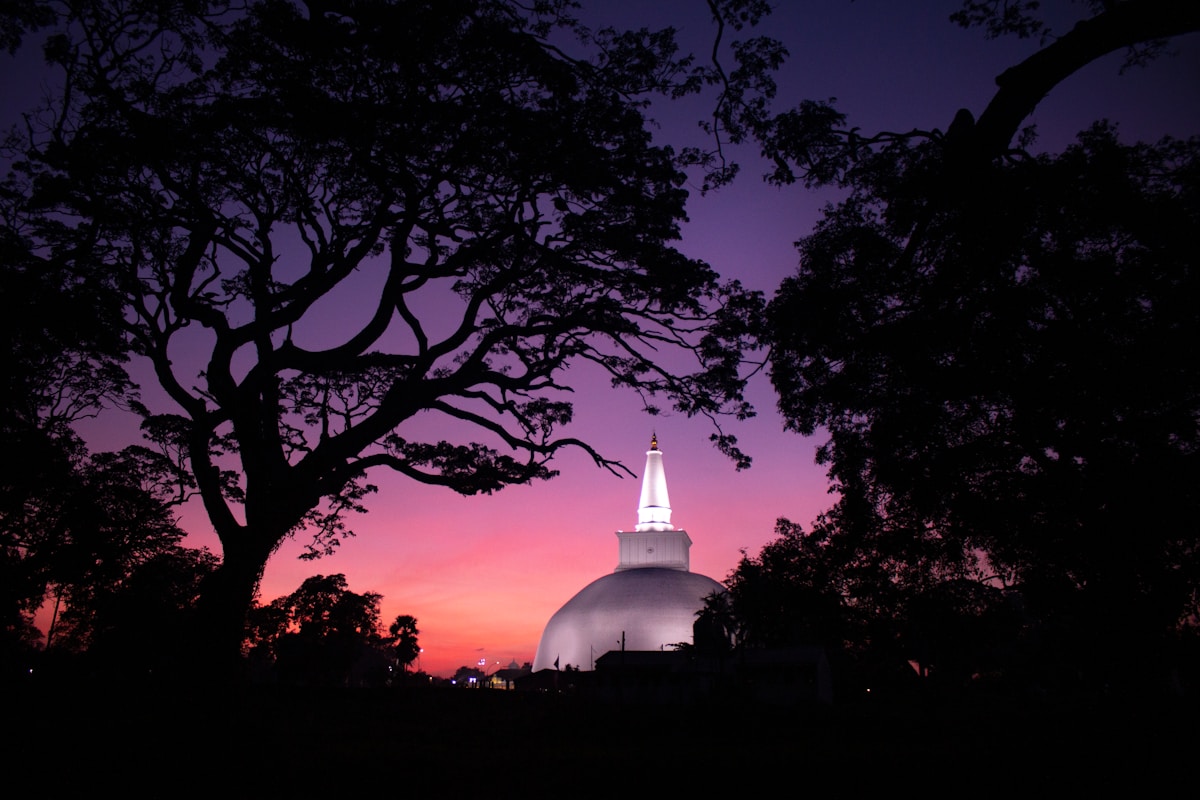
Sri Lanka’s Cultural Triangle covers three ancient capitals - Anuradhapura, Polonnaruwa, and Sigiriya - plus the royal city of Kandy. Combined with the hill country around Nuwara Eliya and Ella, this 10-night route makes sense for travellers who want depth over beaches. You’ll cycle ruins that date to the 3rd century BCE, climb rock fortresses, and ride one of the world’s great railway journeys.
Night 1: Colombo (Arrival)
Arrive at Bandaranaike International Airport and transfer to Colombo (45 minutes) or Negombo (15 minutes) for an overnight stay before heading north. If you arrive with a full afternoon, the Gangaramaya Temple and a walk along Galle Face Green are worthwhile. Dinner in Pettah or the Fort district. Search hotels in Colombo on Booking.com
Nights 2–3: Anuradhapura
Train from Colombo Fort to Anuradhapura takes 4–4.5 hours and costs LKR 300–800 depending on class. Buses take a similar time. The town is the base for exploring Sri Lanka’s oldest and largest ancient city, a UNESCO World Heritage Site continuously inhabited from the 4th century BCE.
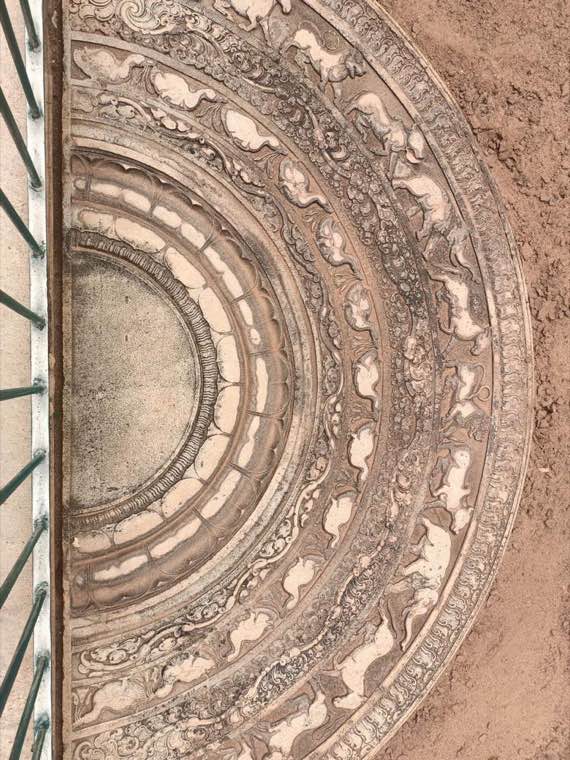 A carved moonstone, a signature detail of Anuradhapura temples.
Day 1 in Anuradhapura: Start at Sri Maha Bodhi - the sacred fig tree grown from a cutting of the Bodh Gaya tree under which the Buddha attained enlightenment, brought to Sri Lanka in 249 BCE by Princess Sanghamitta. A guided Anuradhapura tour is worth considering for day one - the history of these sites is dense and context from a knowledgeable guide transforms what you’re looking at. It is documented as the oldest living tree in the world with a continuous historical record. The site is an active pilgrimage centre; arrive before 8am to see worshippers laying flowers in the early morning calm. White dress is expected (or sarongs available for hire at the gate). Entry: LKR 200 for foreigners (separate from the main site ticket).
Walk or cycle to the Ruwanwelisaya Stupa - the great white dome built by King Dutugamunu in the 2nd century BCE and restored to 103m height. Pilgrims circumambulate clockwise with flowers and incense in a ritual that has continued without interruption for over 2,000 years. The white plaster and gold pinnacle are striking up close. Entry included in the site ticket.
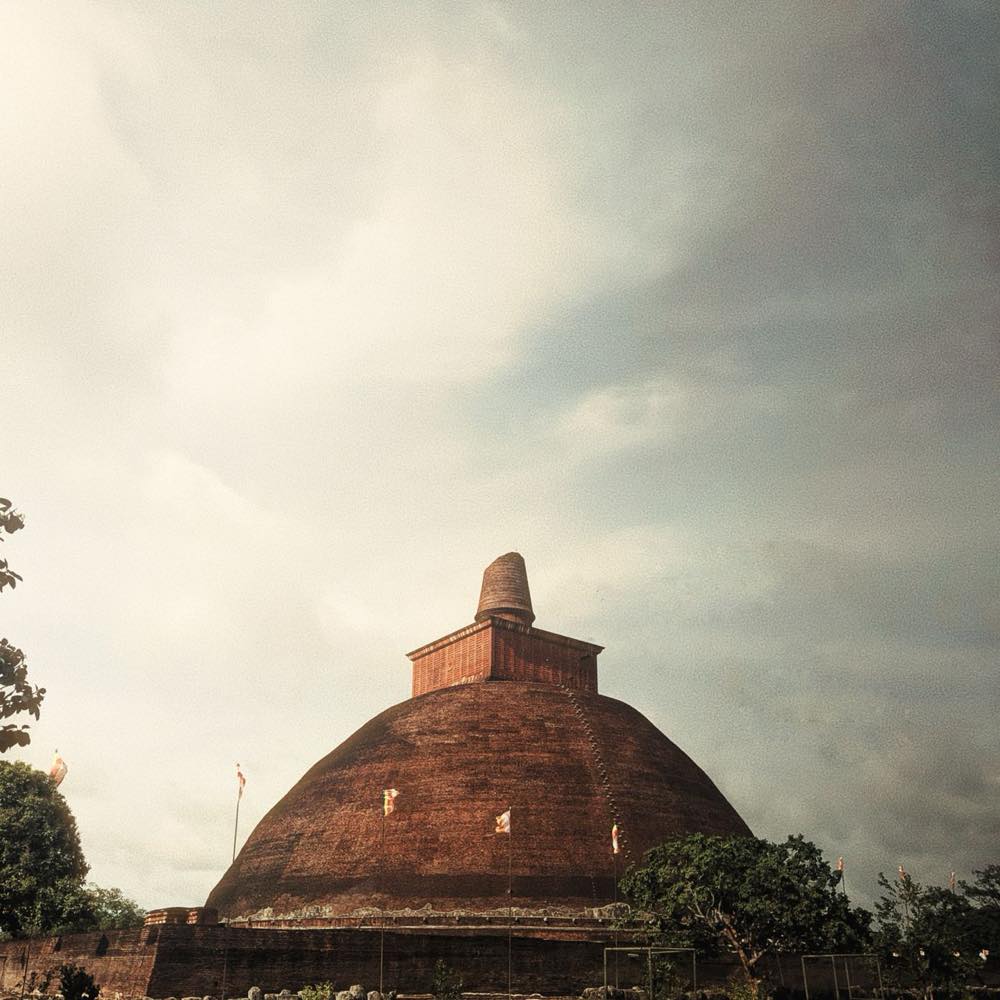 Jetavanaramaya, built of brick and among the largest stupas in the world.
Day 2 in Anuradhapura: The Jetavanaramaya - originally 122m high, it was the third tallest structure in the ancient world after two Egyptian pyramids. Today the red-brick ruins stand around 70m, the upper section eroded over centuries, but the scale is still remarkable. The on-site Jetavana Museum houses excavated sculpture and artefacts in good context. The Abhayagiri Monastery complex to the north is vast - cover it by bicycle, which takes 2 hours at a comfortable pace.
In the afternoon, take a tuk-tuk 13km east to Mihintale - the hill where Buddhism was introduced to Sri Lanka in 247 BCE when the monk Mahinda (son of Emperor Ashoka) met King Devanampiya Tissa. Climb 1,840 steps to the summit dagoba. The site is free and functions as a live pilgrimage destination. Allow 2 hours.
Bicycle hire at the entrance to the ancient city: LKR 200–400 per day. Essential for covering the 8km spread of monuments without a vehicle. Anuradhapura site ticket for foreigners: $25 (covers all major monuments for one day; two-day access requires buying again). Search hotels in Anuradhapura on Booking.com
Nights 4–5: Polonnaruwa
Bus from Anuradhapura to Polonnaruwa takes approximately 2 hours (LKR 150). Polonnaruwa was Sri Lanka’s second major royal capital (10th–13th century CE) and is far more compact than Anuradhapura - the core monuments are concentrated within a few square kilometres and can be cycled in a single day.
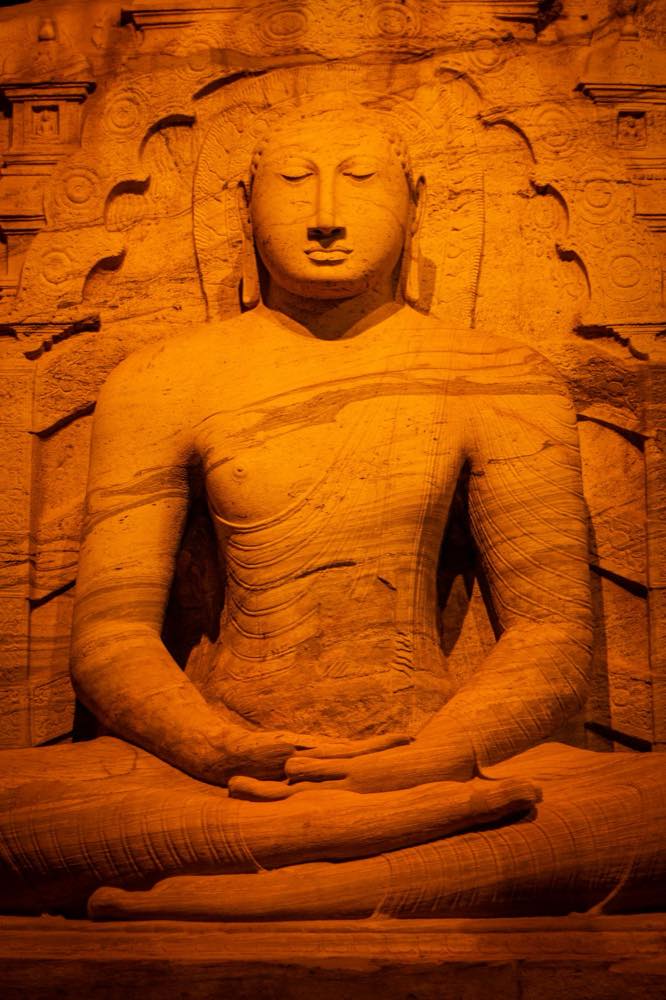 The seated Buddha at Gal Vihara.
Polonnaruwa Museum first - entry included in the site ticket; visit before the ruins to understand what you’re looking at. Well-curated collection of recovered sculpture and reconstructed timelines.
Royal Palace Complex near the ticket office: foundations and columns of King Parakramabahu I’s 7-storey palace, the audience hall with its carved elephant base, and the Kumara Pokuna (royal bath). Good starting point.
Vatadage: the most refined structure in Polonnaruwa - a circular relic house with concentric platforms, four Buddha figures facing the cardinal directions, beautifully carved moonstone entrance steps, and guard-stone figures. A short walk from the palace complex.
Gal Vihara: the high point of the site - four rock-cut Buddha figures carved from a single granite face. For context on the medieval kings who built these structures, book a Polonnaruwa guided tour before arriving. The standing figure (15m) is in a meditative posture; the reclining figure (15m) shows the parinirvana, the Buddha entering final nirvana. The detail of the carving is impressive close up; a rope barrier keeps visitors back. Remove shoes at the barrier. Arrive before 9am to beat tour groups.
Lankathilaka Image House: 17m-high roofless brick shrine with a headless standing Buddha inside and elaborate carved walls. The rooflessness is from age, not design - it was originally 7 storeys.
Rankoth Vihara (55m high, 4th largest stupa in Sri Lanka) and Parakrama Samudra (the great irrigation lake, 2,590 hectares, built by Parakramabahu I and still functioning today) complete the day.
Site ticket: $25. Bicycle hire at the entrance: LKR 200–300. Search hotels in Polonnaruwa on Booking.com
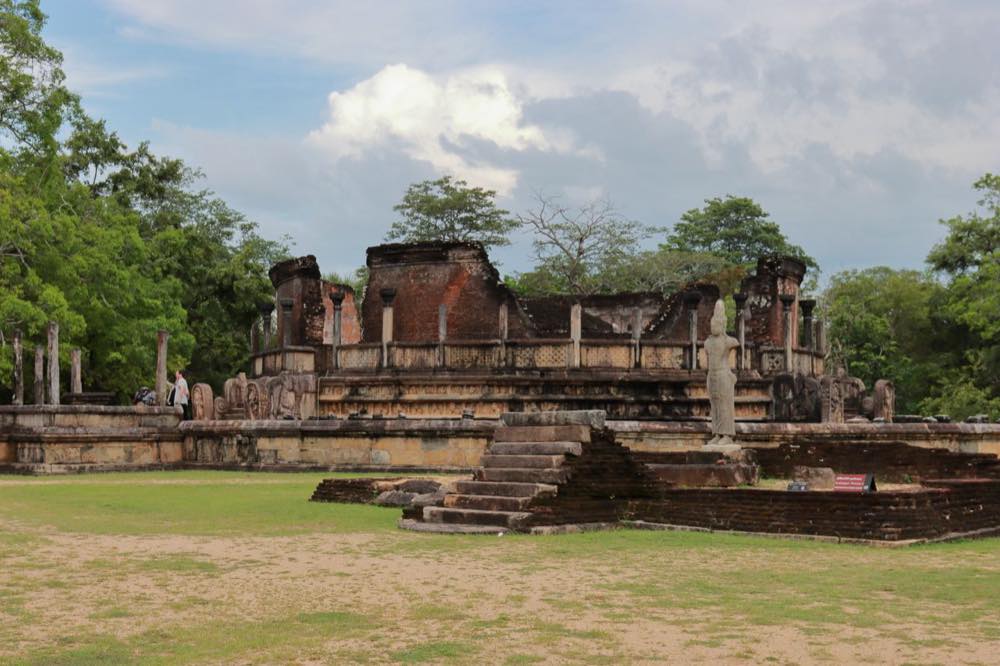 Temple ruins in the ancient city of Polonnaruwa.
Night 6: Sigiriya
Drive from Polonnaruwa to Sigiriya (90 minutes by car or tuk-tuk; LKR 3,000–5,000 by tuk-tuk). Arrive in the afternoon and climb Pidurangala Rock - at 667m, it sits beside Sigiriya Rock and offers the best exterior view of the fortress from above. The scramble takes 45 minutes and the summit has a reclining Buddha carved from granite. Entry: LKR 500. Go up at 4pm for late-afternoon light.
Night 7: Sigiriya
The Sigiriya Rock Fortress deserves an early start - be at the gate by 7am. The 5th-century palace-fortress built by King Kassapa I sits on top of a 200m volcanic rock plug. Book a Sigiriya tour to cover the rock fortress and Pidurangala in a single guided day. The climb passes the Mirror Wall (once polished enough to reflect the king’s image; now covered with centuries of inscribed graffiti-poems) and the Sigiriya Frescoes - 22 surviving paintings of women in a sheltered rock shelter, originally part of a much larger gallery. The summit holds the outline of the Royal Palace, moats, gardens, and sweeping views of the forest plains.
Entry: $35 (included in the Cultural Triangle combined ticket if purchased). The combined ticket ($50 at time of writing) covers Sigiriya, Polonnaruwa, and Anuradhapura - check current pricing at the Cultural Triangle office in Sigiriya or Kandy.
Afternoon: Minneriya National Park jeep safari (20km from Sigiriya). Jeep hire including park entry and driver runs $40–60 per person. The elephant gathering (July–September) draws up to 300 animals to the reservoir; smaller herds are present year-round. Search hotels in Sigiriya on Booking.com
Night 8: Kandy
Drive from Sigiriya to Kandy (approximately 2 hours by car). The road passes through spice gardens and rubber plantations before descending into Kandy.
Temple of the Sacred Tooth Relic (Sri Dalada Maligawa) - the most revered Buddhist site in Sri Lanka. The golden-roofed temple houses the tooth relic of the Buddha in a series of golden caskets; the puja ceremony at 6:30pm is the most attended of the day. Entry: LKR 1,500. The Kandyan cultural dance show at the arts association hall near the lake runs nightly at 5:30pm (LKR 1,000) - a good introduction to the classical Kandyan dance form.
Peradeniya Royal Botanical Gardens (6km from Kandy, entry LKR 1,500): 60 hectares with a famous avenue of royal palms, an orchid house, and a collection of medicinal plants that gives useful context for the spice gardens you may visit.
Night 9: Kandy (Day Trip)
Option A - Knuckles Mountain Range (35km east): a UNESCO-listed biosphere reserve of montane forest, cloud forest, and endemic species; guided day hikes from Kandy run $30–50 per person including transport and guide; the Knuckles massif is visible on a clear day from Kandy.
Option B - Matale spice gardens (25km north): short tour of a working spice garden covering cinnamon, nutmeg, cardamom, cloves, and pepper; typically free to enter with purchases expected. Combine with a visit to the Aluvihara Rock Temple (carvings dating from the 1st century BCE, where the Pali Canon was first written down on palm leaves).
Evening: Kandyan dance show if you missed it the first night. Search hotels in Kandy on Booking.com
Night 10: Nuwara Eliya
Morning drive from Kandy to Nuwara Eliya (2 hours, or take the slow train from Kandy to Nanu Oya - 5 hours, highly scenic). The train journey is the attraction itself: the line climbs through tea estates and cloud forest, crossing viaducts with vertiginous drops into the valley below.
In Nuwara Eliya, visit Pedro Tea Estate (factory tour, LKR 500) and walk around Lake Gregory in the afternoon. The town has a peculiar colonial character - the Hill Club, the Grand Hotel, and the mock-Tudor post office all date from British Ceylon.
Book ahead for peak season (April - Sinhala/Tamil New Year - prices triple; December–March - popular with both local and international visitors). Evening temperatures drop to 8–10°C; the Hill Club lights its fireplace nightly through the cold months. Search hotels in Nuwara Eliya on Booking.com
Night 11: Ella
Take the train from Nanu Oya (Nuwara Eliya’s nearest station, 10km by tuk-tuk) to Ella - approximately 2.5 hours through some of the most dramatic tea-estate scenery on the island. This section of the railway is slower than the Kandy–Ella leg but equally beautiful.
Afternoon in Ella: walk the main street, visit the Nine Arches Bridge (30-minute walk), and climb part of Little Adam’s Peak for the valley views. See our Ella guide for full coverage of the town. Search hotels in Ella on Booking.com
Reading Before You Go
The ancient cities of Sri Lanka are better experienced with background knowledge. The Mahavamsa - the 5th-century Pali chronicle of Sri Lankan history - is the primary source for the history of Anuradhapura and Polonnaruwa. It’s available in English translation. For a more accessible introduction, Romila Thapar’s “Aśoka and the Decline of the Mauryas” gives context for the spread of Buddhism to Sri Lanka. The UNESCO World Heritage listing documents for all three sites are freely available online and have good summaries.
Managing Without a Car
This route is doable without a private hire car but requires more planning:
- Colombo → Anuradhapura: train or bus (direct)
- Anuradhapura → Polonnaruwa: bus (2 hrs, LKR 150)
- Polonnaruwa → Sigiriya: no direct bus - take a bus toward Habarana and a tuk-tuk from there
- Sigiriya → Kandy: bus via Dambulla (2 hrs, LKR 200)
- Kandy → Nuwara Eliya: bus or train
- Nuwara Eliya → Ella: train from Nanu Oya
Within each site, bicycle hire is available and is the recommended way to get around. Tuk-tuks for day trips from each base town are straightforward to negotiate - agree prices beforehand.
Cities in This Itinerary
- Anuradhapura Travel Guide
- Colombo Travel Guide
- Ella Travel Guide
- Kandy Travel Guide
- Nuwara Eliya Travel Guide
- Polonnaruwa Travel Guide
- Sigiriya Travel Guide
Book Your Trip
Flights - search and compare on Aviasales · flights guide eSIM - stay connected with Airalo · eSIM guide Travel insurance - get covered with VisitorsCoverage · insurance guide Airport transfers - book with Kiwitaxi · airport guide Car rental - compare with GetRentaCar Tours and activities - browse GetYourGuide Hotels - compare prices on Search hotels in Sri Lanka on Booking.com