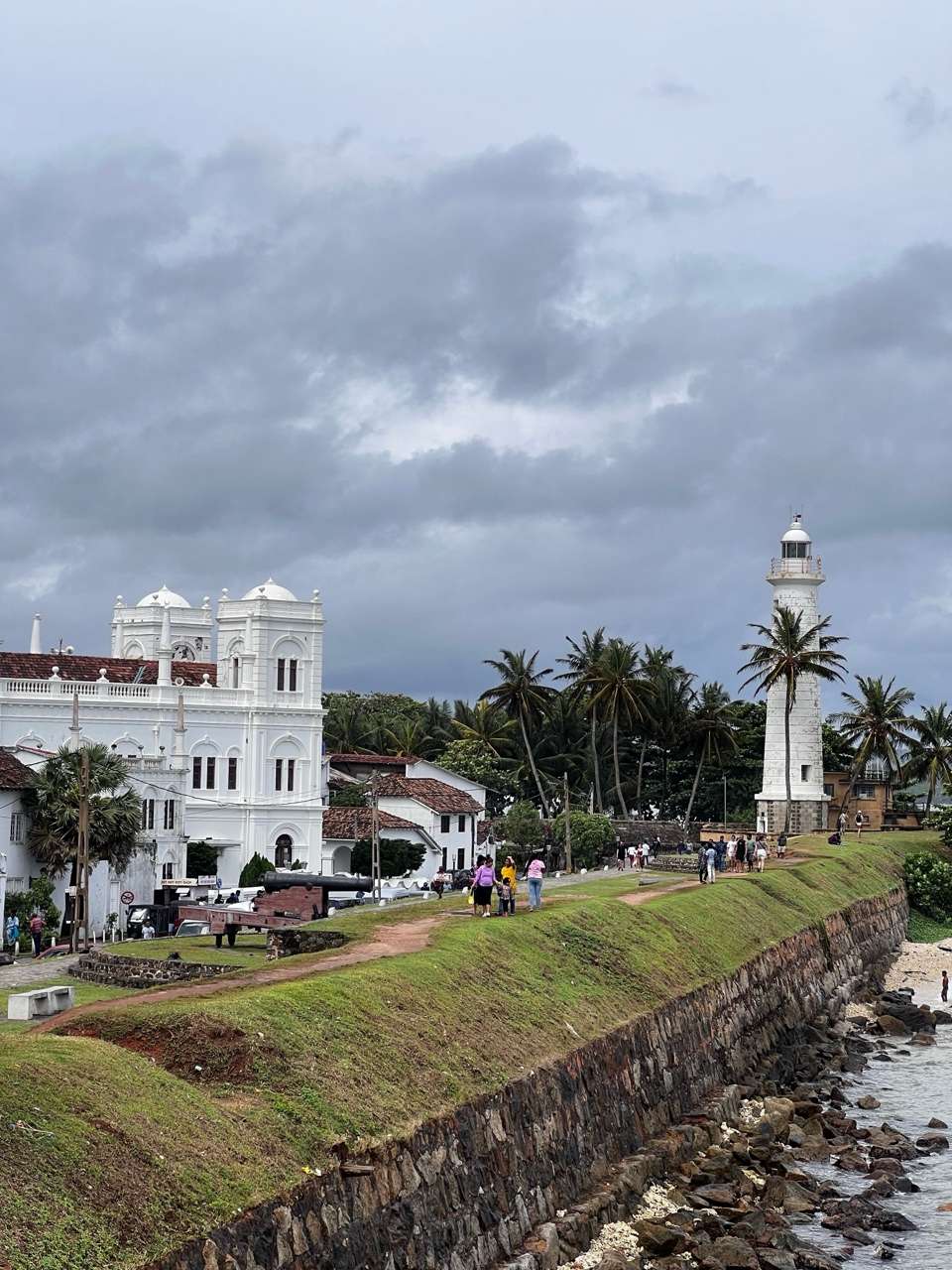
Galle is the finest colonial town in Sri Lanka and one of the best-preserved Dutch fortifications in Asia. The fort - a UNESCO World Heritage Site - was first built by the Portuguese in 1589 and substantially expanded by the Dutch in 1663 to protect the most important harbour on the Indian Ocean spice route. The 36-hectare walled city inside still functions as a living neighbourhood: residents occupy the Dutch-era townhouses, boutique hotels occupy the merchant warehouses, and the rampart walk above the Indian Ocean is one of the most satisfying evening walks in Sri Lanka.
Beyond the fort itself, Galle is the best base for the south coast: Mirissa whale watching to the east, the Madu River mangroves to the north, stilt fishermen at Koggala, and the beaches of Unawatuna and Jungle Beach within tuk-tuk distance. This guide covers the tours worth booking from Galle, with verified GYG links throughout.
Galle Fort Walking Tours
A walking tour of Galle Fort covers 400 years of layered occupation in roughly 2-3 hours. The full circuit of the ramparts is 1.4 km and takes 30-45 minutes at a comfortable pace; the interior streets add another hour or more depending on how deeply you explore. Key stops include the Dutch Reformed Church (1755), the historic jail (now a visitor centre), the lighthouse (1938, built on the site of the original Portuguese watchtower), and the Main Gate - the only landward entrance to the fort, rebuilt by the British in 1873.
A guide makes a significant difference to the experience. The fort’s architectural layers are subtle - Portuguese-era masonry underneath Dutch brick underneath British additions - and the street grid itself tells the story of the Dutch urban planning system that replaced the organic Portuguese layout. Without a guide, most visitors walk the ramparts, take photos, and leave without understanding what they have seen.
-
Galle Fort Walking Tour - a 2-hour guided walk through Galle Fort’s streets and ramparts, covering the Dutch and Portuguese history and the fort’s role in the Indian Ocean spice trade (from approximately $20 per person)
-
Galle Fort Walking Tour with Local Guide and Lunch - a 3-hour extended tour including lunch at a locally-run restaurant inside the fort, with additional stops at the gem museum and the Dutch hospital ruins (from approximately $35 per person)
Both tours operate in small groups (4-8 people). The version with lunch gives you 45 minutes more inside the fort and includes a meal at one of the better restaurants in the interior - a worthwhile addition if you are spending a full day in Galle.
Sunset Rampart Walk
The evening rampart walk - the western facing section from Moon Bastion to Triton Bastion - catches the best light between 5:30 and 6:30 PM during the November-April dry season. The Indian Ocean horizon is unobstructed, and the rampart wall itself glows warm orange in the late sun. It is the most photographed stretch of the fort and busy during peak season (December-March); arrive by 5 PM to secure space on the bastion overlooks.
- Galle: Dutch Fort Sunset Walking Tour with Local Stories - a 90-minute guided sunset walk along the western ramparts of Galle Fort, with local storytelling about the fort’s trading history and the families who still live within the walls (from approximately $18 per person)
The sunset tour starts at 4:30 PM, allowing time to walk through the interior streets before reaching the western ramparts for the golden hour. The guide focuses on the living history of the fort rather than the formal colonial narrative - who actually lived here, what trade flowed through, and why Galle declined after the British developed Colombo harbour.
Whale Watching from Mirissa
Mirissa, 40 km east of Galle, is one of the premier whale watching locations in the Indian Ocean. Blue whales - the largest animals on earth - pass through the Mirissa channel from November to April, following the seasonal migration route along the southern coast of Sri Lanka. Sperm whales are present year-round; spinner dolphins are seen on most trips.
Tours depart at 6:30 AM from Mirissa harbour and return by noon. The journey to whale territory takes approximately 30-45 minutes. Blue whale sightings are reported on roughly 70-80% of trips during the peak January-March window; the rate drops outside the core season. Most operators offer a complimentary re-booking on the next available day if no whales are seen, though this is not universal - confirm the policy before booking.
- Mirissa: Whale Watching Tour - a 5-hour morning trip from Mirissa harbour with the chance to see blue whales, sperm whales, and spinner dolphins; breakfast included (from approximately $50 per person)
From Galle, the most practical approach is to take a tuk-tuk or taxi to Mirissa the previous evening, stay overnight (accommodation in Mirissa runs from approximately $30-80 per room per night), and depart with the 6:30 AM boat. Returning to Galle after the tour gives you the afternoon for the fort.
Alternatively, Mirissa is accessible from Galle by the coastal train (the line continues east from Galle to Matara, passing Weligama and Mirissa) - the train takes approximately 45-50 minutes and costs approximately LKR 50-80 for a second-class seat. Note that the morning departure from Galle to reach Mirissa by 6 AM requires the very first train, which may not be practical depending on where you are staying.
Madu River and Mangrove Boat Tour
The Madu River empties into the Maduganga Lagoon near Balapitiya, 45 km north of Galle. The lagoon system covers approximately 900 hectares and supports a network of mangrove islands, fish farms, and two Buddhist temples - one built on a tiny rock island in the middle of the lagoon. A guided boat tour navigates through the mangrove channels, stops at a cinnamon island where the guide demonstrates the harvesting and peeling process, and visits the fish farms where carp and tilapia are raised in floating cages.
The trip takes 1.5-2 hours. Boats seat 4-8 people; private boat hire is approximately $15-20 USD for the vehicle. The best light for photography is morning (8-10 AM) when the water is calm and the mangrove canopy catches the early sun. Browse Galle tours and activities for current Madu River boat tour bookings.
The Madu River tour pairs naturally with a Galle Fort visit as a full-day combination: Madu River in the morning, lunch in the fort, and the rampart walk in the late afternoon.
Stilt Fishermen at Koggala
The stilt fishermen of the south coast - fishing from poles planted in the shallows, a technique unique to Sri Lanka - are concentrated between Ahangama and Koggala, approximately 10-15 km east of Galle. The poles (called stilt rods) are used during periods of tidal movement when small catches of fish pass close to shore. The fishermen work in shifts at their family-owned poles, which are passed down across generations.
This is a working practice, not a tourist performance - though individual fishermen will often pose for photographs in exchange for a small payment (typically LKR 500-1,000). The best viewing is from the A2 coastal road between Ahangama and Koggala during the morning low tide, or from a southbound tour vehicle. Most full-day tours from Colombo or Galle include a stop here; standalone tuk-tuk hire from Galle to the stilt fishing area costs approximately LKR 1,500-2,000 return.
Unawatuna and Jungle Beach
Unawatuna is 6 km east of Galle Fort and is the closest swimmable beach to the town. The bay is sheltered by a reef on its southern side, which calms the water except during the southwest monsoon (May-September). The beach is 500 metres long and backed by a strip of guesthouses, restaurants, and dive shops.
Jungle Beach, a smaller cove accessible via a 15-minute walk from the eastern end of Unawatuna Bay, is the better choice for snorkelling - the water is clearer, there is less boat traffic, and the reef that marks the headland has live coral and reef fish. Entry to Jungle Beach requires a short scramble over rocks or a tuk-tuk via the access road from the main highway.
Snorkelling equipment can be hired on Unawatuna beach (approximately LKR 500-800 per day) or from a handful of operators at Jungle Beach. Guided snorkelling trips are available through dive shops in Unawatuna; browse Galle tours and activities for current listings.
Sea Turtle Conservation
Kosgoda, 60 km north of Galle, is home to one of Sri Lanka’s oldest sea turtle hatcheries. The Kosgoda Sea Turtle Conservation Project has operated since 1981 and protects nesting sites on a stretch of beach used by five species of sea turtle: loggerhead, green, hawksbill, olive ridley, and leatherhead. The conservation centre operates a visitor programme where guests can learn about the nesting cycle, release baby turtles (hatchlings), and see adult turtles under rehabilitation. Entry is approximately $3-5 USD (as of 2026) and the centre is open daily.
Kosgoda is most easily visited as part of a tour vehicle stopping en route between Colombo and Galle, or as a half-day excursion from Galle. Tuk-tuk hire from Galle is impractical given the distance; a shared taxi or tour vehicle is the better option.
Practical Notes
Book the Galle Fort walking tour a day ahead during peak season (December-March) - small group sizes mean morning slots fill quickly when multiple cruise ships are in port. The sunset tour books out faster than the morning option during January-February.
Whale watching from Mirissa books 3-5 days ahead at the peak of the season (January-March). The boat size is capped at approximately 50-60 passengers; availability drops fast around full moon weekends when seas are particularly calm.
The Madu River boat tour can generally be booked on the day, except during public holidays when the area draws large domestic visitor crowds.
Tuk-tuk hire in Galle is the most flexible way to combine sites on the south coast - negotiate a rate for a full day (approximately LKR 3,000-5,000 including petrol) rather than per-trip to cover Unawatuna, Jungle Beach, Koggala stilt fishermen, and a return to the fort.
Most visitors combine these tours with a night or two based in the Fort itself - Hotels in Galle range from boutique guesthouses inside the ramparts to resort hotels along the Unawatuna stretch.
Browse the full range of Galle tours and activities or explore all Sri Lanka tours.