Jaffna’s history is long, complex, and in places very recent and painful. Understanding it changes how you experience the city. This is not background reading - it is context that explains everything from the architecture of the fort to why the library matters to why the war started and how it ended. Guided cultural and historical tours of Jaffna provide on-the-ground context that enriches a visit to the fort, the library, and the temple sites.
The Jaffna Kingdom (1215–1624)
The Jaffna Kingdom was a Tamil Hindu polity that controlled the northern tip of Sri Lanka and at various points exercised influence over portions of the Indian coast. At its height it was one of the most significant political entities on the island, engaging in trade, warfare, and diplomacy with the Sinhalese kingdoms of the south and with south Indian powers across the Palk Strait.
The kingdom had its own cultural and artistic traditions, its own literature in Tamil, and its own temple architecture. The Nallur Kandaswamy Kovil was the royal temple of the Jaffna kings - its significance is rooted in this royal patronage as much as in the religious tradition.
The kingdom began to fragment under internal conflict in the 15th century and was progressively weakened before the Portuguese arrived.
Portuguese Conquest (1624)
The Portuguese established trading relationships with the coast of Sri Lanka from the early 16th century. Their conquest of the Jaffna Kingdom in 1624 was a violent military campaign. The last Jaffna king, Cankili II, was captured and executed. The Portuguese then conducted a systematic campaign of forced religious conversion in the Tamil north - burning temples, destroying sacred objects, and compelling conversion to Catholicism.
The legacy of this period is visible today in the Tamil Catholic community of the north: the St Mary’s Cathedral and the Madu Church in Mannar both reflect this forced conversion history. Jaffna’s Tamil population today is predominantly Hindu, but a significant Catholic minority exists, a direct consequence of the Portuguese occupation.
Dutch East India Company (1658–1796)
The Dutch East India Company defeated the Portuguese and took control of Jaffna in 1658. The Dutch period was commercially driven rather than religiously motivated - they were less interested in conversion and more in trade and efficient administration.
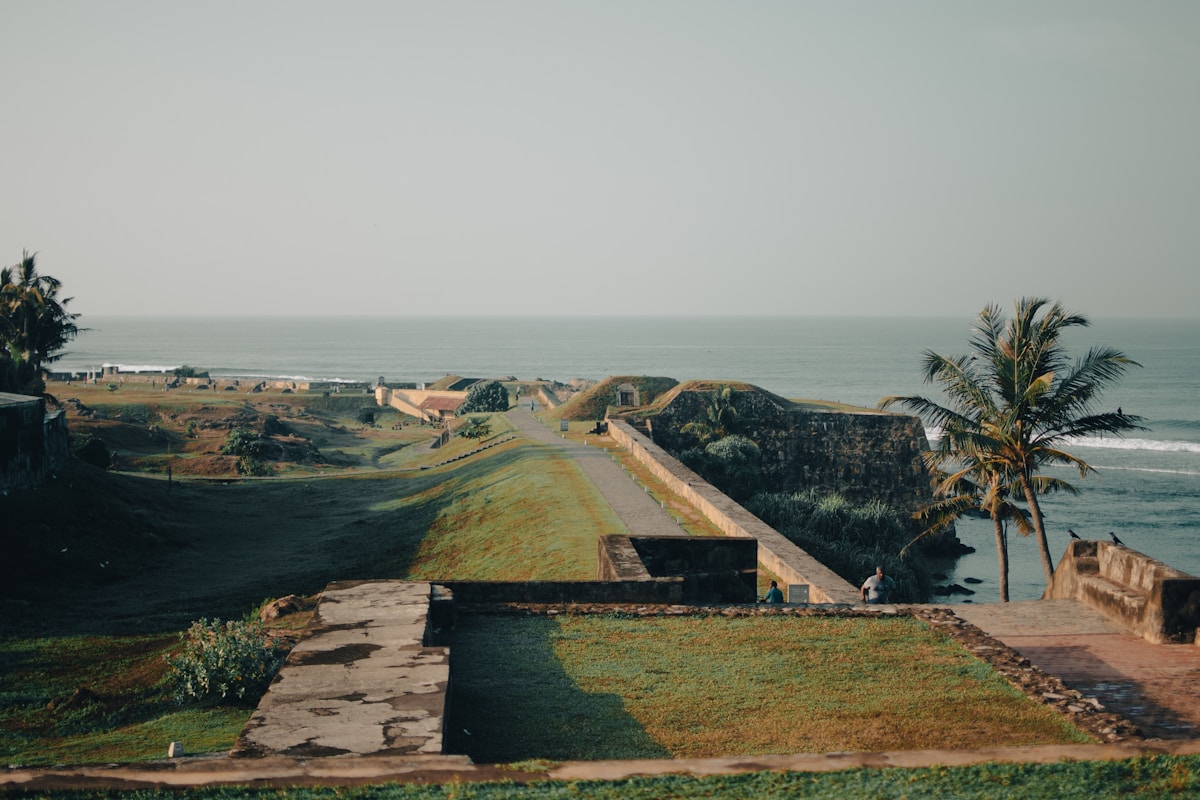
The Dutch built the Jaffna Fort (1680) and expanded the canal system to facilitate movement of goods across the peninsula’s lagoons. The administrative and engineering legacy of the Dutch period is still visible in the fort’s construction and in some of the waterway infrastructure.
British Colonial Period (1796–1948)
The British took Jaffna from the Dutch in 1796 as part of the Napoleonic Wars’ effects on the Dutch colonial empire. Under British rule, Jaffna underwent a transformation that would have lasting and ultimately catastrophic consequences.
American Protestant missionaries, arriving in the 1820s, established English-medium schools throughout the Jaffna Peninsula. This gave the Tamil population of the north disproportionate access to English education at a time when English was the key to employment in the colonial civil service. Jaffna Tamils entered the administrative, legal, and professional classes in numbers well beyond their proportion of the total population. This created economic advancement and social aspiration, but it also generated resentment.
When Sri Lanka (then Ceylon) gained independence in 1948, the Tamil professional class found itself in a country where political power would increasingly belong to the Sinhalese majority - and where policies would be designed to redress what some saw as colonial-era Tamil advantage.
Independence and Ethnic Tensions (1948–1983)
The postwar years brought progressive deterioration in relations between the Sinhalese majority and the Tamil minority. The Official Language Act of 1956 - the “Sinhala Only” act - replaced English with Sinhala as the sole official language, effectively excluding Tamil speakers from civil service employment. Tamil political parties protested without effect. University entrance quotas introduced in the 1970s reduced Tamil access to higher education, which Jaffna Tamils had used to maintain professional and economic status.
By the late 1970s, armed Tamil militant groups had emerged, the largest and most organised being the Liberation Tigers of Tamil Eelam (LTTE). Their goal was an independent Tamil homeland - Eelam - in the north and east of the island.
The Jaffna Library Burning (1981)
In June 1981, during local elections in Jaffna, Sinhalese mobs - including, according to multiple accounts, Sri Lankan police officers and government politicians - attacked Tamil areas of the city. The Jaffna Public Library was set on fire and burned for two days. Approximately 97,000 books and manuscripts were destroyed, including irreplaceable collections of Tamil literature, palm-leaf manuscripts, and historical records.
The burning of the library is considered one of the defining acts of cultural violence in the lead-up to the civil war. For the Tamil community, it was not simply vandalism - it was a deliberate attempt to destroy Tamil cultural memory and identity. The event radicalised a generation.
Black July 1983 and the Civil War
In July 1983, the LTTE ambushed and killed 13 Sri Lankan army soldiers in Jaffna. The government’s response included a failure to prevent - and in some accounts an active encouragement of - anti-Tamil riots across the country, particularly in Colombo. Hundreds of Tamils were killed, Tamil businesses and homes were destroyed, and a large-scale exodus of Tamils from the south began. This event, known as Black July, is widely regarded as the point at which isolated political violence became full civil war.
The war lasted 26 years. It involved ethnic cleansing of Tamil populations from some areas and Sinhalese populations from others, significant human rights abuses by both the Sri Lankan military and the LTTE, suicide bombing campaigns in Colombo, and siege warfare in the north. The final phase, in 2008–2009, was particularly brutal: the Sri Lankan government drove the LTTE into a shrinking territory in the north, and the fighting caused mass civilian casualties. The UN estimated tens of thousands of Tamil civilian deaths in the final months alone.
The war ended on 18 May 2009 with the death of LTTE leader Velupillai Prabhakaran and the military defeat of the remaining LTTE forces. There was no negotiated settlement, no truth commission, and no formal accountability process for crimes committed by either side.
Post-War Jaffna (2009–Present)
The immediate postwar period involved demining (large areas of the north had been heavily mined), return of internally displaced people to their villages, and the rebuilding of infrastructure. The A9 highway was reopened. The Colombo–Jaffna rail link was restored in 2014.
Jaffna today is rebuilding economically and socially. Tourism has grown from almost nothing in 2010 to a small but meaningful sector. The fort has been partially restored. The library was rebuilt. New hotels have opened. The Nallur Festival is once again the major public event it was before the war.
Search hotels in Jaffna on Booking.com
The political questions raised by the war - accountability for atrocities, the status of Tamil political rights, the fate of the disappeared - remain unresolved. Residents who lived through the war are still living with its consequences. Visiting Jaffna with this knowledge is a condition for engaging with the city honestly.
Planning Your Sri Lanka Trip?
- Book tours & activities in Jaffna
- Find hotels in Jaffna
- Travel insurance for Sri Lanka
- Get a Sri Lanka eSIM
- Find flights to Sri Lanka