Kandy: Sri Lanka's Hill Capital and Cultural Centre
Guide to Kandy: Temple of the Tooth Relic, Kandy Lake, Royal Botanical Gardens, and the scenic train from Colombo to Sri Lanka's hill capital.
Guides for Kandy
Overview
Kandy is Sri Lanka’s second-largest city and, by most measures, its cultural capital. It sits at an elevation of 465 metres in the central highlands, which means noticeably cooler temperatures than the coast - a relief if you’ve spent time in the heat of Colombo or the Cultural Triangle.
The city was the last capital of the Kandyan Kingdom, which resisted Portuguese and Dutch colonial control for more than two centuries before falling to the British in 1815. This long independence shaped a distinct local culture: the Kandyan dances, the distinctive Kandyan architecture, and the continued centrality of the Temple of the Sacred Tooth Relic as a focus of Buddhist life.
The UNESCO World Heritage Site designation applies to the Kandyan City centre and its surrounding sacred monuments. Kandy Lake sits at the heart of the city - the temple on its northern bank, the colonial-era hill hotels rising behind. It’s compact enough to explore on foot, yet has enough depth to keep you occupied for two or three days.
Population: approximately 125,000 in the city; the greater Kandy metropolitan area is around 750,000.
Getting There
By Train (Recommended)
The train from Colombo Fort to Kandy is one of the most scenic rail journeys in South Asia and one of the best ways to arrive. The journey takes 2.5–3 hours and climbs through rubber plantations, rice paddies, and jungle-covered hills. Second-class reserved tickets can be booked at the station or through exprail.lk; first-class observation car seats should be reserved several days ahead. Cost: LKR 300–600 second class, around LKR 1,200 first class. Trains run 6–8 times daily.
By Road
The drive from Colombo takes 3–4 hours depending on traffic and which route you take. The E03 Central Expressway has been progressively extended and (as of 2026) significantly reduces the journey time - verify the current extent of the expressway before travel. The old A1 road via Kegalle is the traditional route and passes Pinnawala; it’s slower but passes more along the way.
By private taxi from Colombo: around LKR 8,000–12,000 for a one-way hire. For a fixed-price pre-booked option from Colombo Airport to Kandy, Welcome Pickups operates the route with English-speaking drivers - price agreed before you land, driver meets you in arrivals. By intercity bus: LKR 250–400, several services daily from the Bastian Mawatha terminal in Colombo.
From Sigiriya
90 minutes by road. This route connects two of the most visited destinations in Sri Lanka and is commonly done in sequence.
From Nuwara Eliya (Hill Country)
About 90 minutes by road. Kandy is a natural gateway to the hill country.
Top Sights
Temple of the Sacred Tooth Relic (Sri Dalada Maligawa)
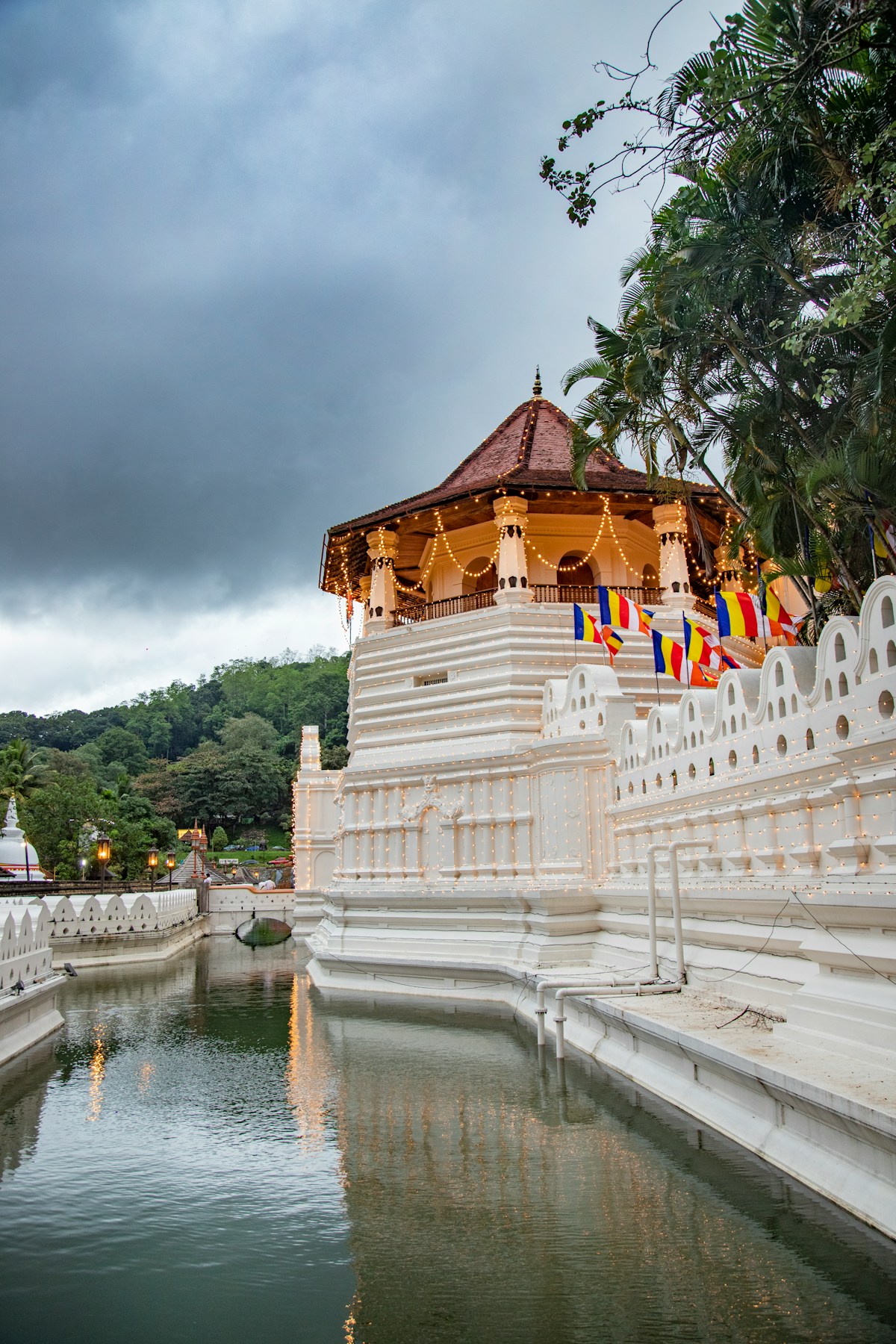
The most important Buddhist temple in Sri Lanka and one of the most sacred in the Theravada Buddhist world. The temple houses what is believed to be a tooth relic of the Buddha - it’s kept in a gold casket, which sits inside a series of nested caskets within the inner shrine room. The relic itself is rarely shown publicly, but the shrine room is open during puja (offerings) ceremonies.
Puja times: 5:30am, 9:30am, and 6:30pm. These are the most atmospheric times to visit - drums are played, devotees crowd the shrine room, and the atmosphere is genuinely charged.
Entry: Around LKR 1,500 for foreign visitors. Photography within the inner shrine room is restricted.
What to expect: The complex extends beyond the main shrine to include a museum, a royal audience hall (Audience Hall), an octagonal tower (Paththirippuwa), and moats on three sides.
Kandy Lake
An artificial lake constructed in 1807 by Sri Wickrama Rajasinha, the last Kandyan king, immediately below the temple. The cloud wall - a whitewashed parapet with a castellated top - runs along the northern edge. A walkway circles the lake; the full circuit takes about 45 minutes and is pleasant early morning or in the evening.
A small island in the lake was used by the king as a bathing area; it’s now a small police station.
Royal Botanical Gardens, Peradeniya
Six kilometres west of Kandy, on a bend in the Mahaweli River. The gardens cover 147 acres and were established in their current form by the British in 1821. Highlights include a giant Java fig tree (Ficus benjamina) with a canopy spread of around 2,500 square metres, an orchid collection, a cactus house, and an avenue of royal palms planted in 1950 for the royal couple’s tour of Ceylon.
Entry: USD $10 for foreigners (tickets in LKR at the gate). Open daily 7:30am–5pm. Allow 2–3 hours.
Udawattekele Sanctuary
A forested hill reserve above the Temple of the Tooth, covering 104 hectares. Good for birdwatching (Sri Lanka blue magpie, chestnut-backed owlet, and the Layard’s parakeet among others) and a quiet walk above the city. Entry is minimal; the sanctuary is less visited than the main temple sights.
Kandyan Dance Performances
Evening cultural shows presenting Kandyan dance, fire-walking, and traditional music run at several dedicated performance halls in the city. For a fuller itinerary that combines the temple, the botanical gardens, and a cultural show, guided tours in Kandy handle the logistics. Our best tours in Sri Lanka guide covers the other island highlights worth booking alongside Kandy. Shows typically start around 7pm and last 45–60 minutes. Cost: around LKR 1,000–1,500 ($10–15 USD). The Kandyan Arts Association Hall and the YMBA hall are the main venues.
These shows are designed for tourists but the dances themselves are genuine - Kandyan dance is a recognised art form requiring years of training. The fire-walking finale is theatrical but effective.
When to Visit
Kandy sits at altitude and catches rainfall from both monsoons. The driest months are January–March and July–August. Rain is possible year-round but is rarely constant.
Esala Perahera: July or August (dates change with the lunar calendar). This is Sri Lanka’s largest annual festival - a ten-day procession of elephants, dancers, and torchbearers through the streets of Kandy, culminating in the Randoli Perahera on the final night. The city fills to capacity; hotel prices triple; book months in advance. Even if you’re not staying in Kandy, the parade is worth attending if your dates align.
Where to Stay
Kandy has a wide range of accommodation. City-centre guesthouses suit visitors focused on the temple and lake; hillside guesthouses offer views; Peradeniya-road properties suit those prioritising the botanical gardens.
See our full Kandy accommodation guide for area-by-area details and price ranges.
Search hotels in Kandy on Booking.com
Practical Tips
- The city centre is hilly. Tuk-tuks are useful for getting between the train station (above the city), the lake area, and outlying sights.
- Trains between Kandy and Ella (via Nanu Oya for Nuwara Eliya) are extremely popular - book reserved seats on the Kandy to Ella train ahead of time, especially during peak season.
- Kandy is on Sri Lankan time (GMT+5:30) - the same as Colombo. No time zone difference anywhere on the island.
- The central market (Kandy Market) sells fresh produce, spices, and textiles and is worth a walk-through in the morning.
More in Kandy
- Where to Eat in Kandy
- Day Trips in Kandy
- Things to Do in Kandy
- Where to Stay in Kandy
- Kandy vs Nuwara Eliya
Related Guides
- Kandy Esala Perahera guide - dates, viewing spots, and how to book grandstand seats
- Kandy to Ella train guide - booking, class, timing, and what to see on route
- Pinnawala Elephant Orphanage - river bathing, ethics, and how to visit
- Ayurveda in Sri Lanka - retreat centres near Kandy and what to expect
- Ella vs Kandy - full comparison of Sri Lanka’s two main hill country towns
- Kandy vs Nuwara Eliya - cultural depth versus tea country scenery
- 2-week Sri Lanka itinerary - standard route through Kandy, Ella, and the south coast
Frequently Asked Questions
- How do I get from Colombo to Kandy?
- The train from Colombo Fort to Kandy is the recommended option - 2.5–3 hours, scenic, and runs 6–8 times daily. Second-class reserved tickets cost LKR 300–600; first-class observation car seats should be booked several days ahead. By road, the drive takes 3–4 hours depending on traffic and the route taken.
- What is the Temple of the Sacred Tooth Relic in Kandy?
- Sri Dalada Maligawa is the most important Buddhist temple in Sri Lanka and one of the most sacred in the Theravada world. It houses what is believed to be a tooth of the Buddha in a gold casket. Puja ceremonies at 5:30am, 9:30am, and 6:30pm are the best times to visit. Entry is around LKR 1,500 for foreigners.
- What is the Esala Perahera festival in Kandy?
- Esala Perahera is Sri Lanka's largest annual festival - a ten-day procession of elephants, dancers, and torchbearers through the streets of Kandy, held in July or August (dates follow the lunar calendar). Hotel prices triple and the city fills to capacity. Book accommodation three to six months ahead if your dates align.
- Is Kandy a UNESCO World Heritage Site?
- Yes. The Kandyan City centre and surrounding sacred monuments hold UNESCO World Heritage Site designation. Kandy was the last capital of the Kandyan Kingdom, which resisted European colonial control for over two centuries before falling to the British in 1815.
- How long should I spend in Kandy?
- Two to three days covers the main sights comfortably - the Temple of the Tooth, Kandy Lake, the Royal Botanical Gardens at Peradeniya, and the Udawattekele Sanctuary. Add a further day for a Sigiriya or Pinnawala day trip. Rushing Kandy in half a day misses its depth.
- What is the weather like in Kandy?
- Kandy sits at 465m elevation, which means noticeably cooler temperatures than the coast - typically 24–27°C rather than 30–33°C. Rain is possible year-round, but January–March and July–August are the driest months. The altitude makes it a relief after time on the coast.
Book an experience
Top experiences in Kandy
Explore the best tours and activities in Kandy , with instant confirmation and free cancellation on most bookings.
Planning to visit? Browse hotels in Kandy, free cancellation on most bookings.