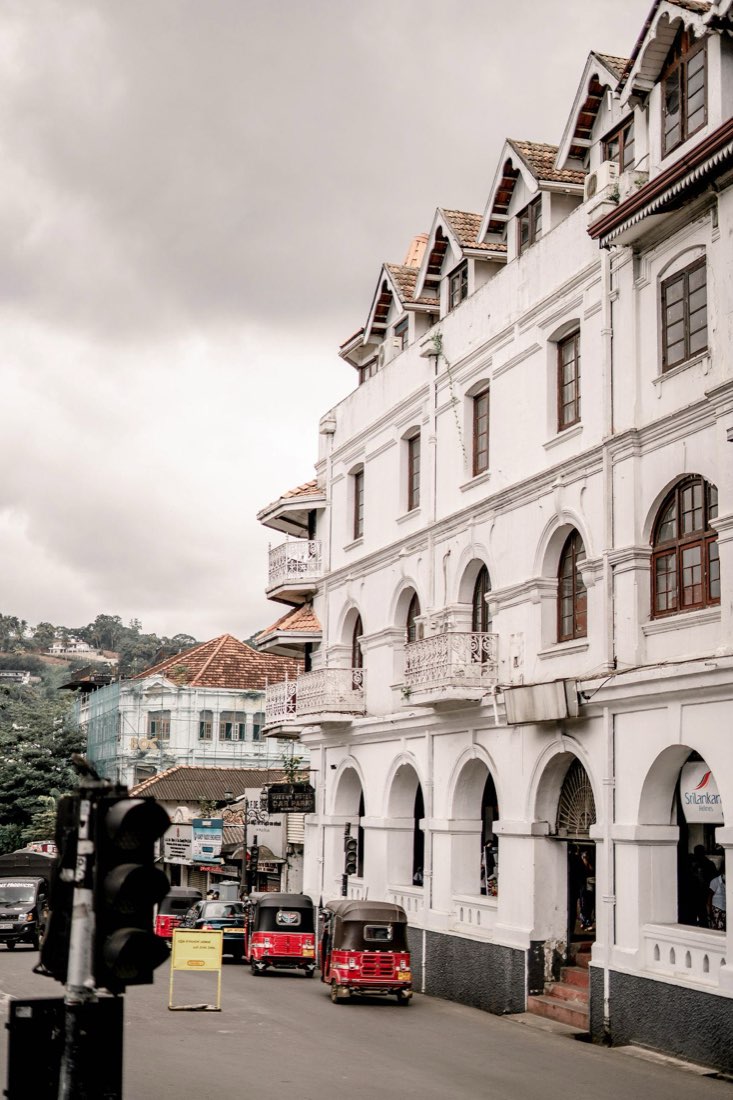
Kandy sits at the centre of the island’s cultural and culinary traditions. As the last capital of the Sinhalese kingdom and a major pilgrimage city, it has a food scene built around local rice and curry establishments, old-fashioned bakeries, and the kind of market food that doesn’t change generation to generation.
The tourist restaurant strip along Dalada Veediya near the Temple of the Tooth caters primarily to visitors; the better eating is a short walk away in the streets around Kandy Market and toward Peradeniya.
What to Eat in Kandy
Rice and Curry: the centrepiece of the Sri Lankan meal and Kandy’s most important food. A proper rice and curry lunch in Kandy involves three to six small curries served around a mound of steamed red or white rice - a vegetable, a protein (fish, chicken, beef, or jackfruit), a dhal, a pol sambol (coconut relish), and a papadum. The best versions are found in local restaurants away from the tourist centre.
Hoppers (Appa): bowl-shaped fermented rice pancakes cooked to order, best in the early morning or evening. Egg hoppers are the standard upgrade. String hoppers (idiyappam) are also widely available. Many guesthouses serve hoppers for breakfast - this is genuinely what locals eat, not a tourist-facing compromise.
Kandy’s Spicy Dry Curries: the hill country style of cooking tends toward drier, more intensely spiced curries compared to the coconut-milk-heavy southern style. Jackfruit curry (polos), mushroom curry, and breadfruit curry are particular to the up-country tradition.
Kavun and Kokis: traditional Sinhalese sweets - kavun is a deep-fried oil cake made with treacle and flour; kokis is a crispy fried pastry in flower shapes made for special occasions. Found at Kandy Market and bakeries.
Where to Eat in Kandy
Kandy Lake Area
Devon Restaurant (Dalada Veediya): one of Kandy’s oldest restaurants, serving Sri Lankan and Chinese food for decades. Popular with locals and tourists alike. The rice and curry lunch is reliable - a full plate with five curries runs LKR 600–900. The portions are large and the upstairs section has views toward the lake. Not the cheapest option but consistent.
Slightly Chilled Lounge Bar (above Kandy Lake): rooftop seating with lake views. Food is Western-leaning with some Sri Lankan dishes - burgers, pasta, and a decent devilled chicken. Primarily a drinks spot with food, but the setting is the best in Kandy for a sunset drink. LKR 1,200–2,500 per person with drinks. Popular for sundowners.
The Pub Royale (Dalada Veediya): a restaurant and bar near the Temple of the Tooth. The Sri Lankan rice and curry is above average for the tourist strip, and the Western options (pizza, sandwiches) are competent. LKR 800–1,800 per person. Air-conditioned interior is welcome on hot days.
Kandy Muslim Hotel (Dalada Veediya): despite the name, this is a restaurant - “hotel” is the South Asian term for a casual eatery. Serves excellent biryani, kottu roti, and Muslim-style rice and curry. The biryani (chicken or mutton) is among the best in the city at LKR 400–700. Busy at lunch; the food sells out by early afternoon.
Town Centre and Peradeniya Road
Kandy Market (Pettah area): the covered market and surrounding streets are the best place for cheap local food. Rice and curry counters serve from 11am for LKR 250–450; short eat stalls (rotis, rolls, samosas) from morning for LKR 50–150 per piece. The market itself sells local fruit, spices, and vegetables in a setting unchanged for decades.
Hellas Restaurant and Café (Peradeniya Road): popular with locals and university staff from the nearby campus. Sri Lankan meals, Chinese-Sri Lankan fusion dishes (devilled chicken, fried rice), and fresh juices. The devilled prawns are good. LKR 500–1,200 per person. Casual and unpretentious.
White House Restaurant (Dalada Veediya): a long-standing mid-range option with a wide menu covering Sri Lankan, Chinese, and Western dishes. The rice and curry buffet lunch is reliable at LKR 700–1,000. Air-conditioned dining room.
Bakeries and Street Food
Bake House / Panaderia: old-fashioned Kandyan bakeries produce breads, buns, and pastries reflecting the Portuguese and Dutch colonial influence on Sri Lankan baking. Look for seeni sambol (caramelised onion) buns at LKR 60–100, kimbula banis (crocodile rolls - sweet bread rolls shaped like crocodiles), and fish buns at LKR 80–120.
TJ’s Bakery and Café (near Lake Roundabout): reliable for breakfast and light meals. Good coffee by Sri Lankan standards (LKR 300–500); Western-style sandwiches and Sri Lankan options side by side. Popular with travellers staying in the central area. LKR 500–1,000 per person.
Street food near the market: The streets immediately around Kandy Market have evening food stalls selling kottu roti (LKR 200–400), egg roti, and wade (lentil fritters, LKR 30–50 each). The kottu stalls fire up from approximately 5pm and the best ones have queues - follow the locals.
Vegetarian and Vegan Options
Kandy handles vegetarian and vegan requests better than most Sri Lankan cities. Sri Lankan cuisine is naturally vegetable-forward - a standard rice and curry lunch often includes three or four vegetable curries alongside a dhal. Specifically useful options:
Natural Café (Peradeniya Road): one of the few explicitly vegetarian-friendly cafes in Kandy, with a menu that includes vegan options clearly marked. Fresh juices, salads, and Sri Lankan vegetable dishes. LKR 400–800 per person.
Most rice and curry restaurants will serve a fully vegetarian plate if you ask - the vegetable curries and dhal are often the best part of the meal anyway.
Practical Notes
- Kandy’s restaurant scene is more developed than many Sri Lankan cities - dietary-specific requests are handled better here than in smaller towns. Between meals, guided tours in Kandy are a useful way to cover the Temple of the Tooth and surrounding sites with a local guide.
- The streets around the Temple of the Tooth have the highest density of tourist-facing restaurants; quality is variable - read recent reviews before committing
- During the Esala Perahera festival (July–August), restaurants in the procession route area are extremely busy on the final nights - book ahead or eat early
- Street food is safe in Kandy’s busier areas; the turnover is high and the cooking is fresh
- Most local restaurants are cash-only; cards accepted at hotel restaurants and a few tourist-facing spots along Dalada Veediya
Take a Guided Food Tour
Kandy’s position as Sri Lanka’s cultural capital extends to its food - the hill country cooking tradition (polos jackfruit curry, drier spice profiles, locally grown produce) is distinct from the coastal style, and the city’s market, its Buddhist festival food culture, and its Kandyan cooking history give a guided food tour real depth. A food tour or cooking class in Kandy is one of the best ways to engage with that tradition: several operators combine a morning market visit, a spice explanation, and a hands-on cooking session in a single half-day. Our Kandy food guide covers the local eating culture in depth - market food, short eats, and where the hill country cooking tradition differs from the coast.
Planning Your Sri Lanka Trip?
- Book tours & activities in Kandy
- Find hotels in Kandy
- Travel insurance for Sri Lanka
- Get a Sri Lanka eSIM
- Find flights to Sri Lanka