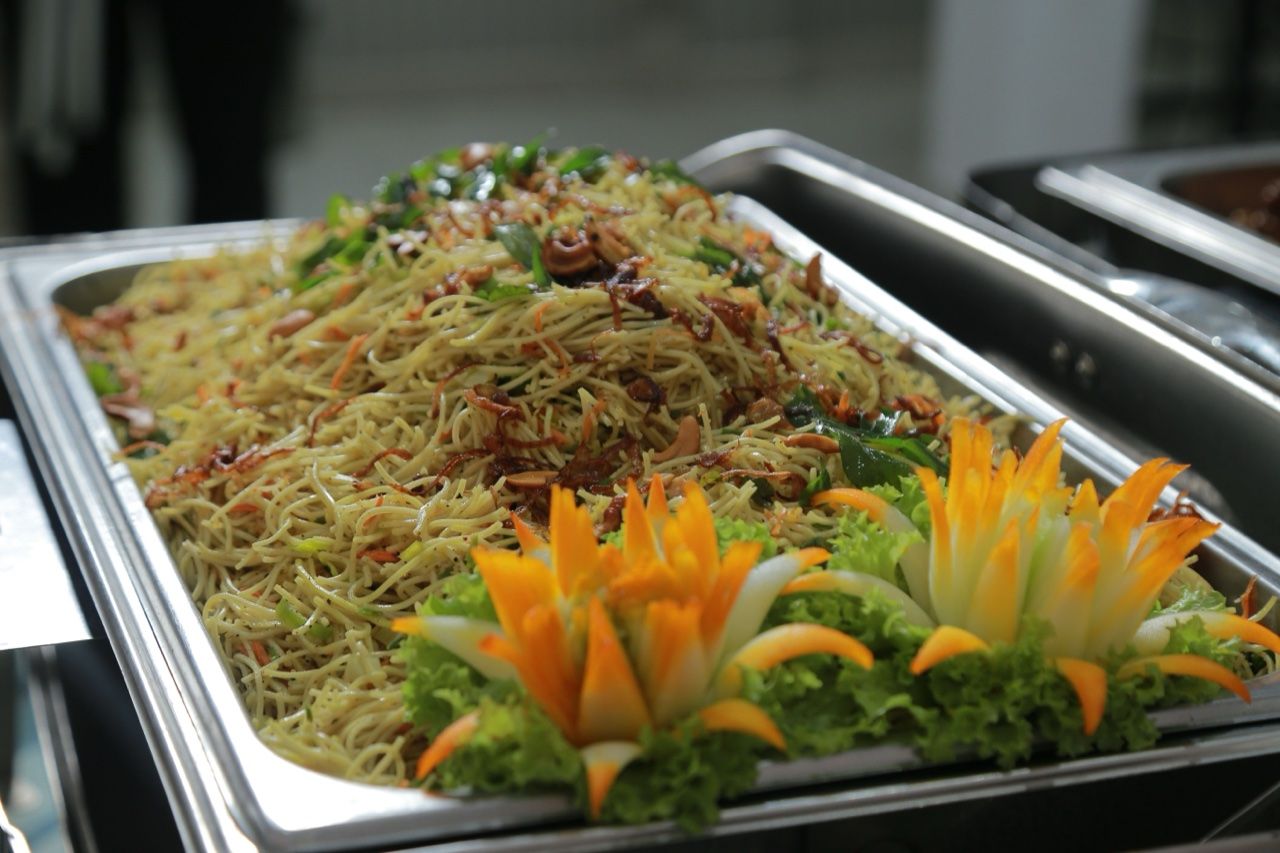
Polonnaruwa’s food scene is structured around the practical needs of a heritage town rather than a tourism destination. The majority of visitors arrive on day trips or overnight stays from Kandy, Sigiriya, or Dambulla and eat either at the restaurant strip between New Town and the ruins or at their guest house. The local canteen culture in New Town - which feeds the resident population - is largely separate from the tourist circuit and produces genuinely good dry-zone rice and curry at prices significantly lower than anywhere on the coast.
The town’s position on the edge of Parakrama Samudra lake gives local restaurants access to freshwater fish that does not appear anywhere else in the Sri Lanka eating itinerary. This is a different ingredient to the tuna and kingfish of the south coast, worth trying specifically in Polonnaruwa rather than treating it as a substitute.
What to Eat in Polonnaruwa
Rice and Curry (Dry Zone Style)
The dry zone rice and curry differs from the coastal version. Less coconut milk, more dried spice, jackfruit and dhal more prominent, and the heat level tends to be more direct. A full plate at a local canteen in New Town costs approximately LKR 350–600 with multiple curries, sambol, and mallung.
Freshwater Fish
Tilapia and freshwater catfish from Parakrama Samudra are the local specialty that distinguishes eating in Polonnaruwa from the rest of the island. At the restaurant strip between New Town and the ruins, freshwater fish appears in dry curries, fried preparations, and sometimes in a lighter sauce. Approximately LKR 600–1,200 for a fish main at a mid-range restaurant.
Jackfruit Curry
Jackfruit (polos when unripe, as a curry) is a dry-zone staple and appears at most local canteens as a daily curry. The dry-zone preparation is more intensely spiced than the coastal version. LKR 350–600 as part of a rice and curry spread.
Hoppers and String Hoppers
Local tea shops in New Town serve the Sri Lankan breakfast staples from early morning - hoppers, string hoppers, and iddi appa with dhal and sambol. A full breakfast at a local tea shop costs approximately LKR 200–400. Earlier and cheaper than anything available near the ruins.
Short Eats
Tea shops around the New Town bazaar sell fresh vadé (lentil doughnuts), rolls, and cutlets through the day. These are the quick-stop meals for local residents and are the cheapest food available in Polonnaruwa - LKR 80–200 per piece.
Where to Eat in Polonnaruwa
Local Canteens (New Town Bazaar)
The most important eating destination in Polonnaruwa for value. The canteens around the main bazaar in New Town serve rice and curry from LKR 350–600. Full dry-zone spread - jackfruit curry, dhal, several vegetable curries, and a fish option. No English menus at most; the pots are visible and pointing works. Lunch service peaks from around 11:30am.
Restaurant Strip (New Town to Ruins Road)
The road between New Town and the archaeological park entrance has several mid-range restaurants serving tourists and guest house visitors. Freshwater fish, rice and curry, and some Western dishes. Mains from approximately LKR 600–1,500. The best option here is ordering the daily freshwater fish when they have it.
Guest House Restaurants
Most guest houses in Polonnaruwa serve breakfast and dinner - typically rice and curry or short plate Sri Lankan meals. Convenient for early starts (ruins are best visited in the morning before the heat peaks), and usually good value at LKR 400–900 for a full meal. Some guest house cooks produce the best food available - worth asking what the cook’s specialty is.
Cafés Near the Ruins Entrance
Several small cafés operate near the main archaeological park entrance, offering drinks, snacks, and light meals for tour groups. Convenient for a cold drink and a quick lunch during a full-day ruins visit. Prices are tourist-facing - approximately LKR 500–1,500 for a basic meal. Not the best eating in Polonnaruwa but acceptable as a lunchtime stop during a ruins day.
Neighbourhood Breakdown
Polonnaruwa New Town: the working town with the local canteen and market food culture. The cheapest and most authentic eating, but requires a short tuk-tuk ride or bicycle from the ruins zone.
The ruins zone road: the mid-range restaurant strip catering to heritage visitors. Freshwater fish available here; better for a sit-down lunch than the New Town canteens if you are already in the area.
The lakeside area: a few restaurants with views of Parakrama Samudra are worth considering for an evening meal. The setting is the main attraction over the food quality.
Budget Eating
Polonnaruwa is genuinely cheap:
- Local canteens in New Town: LKR 350–600 for a full rice and curry plate
- Tea shop breakfast: LKR 200–400
- Short eats (vadé, rolls): LKR 80–200 per piece
- Freshwater fish at a local restaurant: LKR 600–1,200
Budget travellers on full-day ruins itineraries can eat three meals in Polonnaruwa for under LKR 1,500 without difficulty.
Practical Notes
Polonnaruwa is hot - the dry zone climate means midday temperatures are high. Eat breakfast early before the ruins visit rather than during peak midday heat. Drink water throughout the day; coconut water from roadside sellers costs approximately LKR 100–150 and is available along the ruins road.
Guided Food Experiences
The local market and canteen culture in New Town is the aspect of Polonnaruwa eating most worth exploring with a guide. Polonnaruwa tours and cultural experiences that include the town market or a cooking element complement the ruins visit and give a more complete picture of dry-zone Sri Lankan life.
Planning Your Sri Lanka Trip?
- Book tours & activities in Polonnaruwa
- Find hotels in Polonnaruwa
- Travel insurance for Sri Lanka
- Get a Sri Lanka eSIM
- Find flights to Sri Lanka