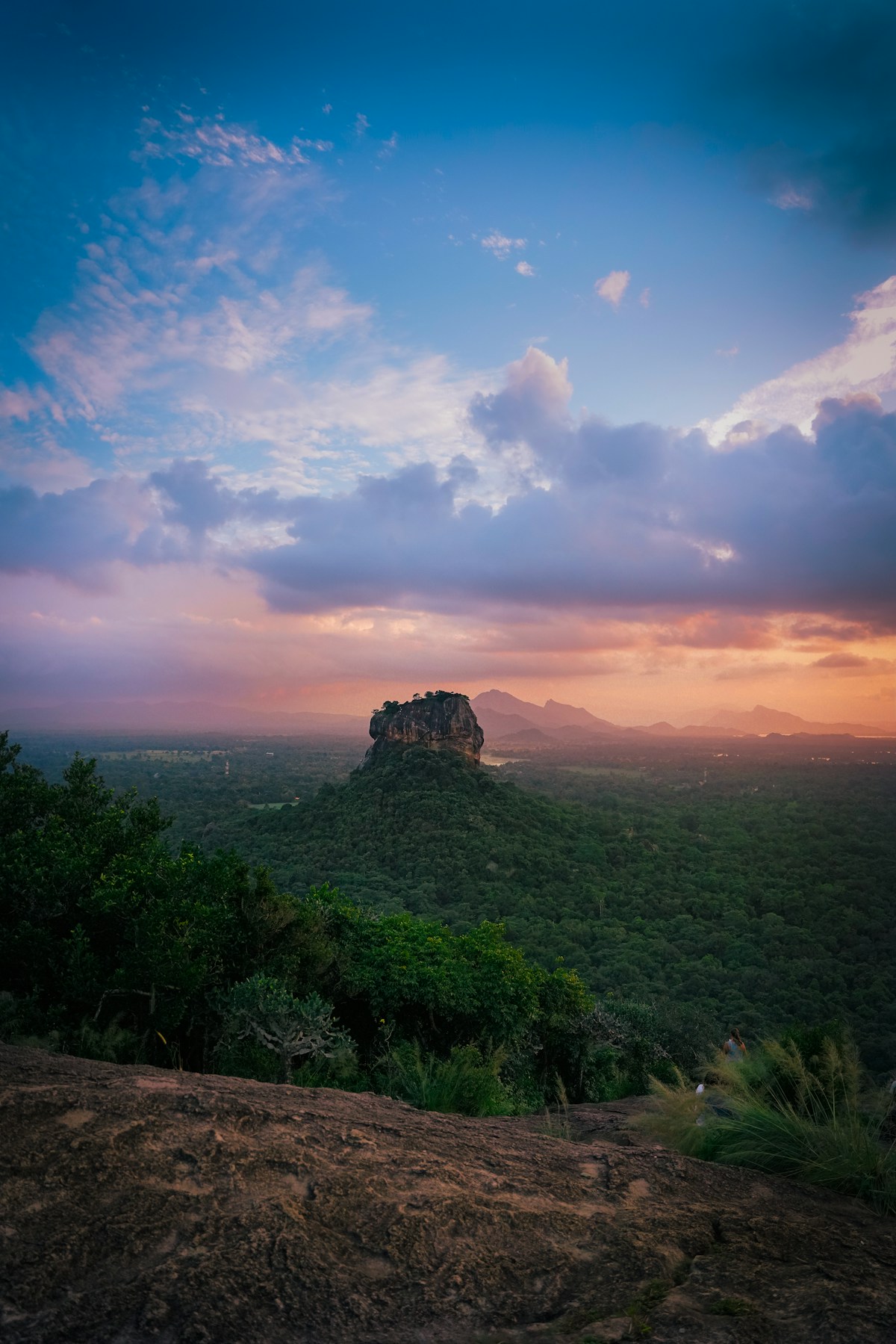
Sigiriya: UNESCO Rock Fortress and Pidurangala
Complete guide to Sigiriya - the UNESCO rock fortress, Pidurangala, Minneriya elephants, entry fees, climb tips, and where to stay nearby.
Guides for Sigiriya
Overview
Sigiriya is one of the most significant archaeological sites in Asia - a 5th-century royal palace and fortress built on top of a 180-metre granite monolith in the Matale District of Sri Lanka’s Central Province. It was designated a UNESCO World Heritage Site in 1982.
The rock itself is extraordinary: a flat-topped mass of granite that rises abruptly from the surrounding jungle and paddy fields. On and around it are the remains of a palace complex, water gardens, frescoes painted directly into the rock face, and a mirror-polished plaster wall covered in ancient inscriptions left by visitors over more than a thousand years.
Entry costs USD $35 for foreigners, making it one of the most expensive single attractions in Sri Lanka. Most visitors consider it worth it. The nearest town is Inamaluwa, 6km away; Sigiriya village, at the base of the rock, has guesthouses, restaurants, and the site museum.
The History
Sigiriya was built by King Kasyapa I, who ruled from 477 to 495 CE. According to the historical chronicles, Kasyapa killed his father Dhatusena and seized the throne, fearing retribution from his half-brother Mogallana who had fled to India. He built his capital on top of Sigiriya - partly for defence, partly for grandeur.
After 18 years, Mogallana returned from India with an army. Kasyapa descended from the rock to give battle on the plain below. His elephant turned away from a swamp during the battle, his troops interpreted this as a retreat and fell into disorder, and Kasyapa was killed. Mogallana moved the capital back to Anuradhapura. Sigiriya became a monastery, used by Buddhist monks for several centuries, before eventually being abandoned.
Getting There
There is no direct public transport from Colombo to Sigiriya. Most visitors arrive by:
- Private vehicle from Kandy: ~90 minutes, the most common approach
- Private vehicle from Dambulla: ~20 minutes, the closest major town
- Day trip from Colombo: 3.5–4 hours by hired vehicle; doable with a very early start
- Tour: Many tour operators in Colombo and Kandy run Sigiriya day trips or Cultural Triangle circuits - guided Sigiriya tours typically include transport, a guide, and entry to Pidurangala or Dambulla as part of the circuit
From Sigiriya village, the site entrance is a 15-minute walk or a short tuk-tuk ride.
The Site
The Rock Climb
The ascent from the base gardens to the summit plateau takes 30–45 minutes for most people. The route involves wide staircases through the lower levels, a spiral metal staircase up the western rock face past the fresco gallery, a narrow walkway along the mirror wall, and a final steep metal staircase up through the Lion’s Paw gateway to the summit.
The climb is steep in places but manageable for most adults in reasonable fitness. Flip-flops or sandals are not suitable for the summit section - wear closed shoes with grip. The rock surface can be slippery in wet conditions.
Total steps: approximately 1,200.
The Sigiriya Damsels Frescoes
Painted on the western rock face in a natural shelter, the Sigiriya Damsels are a series of paintings of women - believed to represent apsaras (celestial beings) or possibly members of King Kasyapa’s court. Of the original approximately 500 paintings, 21 have survived. They date to the 5th century and are among the finest examples of ancient painting in South Asia.
Access is via the spiral metal staircase from the lower level. Photography of the frescoes is technically restricted (cameras were prohibited for a period to protect the paintings from flash damage), but policies may vary - check current rules on site.
The Mirror Wall
Below and beside the fresco gallery, the rock face is covered in polished white plaster - originally so reflective that the king could see his reflection in it as he walked past. The surface is now covered in ancient graffiti: poems and visitor inscriptions written over roughly 1,300 years (7th to 14th centuries). These are among the oldest Sinhala-language texts known, and they’re a remarkable record of how earlier visitors responded to Sigiriya.
Lion’s Paw Gateway
At the top of the mirror wall walkway, the route passes through an enormous gateway that was once the body of a lion - the king’s symbol of power. Only the paws remain; the rest of the brick lion has collapsed. It gives the site its Sinhala name: Sinhagiri (Lion Rock), from which Sigiriya derives.
The Summit Plateau
The flat-topped summit (about 1.6 hectares) holds the ruins of King Kasyapa’s palace: cisterns that still hold water, the stone throne, the footprint of the main palace building, and terraced garden areas. The views from the top extend across the surrounding jungle and plains in all directions on clear days.
The Water Gardens
At the base of the rock, the formal water gardens are the earliest surviving example of hydraulic engineering in Sri Lanka. The fountains - fed by underground pipes - still function during the rainy season without any mechanical pumping, using the same pressure system installed 1,500 years ago.
Pidurangala Rock
A separate granite outcrop about 700 metres north of Sigiriya, accessible from the village. The hike takes about 30 minutes and involves some mild boulder scrambling near the top. At the summit, the view back to Sigiriya - the rock fortress framed against the jungle - is one of the most distinctive views in Sri Lanka.
Entry is by donation (around LKR 300). Unlike Sigiriya, there’s no formal ticket system. There is an active Buddhist cave monastery partway up the trail.
For sunrise: Pidurangala is the standard recommendation for a Sigiriya sunrise view. Leave Sigiriya village by 5:30am. Bring a torch for the first section before dawn.
Sigiriya Museum
Located at the site entrance, the Sigiriya Museum is included in the entry ticket. Two floors cover the history of the site: the hydraulic system, the frescoes, the historical chronicles, and the archaeological excavation history. Worth 45–60 minutes before or after the climb.
Practical Information
Entry fee: USD $30 for foreigners (paid in USD or LKR equivalent). Ticket includes the site and museum.
Opening hours: 7am–5:30pm daily. Last entry at 5pm.
Best time to climb: 7–9am. Before 9am, the heat is manageable and crowds are thinner. By 11am, the rock can be very hot and the upper sections crowded.
What to bring: 1.5–2 litres of water per person. Sun hat. Sunscreen. Closed-toe shoes with grip. Camera. Cash for Pidurangala if visiting.
Where to stay: See the Where to Stay section below for options across all price ranges.
Nearest town: Inamaluwa (6km south) has basic shops. Dambulla (20km south) has ATMs, supermarkets, and broader food options. ATMs in Sigiriya village are limited - carry cash.
Where to Stay
Sigiriya village has budget guesthouses from USD $15–30 per night. Midrange eco-lodges in the surrounding jungle run $60–120. Several boutique lodges - Aliya Resort, Water Garden Sigiriya - from $150 and up. Book early in peak season (December to March) as the better lodges fill quickly.
See our full Sigiriya accommodation guide for area-by-area details and price ranges.
Search hotels in Sigiriya on Booking.com
More in Sigiriya
- Where to Eat in Sigiriya
- Day Trips in Sigiriya
- Rock Fortress in Sigiriya
- Things to Do in Sigiriya
- Where to Stay in Sigiriya
- Sigiriya vs Polonnaruwa
Related Guides
- Climbing Sigiriya guide - entry fee, route, frescoes, mirror wall, and fitness level
- Minneriya elephant gathering - 30km away; 200–300 wild elephants August to October
- Cultural Triangle ancient ruins guide - Sigiriya in context with Anuradhapura, Polonnaruwa, Dambulla
- 10-day Cultural Triangle itinerary - structured route with logistics and costs
- Dambulla travel guide - cave temples 20km south; natural half-day pairing with Sigiriya
- Sri Lanka safari comparison guide - Minneriya vs Kaudulla vs Yala
Frequently Asked Questions
- How much does it cost to enter Sigiriya Rock?
- Entry costs USD $35 for foreigners, paid in USD or LKR equivalent. This includes access to the site and the Sigiriya Museum. It is one of the most expensive single attractions in Sri Lanka.
- What is the best time to climb Sigiriya Rock?
- 7–9am. The site opens at 7am and the western face is in shade early in the morning. Temperatures are manageable, crowds are thin on weekday mornings, and by 10am the rock heats up significantly and tour groups begin to arrive. Last entry is at 5pm.
- Is the Sigiriya Rock climb difficult?
- The climb requires moderate fitness and takes 30–45 minutes. The route involves wide staircases, a spiral metal staircase, a narrow walkway along the mirror wall, and a final steep metal staircase through the Lion's Paw gateway. Those with severe vertigo may find the upper section challenging. The total ascent involves approximately 1,200 steps.
- What are the Sigiriya frescoes?
- The Sigiriya Damsels are 5th-century paintings on the western rock face, sheltered in a natural overhang. Of an estimated 500 original paintings, 21 survive. They show women from the waist up and are considered among the finest examples of ancient painting in South Asia.
- What is Pidurangala Rock and should I visit it?
- Pidurangala is a granite outcrop 700m north of Sigiriya offering the best external view of the rock fortress. The hike takes about 30 minutes, passes an active Buddhist monastery, and costs only a LKR 300 donation - a fraction of the Sigiriya entry fee. It is the standard recommendation for a sunrise view: leave Sigiriya village by 5:30am.
- Are there ATMs in Sigiriya village?
- ATMs in Sigiriya village are limited. Stock up with cash in Dambulla (20km south) or before leaving Kandy or Colombo. Most guesthouses and lodges accept cash only.
Book an experience
Top experiences in Sigiriya
Explore the best tours and activities in Sigiriya , with instant confirmation and free cancellation on most bookings.
Planning to visit? Browse hotels in Sigiriya, free cancellation on most bookings.