Search hotels in Trincomalee on Booking.com
Trincomalee is Sri Lanka’s largest natural harbour and the dominant city on the northeast coast. It has been strategically significant for centuries - Portuguese, Dutch, British, and Japanese forces all occupied it at different points. Today, the naval base occupies much of the harbour while the town, beaches, and temples form one of Sri Lanka’s most compelling east coast destinations.
Nilaveli Beach
Nilaveli is the main beach destination from Trincomalee, 14km north of the city. It is a long, wide beach with shallow turquoise water, far fewer visitors than the southern coast beaches, and a completely different atmosphere to Mirissa or Unawatuna. Guided tours in the Trincomalee area combine Nilaveli, Pigeon Island snorkelling, and temple visits in a single day.
The beach is clearest and calmest from April through September. During the northeast monsoon (November–January), it can be rough and the water turbid. Most guesthouses and beach restaurants are concentrated around the Nilaveli junction on the A15 road - the beach itself extends north for several kilometres beyond the built-up section.
From Trincomalee town: tuk-tuk approximately LKR 700–1,000. Local buses run the route (LKR 40–60).
Pigeon Island National Park
Pigeon Island lies 1.5km offshore from Nilaveli Beach and is the most-visited attraction in the Trincomalee area. The national park protects one of Sri Lanka’s few remaining hard coral reefs, home to blacktip reef sharks, green and hawksbill turtles, parrot fish, and a wide variety of reef species.
Entry: Approximately USD $15 for foreigners (national park fee, as of 2026). Boat transfers from Nilaveli beach approximately LKR 1,500–2,000 per person return. Most Nilaveli guesthouses can arrange packages that include boat and entry fee.
Snorkelling: The reef is shallow in places and accessible without SCUBA - visibility is best in the morning before afternoon wind disturbs the water. Masks and fins are available for hire from boat operators (approximately LKR 500–700). The shark bay, on the eastern side of the island, is where blacktip reef sharks are most reliably seen.
Note: The park limits visitor numbers to protect the reef - avoid peak mid-morning arrival times for the best experience.
Koneswaram Temple
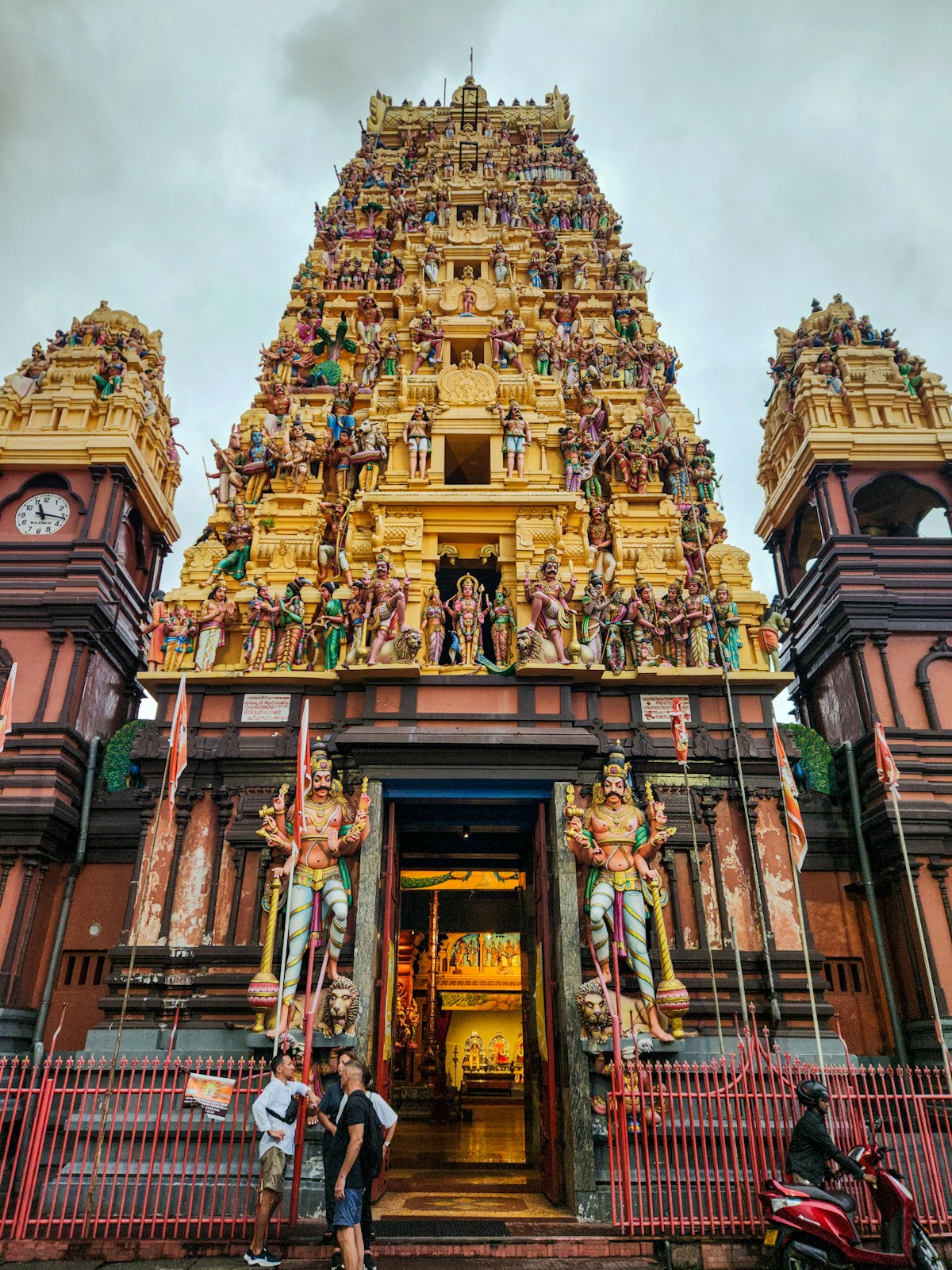
Koneswaram stands on Swami Rock, a headland at the southern end of Trincomalee harbour, and is among the most important Hindu temples in Sri Lanka. The temple is dedicated to Shiva and is one of the five Pancha Ishwarams - ancient Shiva temples considered among the holiest in South Asian Hinduism.
The original structure was built in antiquity and partially dismantled by the Portuguese in 1624, who used some stones to construct Fort Frederick below. The temple was rebuilt in the 20th century and expanded further after Sri Lanka’s independence. Entry is free. Conservative dress is required (no shorts or bare shoulders). The cliff position, 130m above sea level, offers harbour views and the sensation of standing at the edge of the sea.
Evening puja (prayer ceremony) at approximately 6pm is the most atmospheric time to visit.
Fort Frederick
Fort Frederick occupies the Swami Rock peninsula and is an active military compound - the Sri Lanka Army has a base here. Despite this, the fort is open to civilian visitors during daylight hours (approximately 8am–5pm). You sign in at the gate and are free to walk the fort grounds.
The Portuguese began construction in 1624 (reusing stones from the dismantled Koneswaram Temple). The Dutch and British modified and extended the fortifications over subsequent centuries. The main historical markers include the Lover’s Leap rock (a colonial-era legend), cannons, and views over the harbour.
Koneswaram Temple is inside the fort perimeter - you access the temple through the fort gate.
Kanniya Hot Springs
Kanniya Hot Springs are 8km north of Trincomalee town, a short tuk-tuk ride away (approximately LKR 400–600 return). There are seven wells of varying temperature - some reaching 45–50°C - arranged around a small court. The springs are believed to have been sacred since ancient times; a ruined ancient structure surrounds them.
Entry approximately LKR 200 as of 2026. This is a modest attraction but worth the short trip - the contrast between the cool air and hot well water is unusual, and the site sees relatively few international tourists compared to Pigeon Island.
Marble Beach
Marble Beach is 8km south of Trincomalee on the southern shore of the harbour, accessible through a navy checkpoint (civilians can enter). The beach is wide, clean, and relatively undeveloped. It is a popular spot for local families on weekends. Tuk-tuk from Trincomalee approximately LKR 500–700 return.
See our guide to where to stay in Trincomalee for accommodation near Nilaveli beach and the town.
Planning Your Sri Lanka Trip?
- Book tours & activities in Trincomalee
- Find hotels in Trincomalee
- Travel insurance for Sri Lanka
- Get a Sri Lanka eSIM
- Find flights to Sri Lanka