Colombo doesn’t shout about its food scene the way Bangkok or Hanoi does - but spend half a day eating your way through Pettah, the Fort, and Galle Face Green, and you’ll understand why food-obsessed travellers keep coming back. A dedicated food tour is the fastest way into that world: you skip the wrong turns, eat things you’d never order blind, and get the stories behind each dish.
Here’s what to know before you book.
What a Colombo Food Tour Actually Covers
Most Colombo food tours run three to four hours and cover three to five neighbourhoods, stopping at a mix of street-side stalls, hole-in-the-wall cafes, and local market vendors. The route changes by operator, but the dishes are broadly consistent:
Short eats - Sri Lanka’s snack culture built around bite-sized pastries sold from glass-fronted cabinets in every bakery and tea room. Expect egg rolls, fish patties, Chinese rolls (don’t let the name fool you - they’re Sri Lankan), and wade (crispy lentil fritters). These appear at almost every stop on any Colombo food tour, usually with a cup of sweet black Ceylon tea.
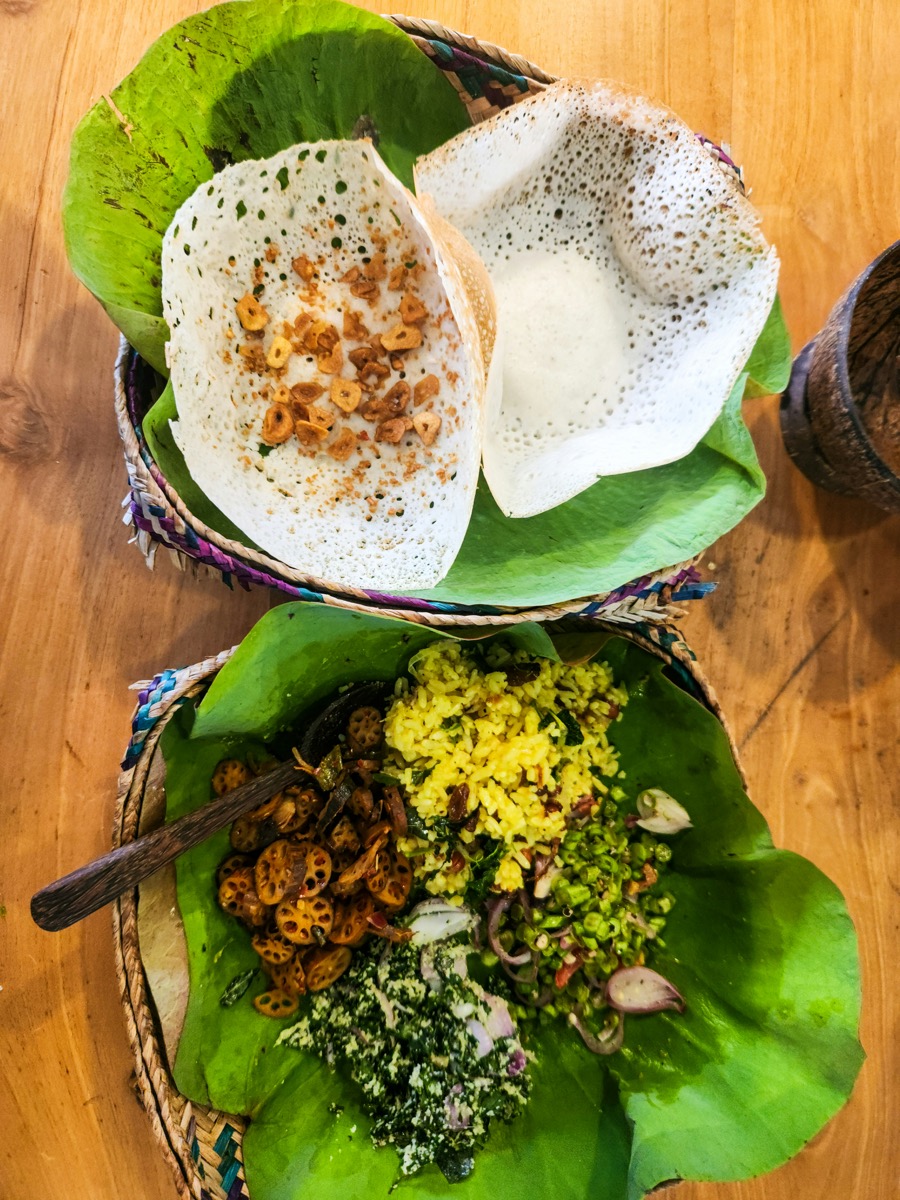
Hoppers (appa) - bowl-shaped rice-flour crepes fermented overnight for a slight tang, crisped at the edges and soft in the centre. String hoppers (idiyappam) are the pressed noodle version, often eaten at breakfast with coconut milk gravy and a thin dhal. Most tours visit a family-run hopper spot, usually somewhere off the main tourist drag in Kotahena or Maradana.
Rice and curry - the national dish in its full form isn’t a single plate; it’s a spread. A mound of steamed red or white rice surrounded by five to eight small dishes: a main protein curry (fish, chicken, or jackfruit), plus combinations of mallum (wilted greens), dal, a coconut sambol, and one or two vegetable curries. The balance of spice, acid, and coconut fat is extraordinary when it’s done well. A good tour will take you somewhere that uses freshly ground spice paste rather than a pre-made mix.
Kottu roti - shredded gothambe roti stir-fried on a hot plate with egg, vegetables, and curry gravy. The rhythmic clatter of metal blades chopping it together is the soundtrack of Colombo after dark. Some daytime tours stop at a kottu spot; others leave it as an evening suggestion.
Watalappan - a coconut and jaggery custard with Malay-Muslim roots, finished with cashews. Dense, barely sweet, deeply good. Often the dessert stop.
The Best Food Tour Operators in Colombo
Colombo Food Tours (Dilini’s Kitchen Walks)
The most-reviewed option on GetYourGuide and Tripadvisor for Colombo street food. Guides are food-trained locals - not general tourism staff - which shows in the commentary. The standard walking tour covers Pettah Market, the Wolfendahl Street bakeries, a Muslim kottu joint near Maradana, and a family home for a brief cooking demonstration. Running time approximately 3.5 hours.
Approximate price: LKR 7,500–9,500 per person (from USD 25–32 as of 2026), depending on group size. Private tours available from approximately LKR 30,000.
The Colombo Culinary Tour (GetYourGuide partner)
A slightly more curated experience aimed at visitors who want context alongside the eating. Stops include the Pettah Floating Market (where vendors sell produce from boats on the Beira Lake canal), a colonial-era Dutch Hospital dining precinct (modern setting, traditional dishes), and a spice trader’s stall in the old market district. Bilingual guides available in English and German.
Approximate price: USD 35–45 per person as of 2026. Runs Tuesday to Sunday mornings.
Fork & Flag Colombo
Focuses specifically on the Muslim and Malay food traditions that are often overshadowed by the broader Sri Lankan cuisine narrative. Visits include a Muslim bakery famous for its faluda and love cake, a korma and biryani kitchen near the Grand Mosque, and a watalappan maker who has been doing it the same way since the 1980s. Groups capped at 8. Worth booking in advance.
Approximate price: LKR 8,000–10,000 per person as of 2026.
Compare Tours on GetYourGuide
| Tour | Duration | Price (from) | Group Size | Highlights |
|---|---|---|---|---|
| Colombo Street Food Walking Tour | 3.5 hrs | from $27 | Small group | Pettah Market, hoppers, short eats, kottu roti stop |
| Colombo Food & Culture Tour | 4 hrs | from $35 | Small group | Muslim quarter, Dutch Hospital, 6–8 tasting stops |
| Private Colombo Market & Cooking Experience | 5 hrs | from $65 | Private | Pettah market shopping, home cooking session, 6+ dishes |
Browse all Colombo food tours → GetYourGuide
Private Market Tours via Airbnb Experiences
Several local chefs and food writers run private Pettah market morning tours that include shopping for ingredients followed by a home cooking session. These run 4–5 hours and typically cover 6–8 dishes including a full rice and curry spread. Good option if you want to eat what you cook.
Approximate price: USD 50–80 per person for a group of 2–4 as of 2026.
Where the Tours Go: Key Colombo Neighbourhoods
Pettah is the commercial and cultural heart of old Colombo - a dense grid of streets where wholesale merchants, spice traders, and street vendors operate alongside each other. The Central Market (Pettah Central Market) at Manning Place is one of the oldest in the country, and the spice warehouses off Second Cross Street still sell cinnamon, cardamom, and pepper in cloth sacks. Morning is the best time to visit: the vendors are set up, the light is good, and the stalls haven’t run out of the best produce.
Galle Face Green is the ocean-front promenade where Colombo goes to eat in the evenings. A line of food carts along the green sells isso wade (prawn fritters), corn on the cob, fresh king coconut water, and the local snack called isso (prawns) with lunu miris chilli relish. Most daytime tours don’t include Galle Face - it’s better as an evening addition on your own, roughly LKR 200–500 per snack.
Fort (Colombo 01) has the Dutch Hospital, a 17th-century colonial-era warehouse converted into a food and retail precinct. Worth a stop for modern takes on traditional dishes: Nuga Gama inside the Cinnamon Grand is a better-known version of this, but the Dutch Hospital options are more accessible. Lunch mains approximately LKR 1,200–2,500.
Kotahena (north of Pettah) is one of the best areas for authentic short eats and hopper shops used by locals rather than tourists. Several operators deliberately avoid advertising these locations precisely because they want to keep them genuinely local.
What to Expect Practically
Most Colombo food tours start between 8am and 10am. The food stops are filling - plan your day so you’re not eating a hotel breakfast immediately beforehand. Wear comfortable shoes; markets like Pettah involve uneven pavements and tight lanes. Dress modestly near mosque areas (Maradana, Wolvendaal).
Tea appears at almost every stop. If you want to understand Ceylon tea properly, mention it to your guide: most can arrange a stop at a proper tea room rather than a tourist cafe, where you’ll get estate-specific tea (Nuwara Eliya, Dimbula, or Uva region) without sugar added at the pot.
Dietary requirements are manageable but need advance notice. Sri Lankan food uses a great deal of coconut in many forms and fish paste (Maldive fish) in vegetable dishes that otherwise appear vegan. Alert your operator beforehand and they’ll route accordingly.
Booking Tips
Book at least 48 hours in advance for group tours; popular morning slots (especially Saturday) fill early. For private tours, a week in advance is safer. All the operators above accept online booking; the GetYourGuide-listed tours offer free cancellation up to 24 hours before start.
If you’re combining a Colombo food tour with cooking, schedule the class for a different day - eating through six or eight tasting stops followed by a four-hour cooking session is more than most people want in one go.
A good food tour here isn’t a highlight reel of the country’s cuisine - it’s an introduction to one of Asia’s most underrated food cultures, and one that stays with you long after the flight home. If you’re making Colombo a base for your Sri Lanka trip, Hotels in Colombo in the Fort or Galle Road area keep transfer time to morning tour meeting points short.