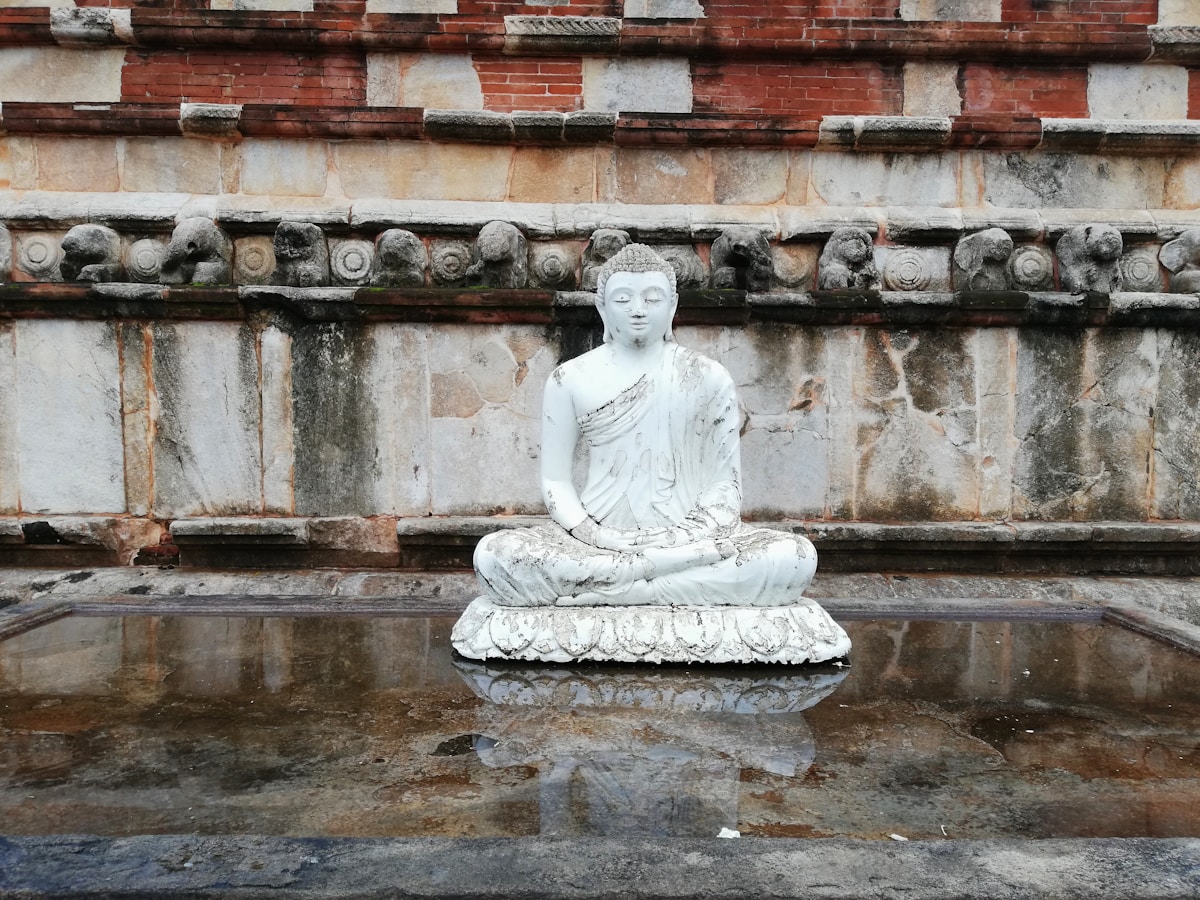
Anuradhapura was the first and greatest capital of ancient Sri Lanka, continuously inhabited for more than 1,300 years from the 4th century BCE. The monuments spread across 40 square kilometres of dry-zone scrub, but the core sites cluster within 8km and are best covered by bicycle over two days. Entry to the archaeological zone is $25 for foreigners (covers most monuments for one day). Organised tours of the ancient city are available if you prefer a guided introduction to the site.
Start at 7am - the heat by midday is significant in this low-lying plain, and the early morning is when pilgrims are most active at the active worship sites.
Sri Maha Bodhi
The sacred fig tree (ficus religiosa) in the Mahamewna Gardens is grown from a cutting of the original Bodh Gaya tree beneath which the Buddha attained enlightenment. Princess Sanghamitta brought the cutting from India to Sri Lanka in 249 BCE at the request of King Devanampiya Tissa. It has been documented in continuous historical records ever since, making it the oldest living tree with a verified history in the world.
The tree is an active pilgrimage site - thousands of Buddhists from across Sri Lanka and from Buddhist communities in Asia visit daily. The atmosphere at dawn is the most compelling: devotees lay white lotus flowers and jasmine on the stepped platforms below the golden-fenced enclosure, light oil lamps, and chant paritta. Arrive before 8am to see this before tour groups arrive.
Entry: LKR 200 (separate from the main archaeological site ticket). Cover shoulders and knees. Remove shoes before approaching the inner enclosure. White dress is traditional and expected - sarongs are available for hire at the gate for LKR 50.
Ruwanwelisaya Stupa
The great white dome of Ruwanwelisaya is visible from across Anuradhapura. Built by King Dutugamunu in the 2nd century BCE and restored multiple times, it stands 103m high and measures 290m in circumference at the base. The plaster exterior is brilliant white; the pinnacle is gilded.
The site is a living place of worship, not a museum. Pilgrims circumambulate the stupa clockwise, carrying flowers and incense, often in a continuous stream from dawn to dusk. The elephant wall around the base - rows of carved stone elephant heads - is worn smooth by centuries of hands. The surrounding park is shaded and good for sitting.
Entry included in the main archaeological ticket. Remove shoes at the designated point. Photography is permitted but approach ongoing worship quietly - pilgrims have priority.
Jetavanaramaya
At its original height of 122m, the Jetavanaramaya was the third tallest structure in the ancient world, exceeded only by two Egyptian pyramids. Built by King Mahasena in the 3rd century CE, it required an estimated 93.3 million fired bricks. Today the red-brick ruins stand around 70m - the upper third was lost to erosion and vegetation over the centuries of abandonment before conservation began.
The Jetavana Museum on site displays recovered sculptures, votive objects, and a scale model showing the monastery complex in its original state. One exhibit holds fragments of a relic casket found during excavation. Allow 45 minutes for the ruins and museum combined.
Isurumuniya Vihara
A cave temple cut into a granite outcrop at the edge of Tissa Wewa tank, Isurumuniya is quieter than the major stupas and worth the visit for one of the most famous sculptures in Sri Lanka: the Isurumuniya Lovers, a relief carving showing two figures in an intimate posture. The sculpture dates to the Gupta period (4th–6th century CE) and the identities of the figures are debated - royal lovers, Shiva and Parvati, or simply idealised figures. It sits in a small museum room adjacent to the cave temple.
The vihara itself is cool and shaded - a welcome contrast to the exposed stupa sites. Entry: LKR 200.
Abhayagiri Monastery
The Abhayagiri complex was once one of the largest monasteries in the Buddhist world, housing up to 5,000 monks at its peak. The central stupa (75m high in its current restored state) is approached through extensive ruins of chapter houses, refectories, bathing pools, and meditation pavilions spread over several hectares.
The Abhayagiri Museum houses the Samadhi Buddha statue - one of the finest examples of ancient Sinhalese sculpture, a serene seated figure in meditation that was famously admired by Jawaharlal Nehru during his imprisonment, who reportedly kept a photograph of it in his cell. The original Samadhi statue is in a pavilion near the Mahamewna Gardens (access on the main site ticket).
Mihintale
13km east of Anuradhapura by road, Mihintale is the hill where Buddhism was introduced to Sri Lanka. In 247 BCE, the monk Mahinda (son of the Mauryan Emperor Ashoka) encountered King Devanampiya Tissa here and taught him the Dharma - an event considered the foundation of Sri Lankan Buddhist civilisation.
The site is climbed via 1,840 granite steps cut into the hillside. The ascent takes 30–45 minutes at a moderate pace. At the top: a stupa marking the spot of the first Buddhist sermon on the island, a refectory with ancient stone troughs for monks’ meals, and views over the surrounding forest. The site is free of charge. Pilgrim traffic is heavy on Poya (full moon) days - arrive early if visiting on a Poya.
Tuk-tuk from Anuradhapura to Mihintale and back: LKR 1,500–2,000 for the return trip including waiting time.
Basawakkulama Tank
The oldest confirmed ancient tank in Sri Lanka, built in the 4th century BCE during the reign of King Pandukabhaya. It’s 2km in circumference and still holds water used for local irrigation. The path around the tank is pleasant for a late-afternoon cycle - families fish from the bank and birds gather at the water’s edge.
Getting Around Anuradhapura
Bicycle is the most practical transport within the site. Hire at the entrance to the sacred city: LKR 200–400 per day. The roads through the archaeological zone are quiet and flat. A full day cycling covers the major monuments comfortably.
Tuk-tuk with driver is an alternative if you prefer not to cycle - negotiate a half-day rate (LKR 2,000–3,000) to cover the main sites, which is comparable to cycling once you factor in comfort in the heat. Drivers typically know the sites well.
The site is large - do not underestimate distances. Walking the full circuit in a day is not recommended given the heat and the spread of monuments.
Practical Information
- Opening hours: Sacred city sites open from 6am (some from dawn)
- Main ticket price: $25 (foreigners) - covers most monuments for one day; buy at the Central Cultural Fund booth near Sri Maha Bodhi
- Dress code: Cover shoulders and knees at all temple sites; remove shoes before entering shrine rooms
- Photography: Permitted at most sites; avoid photographing worshippers in close-up without permission
- Best time to visit: November–April (dry season); December–March (peak, more tourists); May–October (less crowded, wetter but usually manageable)
- Getting there: Trains from Colombo Fort to Anuradhapura run daily, 4–4.5 hours, LKR 300–800
Planning Your Sri Lanka Trip?
- Book tours & activities in Anuradhapura
- Find hotels in Anuradhapura
- Travel insurance for Sri Lanka
- Get a Sri Lanka eSIM
- Find flights to Sri Lanka