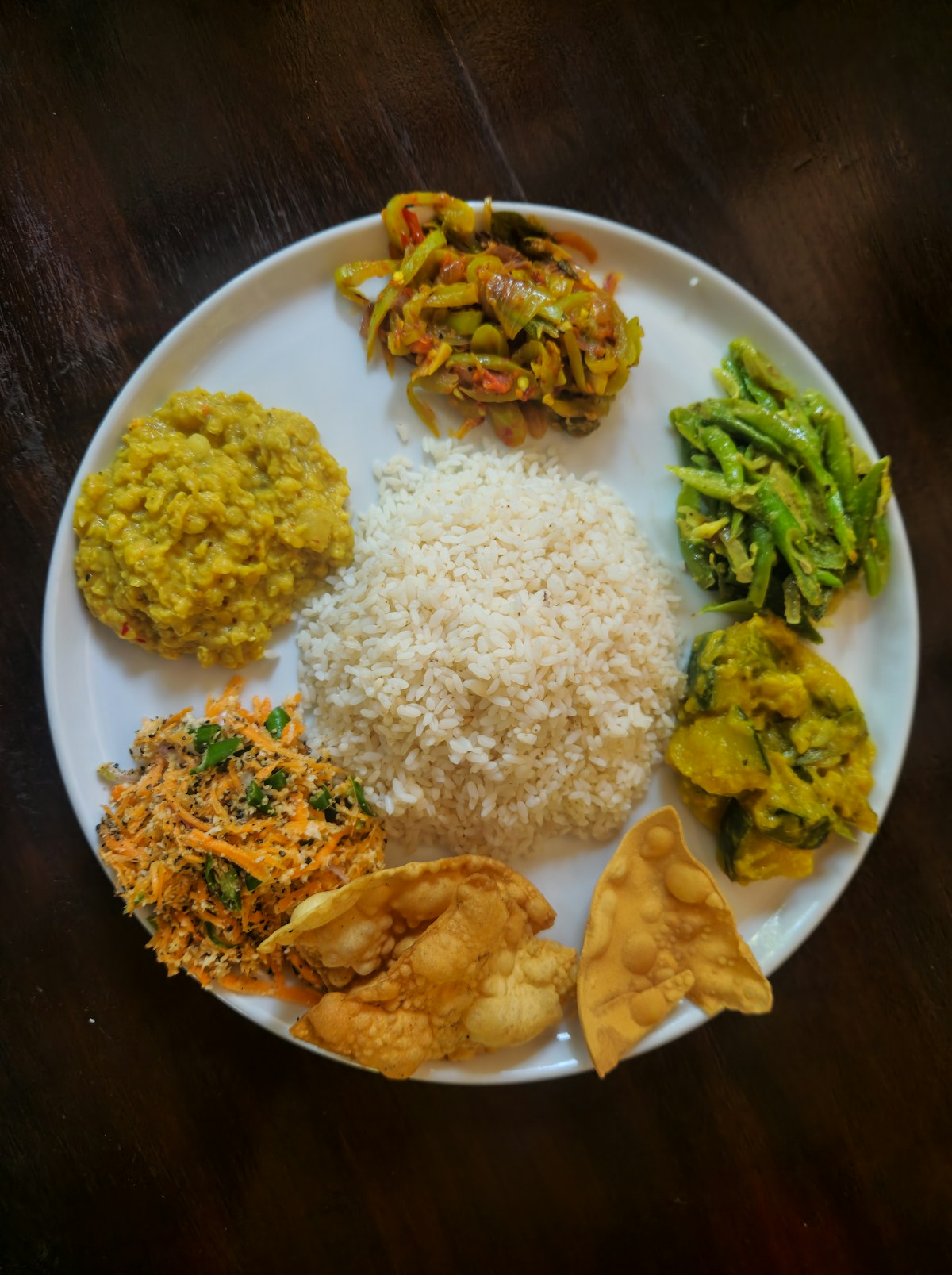
Best restaurants in Anuradhapura: Shalini Restaurant in New Town is the most reliable sit-down option for visitors, the bus stand canteens are the best value (rice and curry from LKR 350), and Nuwarawewa Walauwa Rest House is the pick for atmosphere. Vegetarian food is easy to find everywhere.
Anuradhapura is a pilgrim city as much as a tourist destination. The ancient sacred precinct - the Maha Viharaya, the Sri Maha Bodhi, the dagobas - draws Sinhalese Buddhist pilgrims from across the island in numbers that dwarf the tourist count. The food scene reflects this: functional, unpretentious, oriented around the needs of pilgrims and locals rather than international visitors. There is no tourist restaurant strip, no beach café culture, and no attempt to present Sri Lankan food for a foreign audience. What you get instead is honest, good-value cooking at prices well below the south coast. If you’re planning to cover the full site alongside a meal stop, half-day and full-day guided tours of Anuradhapura can be arranged in advance.
The Buddhist context also means vegetarian eating is easy here - easier than almost anywhere else in Sri Lanka. Most canteens serve substantial vegetable curries, and meat is less present on menus than in coastal towns.
What to Eat in Anuradhapura
Rice and Curry: the standard and the best option. Anuradhapura’s canteens serve a proper Sri Lankan lunch - rice with three or four accompaniments including dhal, at least one vegetable curry, a sambal, and optionally fish or chicken. Lunch is the main meal; LKR 350–700 ($1.15–2.30) for a full plate as of 2025. The food is straightforward and good.
Vegetarian Dishes: because of the large Buddhist pilgrim population, vegetable-forward cooking is well-represented. Jackfruit curry, green bean curry, pol sambol (coconut sambal), and dhal are available at essentially every canteen. Asking for a vegetarian plate is understood and accommodated without fuss - this is one of the best cities in Sri Lanka for plant-based eating.
Sri Lankan Breakfast: the tea shops near the bus stand and market area serve string hoppers, hoppers, and pol roti from early morning. A breakfast plate of string hoppers with coconut milk and dhal costs approximately LKR 200–350 ($0.65–1.15). Getting breakfast here before heading to the sacred sites makes sense - the sites are large and touring them takes several hours.
Short Eats: the bakeries and tea shops around the New Town area sell rolls, cutlets, and vadai throughout the day at LKR 50–150 ($0.15–0.50) per piece. Good for a quick, cheap snack between sites.
Where to Eat in Anuradhapura
Shalini Restaurant (New Town): one of the more reliable sit-down restaurants in Anuradhapura, used by both visitors and locals for a proper meal. Serves Sri Lankan rice and curry, fried rice, short eats, and simple mains. The fish curry and jackfruit curry are consistently well-prepared. A full lunch runs approximately LKR 500–900 ($1.60–3) per person. The staff are used to serving visitors unfamiliar with the menu and can explain the curries on offer.
Hotel Randiya Restaurant (New Town): a local hotel restaurant popular with Sri Lankan business travellers and domestic visitors. Serves reliable rice and curry, kottu, fried rice, and string hoppers at very reasonable prices - approximately LKR 400–800 ($1.30–2.60) per person. The morning hoppers are a good reason to eat breakfast here rather than at your guesthouse. Gets busy with local custom at lunchtime.
Canteens near the Bus Stand: the area around the Anuradhapura bus stand has a cluster of local canteens - referred to as “hotels” in the Sri Lankan convention, even though they serve food only. These are the best-value eating in the city. A full rice and curry lunch with fish costs approximately LKR 350–600 ($1.15–2). Arrive between 11:30am and noon for the best selection of curries; the pots start emptying by early afternoon.
New Town Restaurant Street: the New Town area has a concentration of local restaurants serving rice and curry, fried rice, and short eats. The kottu roti stalls that open in the evenings are the most atmospheric - the metallic scraping sound of kottu being chopped is a Sri Lankan staple, and a full kottu with egg and chicken costs approximately LKR 500–850 ($1.60–2.80).
Guesthouse Kitchens: several guesthouses near the archaeological zone cook on request. For evening meals, this is often the best option - a home-cooked Sri Lankan dinner with four or five dishes runs approximately LKR 800–1,500 ($2.60–5) per person in a quieter setting than the town canteens. Arrange it in the morning so the kitchen can source ingredients.
Must-Try Dishes in Anuradhapura
Jackfruit curry (polos): jackfruit curry is the defining dish of the Sri Lankan pilgrim diet. Cooked slowly with coconut milk, green chilli, and turmeric, it has a meaty texture that makes it genuinely filling as a vegetarian main. Available at essentially every canteen in Anuradhapura and at its best when made fresh - look for it at Shalini Restaurant and the bus stand canteens.
Dhal (parippu): a Sri Lankan lunch without dhal is incomplete. The version at local canteens - well-spiced with turmeric, mustard seeds, and curry leaves - is consistent and good. The best dhal in town is often at the simplest spots, not the hotel restaurants.
Coconut roti (pol roti): thick flatbread made with grated coconut, eaten with a fresh pol sambol. Available at breakfast tea shops from around 6:30am - particularly good at the shops near the Anuradhapura railway station before an early start on the sites.
Milk rice (kiribath): on poya (full moon) days, milk rice appears at stalls near the sacred precinct - made with coconut milk and served in squares with a coconut sambal. If your visit coincides with a poya day, try it from a street stall.
Best Restaurants in Anuradhapura: Our Picks
- Best sit-down for visitors: Shalini Restaurant (New Town) - staff explain the curries, reliable jackfruit and fish dishes, around LKR 500–900
- Best atmosphere: Nuwarawewa Walauwa Rest House - colonial terrace on the tank, worth the price for a special dinner
- Best local value: bus stand canteens - full rice and curry lunch from LKR 350, no frills
- Best vegetarian eating: any local canteen - request a vegetarian plate and it is understood immediately
- Best breakfast: tea shops near the bus stand - pol roti and coconut milk from 6:30am
Practical Notes
- No tourist restaurant strip exists here; eating is integrated into the local town rather than separated from it
- Vegetarian eating is straightforward - flag your preference and any canteen can accommodate it
- The ancient city is very large (cover it by bicycle or tuk-tuk); carry water and snacks for a full-day visit - guided Anuradhapura tours are worth considering given the scale of the site and the lack of on-site signage in English
- Lunch canteens sell out by early afternoon; eat before 1pm for the full curry selection
- Alcohol is not widely available; this is a sacred city and most establishments do not serve it
- Exchange rate guide: LKR 300 ≈ $1 USD (as of 2025)
Take a Guided Food Tour
Anuradhapura is a living sacred city as much as an archaeological site, and local eating here is firmly in the everyday Sri Lankan tradition rather than the tourist-facing variety. A guided food tour in Anuradhapura pairs well with the ancient city visit - local guides know which canteen kitchens are cooking at any given time, explain the significance of the dishes they serve, and navigate the unmarked establishments that have no English signage. For a broader look at what Sri Lanka’s north-central region eats, our Anuradhapura food guide covers the key dishes, the markets, and the meal rhythm of the city.
Planning Your Sri Lanka Trip?
- Book tours & activities in Anuradhapura
- Find hotels in Anuradhapura
- Travel insurance for Sri Lanka
- Get a Sri Lanka eSIM
- Find flights to Sri Lanka