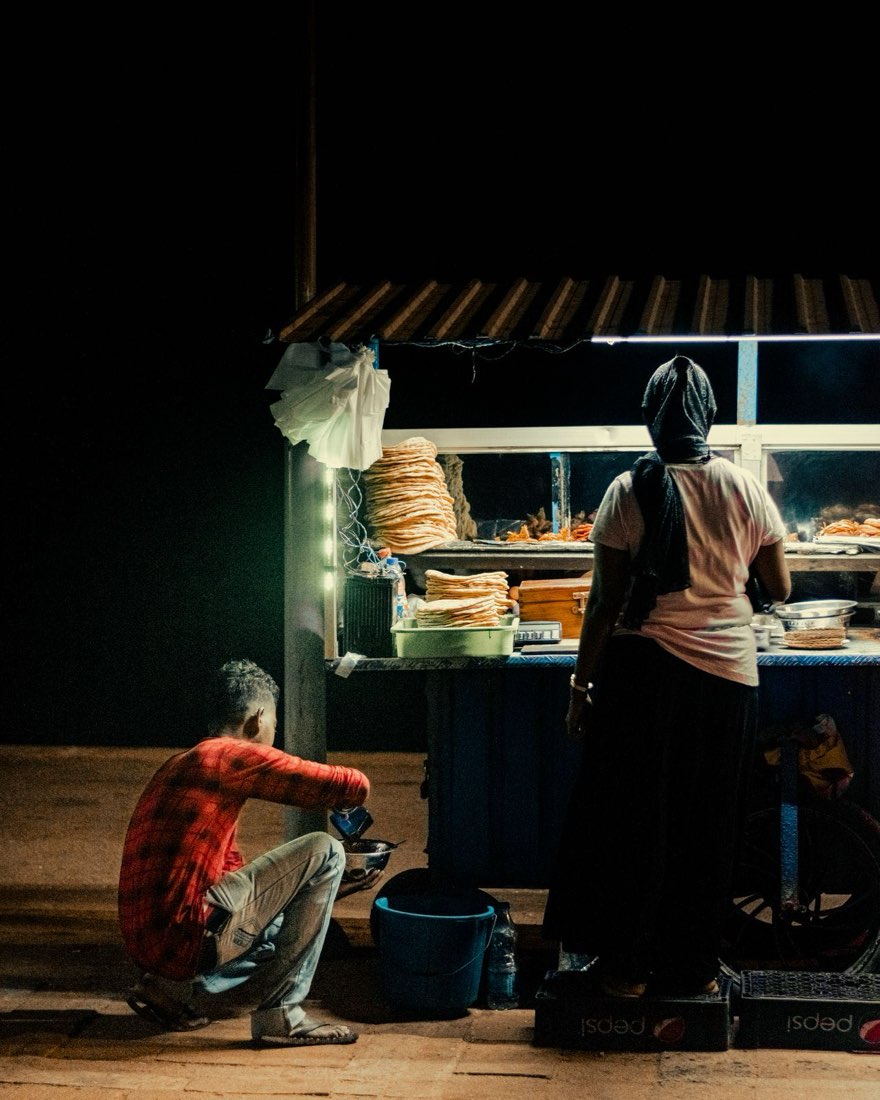
Colombo’s food scene is the most varied in Sri Lanka. The city feeds a population from every part of the island - Sinhalese, Tamil, Muslim, and Burgher communities, plus an international business crowd and a growing tourist presence. That diversity shows up in the food: from LKR 150 isso vadai at a Galle Face stall to a LKR 12,000 crab curry at Ministry of Crab, most of it within a few kilometres of each other.
Knowing which part of the city you are in matters more in Colombo than anywhere else in Sri Lanka. Prices and quality vary sharply by neighbourhood, and the best eating is often not where the most tourists are.
Street Food and Local Eating
Galle Face Green (Evenings)
The long seafront promenade in Colombo 3 is the city’s most accessible street food destination. From around 5pm, vendors set up selling isso vadai (deep-fried prawn fritters, approximately LKR 150–250 for three pieces), kottu, freshly cut tropical fruit, and thambili (king coconut, LKR 100–150). The setting - ocean breeze, sunset over the Indian Ocean, a crowd of Colombo families - is the best cheap food experience the city has to offer.
Pettah Market Area (Daytime)
Pettah (Colombo 11) is the trading and commercial heart of the city and has the densest concentration of street food and cheap eating. Vadé, rolls, fresh fruit, and tea shop short eats from approximately LKR 80–300 per item throughout the day. The best stalls are those that have occupied the same spot for years and serve the traders and market workers, not tourists.
Pilawoos Kottu (Colombo 3)
On the Duplication Road junction in Kollupitiya, Pilawoos is the most famous kottu counter in Colombo. A standard chicken kottu costs approximately LKR 450–600. Open until late, consistently busy with locals - the crowd at 10pm is the quality indicator that matters. Also runs a rice-and-curry counter at the front for daytime eating.
Kotahena Tamil and Muslim Eating (Colombo 13)
Kotahena, adjacent to Pettah, has the densest concentration of Tamil and Muslim cooking in the city. Vegetarian Tamil food, watalappam (coconut milk pudding with treacle), biryani, and hoppers at prices below most other parts of the city. This area is rarely visited by tourists but is where Colombo’s Tamil and Muslim communities eat when they want their own food.
Neighbourhood Guide
Colombo 1 - Fort
The colonial business district is quiet in the evenings, with the main exception being the Dutch Hospital complex on Hospital Street. This colonial courtyard hosts several of Colombo’s most recognised restaurants:
- Ministry of Crab: the flagship. Jaffna-style crab curry, devilled crab, butter garlic crab. LKR 5,000–15,000 per person. Book ahead.
- Noodles by Harpo’s: the more affordable option in the same complex - Chinese-Sri Lankan dishes and devilled plates at approximately LKR 800–1,800.
- Pagoda Tea Room: one of the oldest restaurants in Colombo, operating since the 1950s. Old-school Sri Lankan and Burgher food - lamprais, cutlets, love cake. Worth one visit for the atmosphere.
Colombo 3 - Kollupitiya
The most practical neighbourhood for eating across all price ranges. The Galle Road corridor and the side streets off it have local canteens, mid-range restaurants, bakeries, and street food within easy reach.
- Upali’s (Sri Jayawardenepura Mawatha): the standard-bearer for mid-range traditional Sri Lankan cooking. Rice and curry, hoppers, and short eats. A full lunch from approximately LKR 800–1,800.
- Barefoot Café (38th Lane): shaded garden café in the Barefoot store. Light meals, Sri Lankan dishes, reliable Wi-Fi. Mains approximately LKR 1,200–2,500.
- Kollupitiya market area: cheap rice-and-curry counters and short eat stalls serve the local population around the market. The best budget eating in Colombo 3.
Colombo 7 - Cinnamon Gardens
The leafiest and most affluent part of central Colombo. Restaurants here skew upscale.
- The Gallery Café (Alfred House Rd): restored colonial mansion with garden dining. Upscale Sri Lankan and international. Mains approximately LKR 2,000–4,500.
- Nuga Gama (Cinnamon Grand Hotel): traditional Sri Lankan buffet in an indoor village setting. Theatrical and good quality - approximately LKR 3,500–5,000 per person.
Colombo 4–6 - Bambalapitiya and Wellawatte
More local-feeling residential neighbourhoods with lower restaurant prices than Colombo 3. The highest concentration of Muslim-owned restaurants and biryani shops outside Pettah. Good neighbourhood eating if you are staying south of Kollupitiya.
Colombo Dishes Worth Seeking
Lamprais: the Dutch colonial legacy - rice cooked in stock with a Dutch-style meat curry, pickle, and sambol, all baked inside a banana leaf parcel. Available at Fab bakery (multiple locations), the Pagoda Tea Room, and the Dutch Burgher Union. Rarely done well outside Colombo.
Isso vadai: prawn fritters from the Galle Face stalls. A Colombo street food staple not found at the same quality elsewhere.
Hoppers: the fermented rice batter bowl is available throughout Sri Lanka, but the late-night hopper shops in Colombo 3–5 that open from 9pm and serve egg hoppers and string hoppers until after midnight are distinctly Colombo.
Watalappam: a coconut milk and jaggery pudding from the Muslim cooking tradition. Found at the Kotahena restaurants and at several mid-range Colombo bakeries.
Budget Eating
Colombo has genuine budget eating if you know where to go:
- Pettah market short eats: LKR 80–300 per item
- Local rice and curry counters (Pettah, Maradana, Kollupitiya market): LKR 350–600 for a full plate
- Pilawoos kottu: LKR 450–600
- Galle Face street food (isso vadai, kottu): LKR 100–300 per item
- Tea shops throughout the city: LKR 200–400 for a full breakfast
Practical Notes
- Major restaurants accept cards; local canteens and street food are cash-only
- Colombo traffic is serious - a tuk-tuk from Kollupitiya to the Dutch Hospital takes 10–20 minutes depending on time of day
- Several restaurants close or do not serve alcohol on poya days (full moon) - check before booking
- The evening street food window at Galle Face runs approximately 5pm–9pm before vendors pack up
Colombo Food Tours and Guided Eating Experiences
Colombo’s eating culture is too geographically spread to absorb independently in a short visit. A guided Colombo food tour typically covers three to four distinct zones in a half day: Pettah market for the cheapest and most chaotic street food on the island; the Dutch Hospital complex for upscale Sri Lankan cooking in a restored colonial setting; Kollupitiya for kottu stalls and neighbourhood restaurants; and optionally Galle Face Green for sunset isso vadai. A guide navigates the traffic logic, orders at spots with no English menus, and explains the cultural context behind each stop - turning what would be a disjointed afternoon into a coherent meal trail. Most tours run USD 35–65 per person including tastings, and are available as morning or evening departures.
Planning Your Sri Lanka Trip?
- Book tours & activities in Colombo
- Find hotels in Colombo
- Travel insurance for Sri Lanka
- Get a Sri Lanka eSIM
- Find flights to Sri Lanka