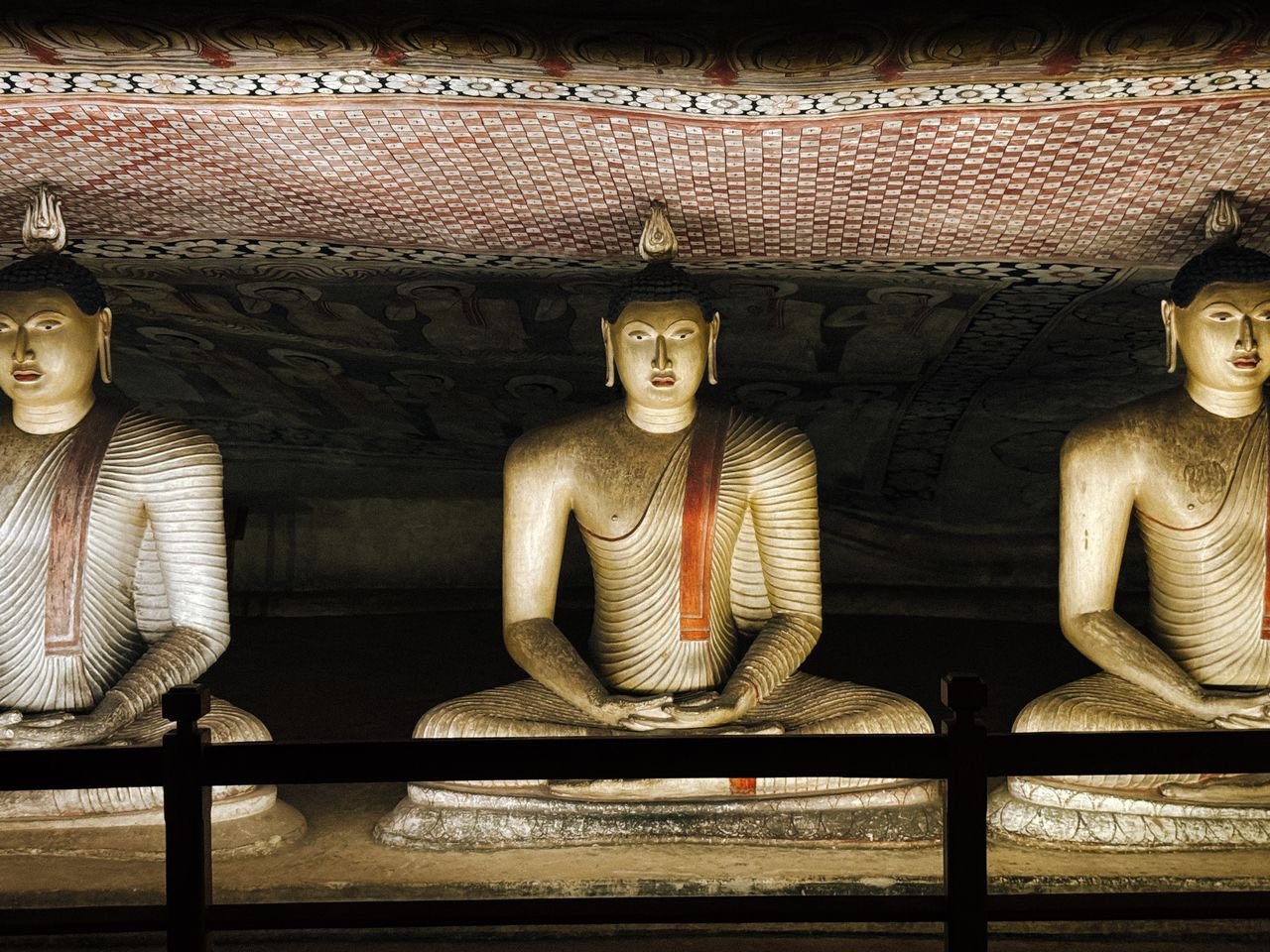
The Dambulla Cave Temple is the one reason most people stop in town. It is a UNESCO World Heritage monastery of five caves under an overhanging granite cliff, holding more than 150 Buddha images and some of the largest painted ceilings in Sri Lanka. This guide covers what you actually need on the day: the ticket, the climb, the dress code and the monkeys. For the full cave-by-cave story and the town itself, see our Dambulla travel guide.
Dambulla Cave Temple Entrance Fee and Tickets
The foreign-visitor ticket is currently quoted at LKR 2,000 (about USD 6) by most recent sources, with Sri Lankan residents paying a nominal amount. Some older pages still say LKR 1,500, and we have not found a published Central Cultural Fund notice, so the price is approximate as of 2026. Bring cash, since card payment is not reliable at the counter.
- Ticket office: at the base of the hill, beside the Golden Temple building. Buy here before you walk up, not at the caves.
- Shoe storage: a small separate fee, roughly LKR 100-200, paid to the keepers near the cave terrace.
- Ticket counter hours: earlier than the caves close. Treat 5pm as the last realistic purchase time.
- No timed entry: you do not need to pre-book. Tours that include the ticket are covered below.
Opening Hours and Best Time to Visit
The caves open at 7am and close at around 6pm (some sources say 7pm). We suggest one of two windows:
- 7-9am: cooler stone, thinner crowds and soft light through the cave openings. Best if you plan to climb Sigiriya the same day, since you can do Dambulla first and reach the rock before the afternoon heat, or the reverse.
- 3-5pm: fewer tour buses, and the late light suits photography from the terrace. Check the ticket office timing first.
Poya (full moon) days are busy with local pilgrims and can mean extra queueing; the atmosphere is worth it if you are respectful. Midday is the hottest and most crowded.
The Climb and the Golden Temple
The Golden Temple at the foot houses the ticket office, a Buddhist museum and the giant gilded seated Buddha you see from the road. It is the modern landmark that gives the site its nickname, but the caves are up the hill. From the car park the paved path with steps takes 15-20 minutes. It is hot and unshaded in places, so carry water and wear sun protection. Tuk-tuks from town drop you at the base for roughly LKR 300-500.
Dress Code and Shoes
This is an active place of worship. Cover shoulders and knees, remove shoes and hats before the cave terrace, and do not pose with your back to a Buddha statue. The stone terrace heats up fast, so thin socks help. Our temple etiquette guide covers the wider rules, including photography.
Monkeys
Toque macaques are habituated to visitors along the path. They snatch bags, bottles and loose food. Keep everything zipped, hold nothing visible in your hands, and do not feed them. If one approaches, walk on calmly rather than running.
What You See Inside
You pass through the five caves in order, from Cave 1 to Cave 5. Cave 2, the Maharaja Lena, is the largest, with a long painted ceiling and Buddha figures down its length. Cave 1 has a rock-carved reclining Buddha. Caves 3 to 5 are later Kandyan-era additions. A good first stop is the UNESCO listing for the Golden Temple of Dambulla for the official site description. Note that photography rules in shrine rooms can vary, so ask the monk or attendant, and never use flash on the murals.
Guided Tours and Combining Sigiriya
A guide adds a lot here because the paintings tell Jataka stories that are hard to read cold. We suggest a short local guide at the entrance or a pre-booked option: browse Dambulla tours and day trips on GetYourGuide, many of which combine the caves with Sigiriya Rock and a village lunch. Dambulla and Sigiriya are about 20km apart, so most visitors do both on one day. For where to stay near the caves, see where to stay in Dambulla, and for lunch after the climb, our Dambulla restaurant guide has easy options.
Practical Tips
- Carry small LKR notes for tickets, shoe keepers and tuk-tuks.
- Wear shoes that slip off easily and bring a small bag for them, in case you prefer to carry rather than store them.
- Bring water, but keep it out of sight near the monkeys.
- Allow 1.5-2 hours in total.