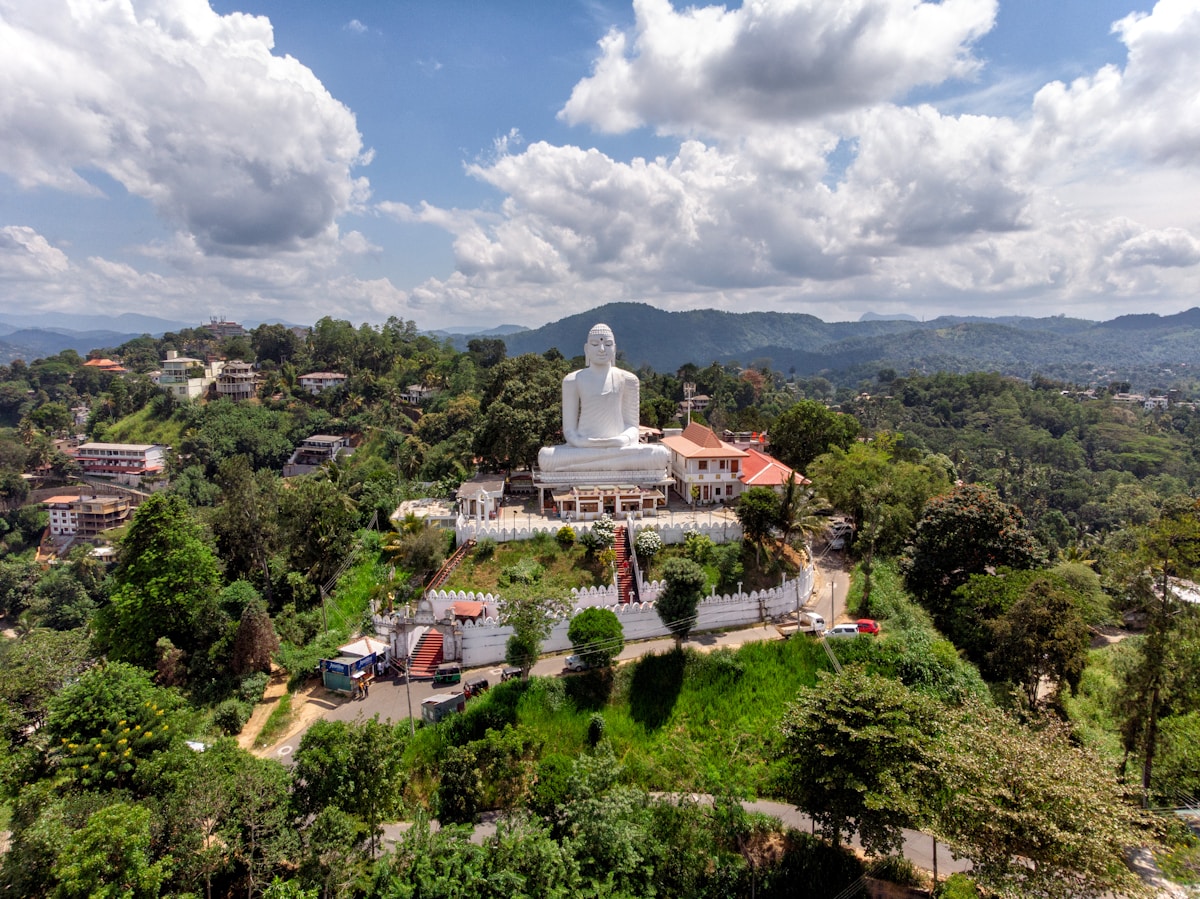
Sri Lanka’s temples range from 2,000-year-old stupas at Anuradhapura to busy urban shrines in Colombo. Knowing the basic customs before you visit makes the experience more meaningful - and avoids the awkward moment of being turned away at the entrance or asked to cover up halfway through a ceremony.
Dress Code
Cover shoulders and knees. This is the single most important rule and applies at all Buddhist temples, most Hindu kovils, and many sacred outdoor sites. It applies to all visitors regardless of gender.
Practically speaking:
- Shorts should fall below the knee, or bring a sarong
- Sleeveless tops are not permitted inside temple buildings - a light shirt or shawl covering the shoulders is the minimum
- Transparent or very tight clothing is generally frowned upon even if it technically covers the right areas
- Hats and caps should come off inside shrine rooms
Sarong and cloth rentals are widely available at all major temple entrances for LKR 100–300. The quality varies from thin polyester wraps to proper cotton sarongs. If you’re planning multiple temple visits, buying your own cotton sarong (LKR 500–800 at local fabric shops) is more comfortable and hygienic.
White clothing is what Sri Lankan pilgrims traditionally wear when visiting temples on poya (full moon) days, which are public holidays devoted to religious observance. Wearing white on poya days is a sign of respect but it’s not required of tourists.
At Kataragama, a major pilgrimage town in the south where both Buddhist and Hindu traditions converge, the dress code is enforced more strictly than at typical tourist temples - avoid shorts entirely and ensure shoulders are covered at all times in the temple area.
Shoes
Remove your shoes before entering any temple grounds - not just the inner shrine, but the outer compound or courtyard as well. This includes outdoor areas around stupas and shrines.
What to expect at the entrance:
- A shoe rack or supervised deposit area near the entry gate (tip of LKR 20–50 appreciated)
- Some sites ask visitors to remove shoes 50–100 metres before the main entrance
- Hot paving stones on sunny days - temple socks are sold at major sites for around LKR 50–100 and are worth having in the dry season
At Dambulla Cave Temple, the approach path up the hill is shoe-free from the ticket office. The stone steps get hot mid-morning - arrive early or wear socks on the way up.
At Anuradhapura and Polonnaruwa, the rules apply around individual shrines and stupas but you can generally keep shoes on while walking between sites across the archaeological grounds.
Leather items: A small number of traditional sites prohibit leather goods including belts and leather bags in the inner sanctum. Signs will indicate this where it applies.
Photography
Rules vary significantly between sites and between different areas of the same site.
Generally permitted:
- Outdoor grounds, gardens, and approach paths
- Exterior architecture of temples and stupas
- Ceremonial activities where there are no signs prohibiting it (always ask first)
Generally prohibited or restricted:
- Inside inner shrine rooms at most active temples
- During active puja (prayer) ceremonies at both Buddhist and Hindu sites
- Flash photography near any Buddha statue, even where photography is otherwise allowed
Key rules for photography at specific sites:
At the Temple of the Sacred Tooth Relic in Kandy, photography is not permitted inside the inner relic chamber (Vadahitina Maligawa). The outer courtyard and approaches can be photographed freely.
At Dambulla Cave Temple, photography is permitted throughout the cave complex but flash must be off - the frescoes and statues are sensitive to repeated flash exposure.
At the Anuradhapura and Polonnaruwa archaeological complexes, photography is generally free across the outdoor sites. Show respect around monks in prayer and don’t crowd a puja in progress to get photos.
Selfies and poses:
- Never pose with your back to a Buddha image - face the statue when posing
- Sitting or standing at the same height or higher than a Buddha’s head is inappropriate at many sites
- Some temples explicitly prohibit posing in front of Buddha images for photos; signage will indicate this
Behaviour in Shrines and Around Stupas
Circumambulation direction: Walk clockwise around stupas and shrines. This is universal in Sri Lanka’s Buddhist tradition and visitors following the path will naturally guide you in the right direction.
Inside shrine rooms: Speak softly. Remove hats. If others are praying, give them space and don’t position yourself between a worshipper and the Buddha image.
Feet: As noted above - never point your feet toward Buddha images, altars, or monks. When seated on the floor, keep feet tucked to the side or behind you.
Monks: Never touch a monk (this applies especially to women touching male monks). If speaking to a monk, it’s polite to bow slightly. Monks may decline to be photographed - always ask first and accept a refusal graciously.
Making Offerings
Offering flowers, incense, or oil lamps is open to all visitors, not only Buddhist pilgrims. It’s a participatory act that connects you to the living tradition of the temple rather than treating it as a museum.
Lotus flowers: The most common offering at Buddhist temples. Sold outside virtually every major site for LKR 20–100 per stem or small bundle. Place at the feet of a Buddha image or in the offering area.
Incense: Light the stick from a flame at the entrance offering area, then place in the sand urn. Most temples have designated spots.
Oil lamps: Available to light at many temples in exchange for a small donation. The flame is considered symbolic of wisdom.
Coconuts: This is a Hindu offering made at kovils (Hindu temples), particularly before the main shrine. Not the right offering at Buddhist temples.
At Hindu temples like Nainativu Nagapooshani Amman Kovil in Jaffna, the customs around offerings are slightly different - flower garlands and fruit are common. Always follow what local worshippers are doing and observe before participating.
Key Sites and Their Specific Notes
Temple of the Sacred Tooth Relic (Kandy): Entry LKR 1,500 for foreigners. Three puja ceremonies daily at 6:30am, 9:30am, and 6:30pm - arrive 20 minutes early. Drums signal the start; the atmosphere during puja is exceptional. Photography inside the inner relic chamber is prohibited.
Dambulla Cave Temple: Entry LKR 1,500 for foreigners. Shoes off from the ticket office. The five caves hold 157 Buddha statues and some of the finest rock frescoes in the country. Flash photography prohibited.
Anuradhapura: A living pilgrimage city with some of the world’s oldest stupas (2,300+ years). Dress code strictly enforced around active shrines like Sri Maha Bodhi (the oldest recorded tree in the world) and Ruwanwelisaya stupa. Archaeological zone entry is approximately USD $25.
Polonnaruwa: Largely an archaeological site rather than an active place of worship, but some shrines are still used and the same respectful behaviour applies. Comfortable walking shoes are important - the site covers a large area.
Kataragama: The main shrine complex sees intense crowds during festival periods (July–August Esala festival). Both Buddhist and Hindu worshippers practise here. Dress very conservatively and be aware that some ritual activities (including fire-walking) are not performances - they’re active religious acts.
If you’d prefer a guided visit with an English-speaking guide who handles the temple etiquette briefing on site, guided tours to Kandy’s temples and guided cultural triangle tours are widely available and take the guesswork out of the customs requirements.
Plan Your Trip
Search hotels in Sri Lanka on Booking.com — compare hotels and guesthouses across Sri Lanka.