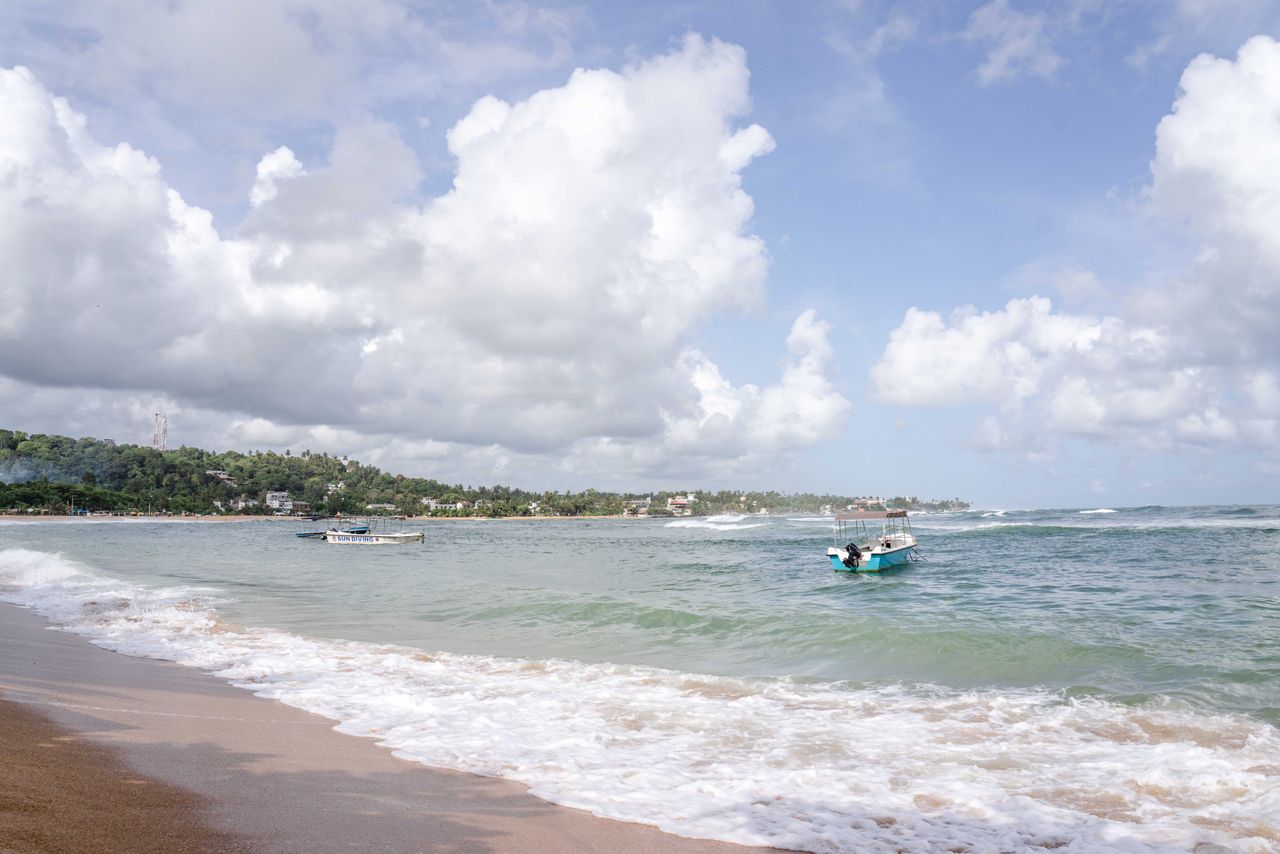
Galle is well-positioned for exploring the south coast in both directions and the inland areas toward the hill country. Most destinations along the coast are reachable by tuk-tuk, local bus, or hired vehicle without needing to change your accommodation base.
Search hotels in Galle on Booking.com
East Along the Coast
Unawatuna - 8km (15 minutes by tuk-tuk)
Unawatuna is the closest beach destination from Galle. The bay is a horseshoe-shaped arc of sand sheltered by a headland, with calm water for swimming from November to April. Snorkelling is good at the eastern end of the bay near Jungle Beach. The town has a range of restaurants, beach bars, and accommodation.
Good for a half-day trip, or a full day if you want to add snorkelling at Jungle Beach (10 minutes walk from Unawatuna’s main beach). Tuk-tuk from Galle Fort: LKR 250–350. Unawatuna snorkelling tours from Galle include equipment and a guide from around $25 per person.
Koggala Lake - 15km (25 minutes by tuk-tuk)
Koggala is a large coastal lagoon east of Galle, connected to the sea. Boat tours run from the lakeside and pass small forested islands, one of which hosts a cinnamon plantation (visitors can pick and smell fresh cinnamon bark). Another island houses a small factory making traditional Sri Lankan lacquerware masks. The Martin Wickramasinghe Folk Museum - documenting Sinhalese rural life and the work of one of Sri Lanka’s most significant authors - is on the lakeside. Half-day trip. Boat hire: approximately LKR 2,000–3,000 for a one-hour tour.
Weligama - 30km (45 minutes by bus or tuk-tuk)
Weligama is the most reliable place on the south coast for beginner surfing. The bay is broad and shallow, with consistent small-to-medium waves and a gentle shore break suitable for those learning. Surf schools along the beach offer 1.5-hour lessons for around $25–30 including board hire. The town is also known for stilt fishermen - a photographic tradition now mostly performed for tourists, but photogenic regardless. The local fish market operates in the early morning.
Mirissa - 38km (1 hour by bus or tuk-tuk)
Mirissa’s whale watching season runs from November to April. Blue whales - the largest animals ever to have lived - are regularly sighted offshore, along with sperm whales and spinner dolphins. Tours depart from Mirissa Harbour at 6–6:30am and return by mid-morning. Cost: approximately $35–50 per person. Book the day before through your accommodation or directly at the harbour. You can also book guided tours from Galle that cover the south coast - whale watching, snorkelling, and fort visits - as a combined day out.
Mirissa’s beach is pleasant for an afternoon after a morning whale watch. The tuk-tuk from Galle to Mirissa runs around LKR 1,000–1,500 one way, or take the local bus for LKR 60–80.
West Along the Coast
Hikkaduwa - 21km (35 minutes by bus or tuk-tuk)
Hikkaduwa Coral Reef Marine Sanctuary is the main draw. Snorkelling directly from the beach, where four resident green sea turtles are reliably encountered, is possible from the shore. Dive centres offer reef dives and access to deeper wreck sites including a 19th-century British cargo ship. The long main beach (3km) has surf at the northern end.
Train from Galle to Hikkaduwa is the easiest transport: 30 minutes, LKR 30–50, trains run frequently. The station is central. Snorkelling and glass-bottom boat tours at the reef can be booked directly at the beach, or Hikkaduwa day tours from Galle include transport, guide, and equipment from around $25–40 per person.
Inland Day Trips
Rumassala Hill - 5km (10 minutes by tuk-tuk)
A short forest hike above Jungle Beach leads to the hilltop Japanese Peace Pagoda (1978) and gives views over Galle Bay and the Fort. The walk takes about 1.5 hours return. The forest is good for birdwatching in the morning. A low-key option for those who want a walk without committing to a full-day excursion.
Yatagala Raja Maha Vihara - 25km (45 minutes by road)
A working cave temple used as a site of local pilgrimage, Yatagala has a large reclining Buddha and ancient rock paintings in the main cave. It is an active religious site rather than a tourist attraction - visitors are welcome but respectful dress and behaviour are expected. Entry is free; a donation is appropriate. Worth combining with a drive through the inland rubber and cinnamon plantation country north of Galle.
Sinharaja Forest Reserve - 90 minutes north
Sinharaja is a UNESCO World Heritage Site rainforest covering 18,900 hectares of the lowland wet zone. It holds the highest density of endemic species of any forest in Sri Lanka - 95% of endemic birds are present, along with endemic reptiles, amphibians, and mammals. Most visitors join a guided walk; guides are mandatory and available at the forest entrances at Kudawa (main entrance) or Morningside. A full-day trip from Galle: leave by 7am and return by 5–6pm.
Getting there: Hire a vehicle for the day (approximately LKR 6,000–8,000 from Galle). The roads beyond the main highway are not well-served by public transport.
Practical Notes
- All coastal destinations are straightforward by local bus (cheap, slow, frequent) or tuk-tuk (faster, more expensive, negotiable)
- Mirissa and Weligama are easy half-days that can be combined in one long day by road
- Sinharaja requires a full day and advance planning
- Most tuk-tuk drivers in Galle offer multi-stop south coast tours for around LKR 3,000–5,000 for a day
Planning Your Sri Lanka Trip?
- Book tours & activities in Galle
- Find hotels in Galle
- Travel insurance for Sri Lanka
- Get a Sri Lanka eSIM
- Find flights to Sri Lanka