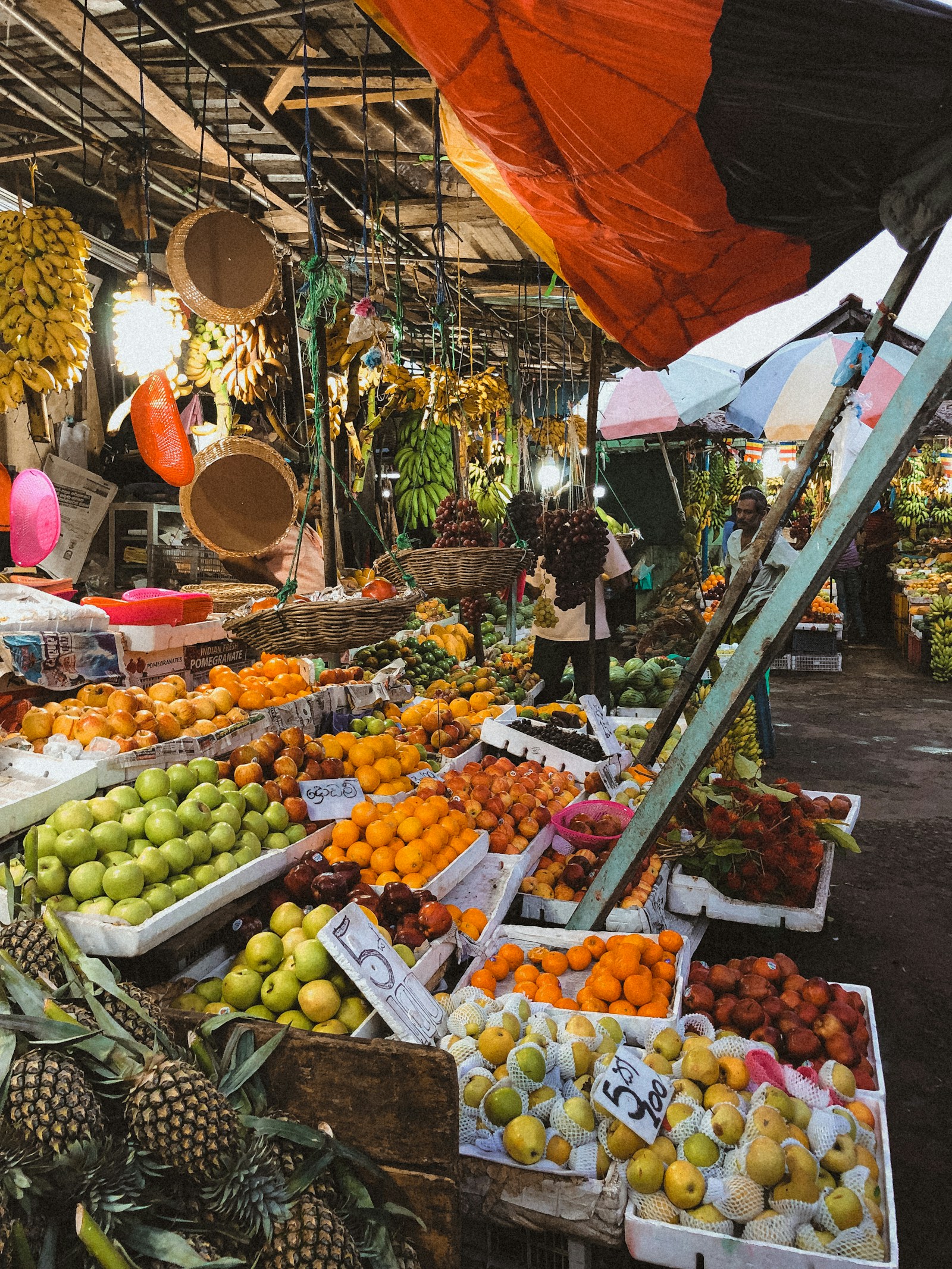
Kandy is Sri Lanka’s last royal capital, a Buddhist pilgrimage city, and the cultural centre of the hill country. Its food reflects that seriousness - rice and curry counters that have barely changed in decades, an active covered market selling produce from the surrounding hills, and a street food scene built on short eats and kottu roti rather than tourist-facing innovations.
Understanding what Kandy’s food is (and what it isn’t) helps you eat well here. The tourist strip on Dalada Veediya near the Temple of the Tooth has restaurants - they’re fine, but they’re not where the best eating happens. The better food is a short walk away at Kandy Market, in the lanes behind the clock tower, and in the local rice and curry counters that serve lunch and sell out by early afternoon.
What to Eat in Kandy
Rice and Curry
The centrepiece of eating in Kandy, and in Sri Lanka generally. A proper rice and curry lunch involves steamed rice (red or white) surrounded by three to six small portions - typically a dhal, a pol sambol (freshly grated coconut with chilli, lime, and Maldive fish), a vegetable curry, a protein curry, and papadum.
The hill country version of this meal differs from the coastal style: drier curries, more intense spice, less coconut milk, more dried chilli. Jackfruit curry (polos) and breadfruit curry are specific to the up-country tradition. Mushroom curry and a coconut-based green bean or winged bean curry are regulars.
Local rice and curry counters serve from 11am and routinely sell out of their best dishes by 1pm. Arrive early.
Short Eats
Short eats are Sri Lanka’s snack culture and Kandy is a good city for them. The term covers a wide range: fish rolls (pastry filled with spiced fish), vegetable rolls, samosas, patties, wade (fried lentil doughnuts, LKR 30–60 each), cutlets (mashed potato and fish or meat, deep fried), and kimbula banis (sweet bread rolls shaped like crocodiles, found in bakeries).
Most short eats stalls open from early morning; bakeries start at around 7am. Prices range from LKR 50 to LKR 150 per piece.
Kottu Roti
A Sri Lankan street food made by chopping flatbread (roti) with vegetables, egg, and a chosen protein on a hot griddle - you hear the rhythmic metal scrape of the griddle blades well before you see the stall. Kottu comes in vegetarian (LKR 200–350), egg (LKR 250–400), and chicken or beef versions (LKR 350–550). Kandy’s kottu stalls fire up from about 5pm. The best ones are near Kandy Market and the clock tower area.
Hoppers and String Hoppers
Bowl-shaped fermented rice pancakes, cooked crispy at the edges and soft in the centre. Egg hoppers have a whole egg cracked into the bowl before folding. String hoppers (idiyappam) are steamed rice-flour noodle nests, eaten with a dhal curry and coconut milk. Both are morning and evening foods - found at guesthouses from around 7am and at local restaurants from late afternoon.
Kandy Market Produce
The market itself is worth walking through even if you’re not buying. Vendors sell mangoes, wood-apple, rambutan, mangosteen (in season), and papaya from the surrounding region. Spices - cinnamon (Sri Lanka’s own), cardamom, cloves, dried chillies - are sold in packets. Produce prices are significantly lower than in tourist shops.
Where to Eat in Kandy
Devon Restaurant
Dalada Veediya, close to the Temple of the Tooth. One of Kandy’s most established restaurants, serving Sri Lankan and Chinese food for decades. The rice and curry lunch - five or six curries with steamed rice, papadum, and sambol - costs approximately LKR 700–1,000 as of 2026. Portions are large. The upstairs section has views toward Kandy Lake. Both locals and tourists eat here; service is fast, the menu is consistent. Open from approximately 10am to 10pm daily.
Kandy Market Counters
The covered market on Main Street and the surrounding lanes. Rice and curry counters serve from 11am: a full plate runs LKR 250–450, typically including three or four curries and sambol. Short eat stalls operate from early morning - wade, fish rolls, and egg roti for LKR 50–150 per piece. The area is busier at lunch than dinner; most counters close or run out by 3pm.
Kandy Muslim Hotel
Dalada Veediya. Despite the name, this is a restaurant - “hotel” is the South Asian term for a casual eatery. Serves biryani, kottu roti, and Muslim-style rice and curry. The chicken or mutton biryani is among the best in Kandy at approximately LKR 400–700. Busy at lunch; sell-out risk by early afternoon.
Local Bakeries
Old-fashioned Kandyan bakeries produce seeni sambol buns (caramelised onion filling, LKR 60–100), fish buns (LKR 80–120), and kimbula banis (sweet crocodile rolls). TJ’s Bakery near the Lake Roundabout is a reliably clean option for breakfast and coffee (LKR 300–500 for a coffee, LKR 200–400 for a filled bun).
Evening Street Food
From approximately 5pm, the streets around Kandy Market and the clock tower have active kottu stalls, egg roti vendors, and wade carts. A kottu roti with egg and vegetables costs LKR 250–400. Wade are LKR 30–60 each and best eaten hot. The turnover is high and the food is cooked to order.
Kandy Food Tours and Cooking Classes
Kandy has a well-developed guided food scene that goes beyond restaurant recommendations. A Kandy food tour or cooking class typically covers one of three formats: a Kandy Market walk with a guide who explains the produce, spice trade, and seasonal vegetables used in up-country cooking; a cooking class at a local home or guesthouse kitchen where you prepare rice and curry, hoppers, and a sambol from scratch; or an evening street food tour along Dalada Veediya and the lake-facing stalls. The cooking class option is the best value - you learn technique and produce a full Sri Lankan meal that you then eat, which is more useful than a restaurant visit. Most classes include a morning market trip as part of the session. USD 25–60 per person depending on format and duration.
Practical Notes
- Most local rice and curry counters are cash-only; cards accepted at hotel restaurants and a few places along Dalada Veediya
- The best rice and curry lunches sell out by 1pm - aim to eat before 12:30pm at busy market counters
- Dietary needs: Sri Lankan cuisine is naturally vegetable-forward and most rice and curry meals include several plant-based options; ask for a “vegetarian plate” and the protein curry is left off
- During the Esala Perahera festival (July–August), restaurants near the procession route are extremely busy on peak nights - eat early or expect waits
- Food from busy market stalls is generally safe; high turnover means ingredients are fresh and cooked to order
Planning Your Sri Lanka Trip?
- Book tours & activities in Kandy
- Find hotels in Kandy
- Travel insurance for Sri Lanka
- Get a Sri Lanka eSIM
- Find flights to Sri Lanka