Mirissa: Blue Whale Watching & South Coast Beach
Mirissa travel guide: blue whale watching from November to April, Coconut Tree Hill, Mirissa Beach, and where to stay on Sri Lanka's south coast.
Guides for Mirissa
Mirissa is a small beach town on Sri Lanka’s south coast, in Matara District, approximately 150km from Colombo. By road via the Southern Expressway it takes about 3 hours from Colombo, or around 1 hour from Galle (38km east). The town has a population of approximately 5,000.
Two things define Mirissa: whale watching and the beach. From November to April, blue whales and sperm whales are reliably sighted offshore, and Mirissa Harbour is the main departure point for whale watching tours on the south coast. For the rest of the year, the draw is straightforward - a calm, palm-backed beach on a sheltered bay, a low-key town without a lot of infrastructure or commercial pressure.
Mirissa Beach
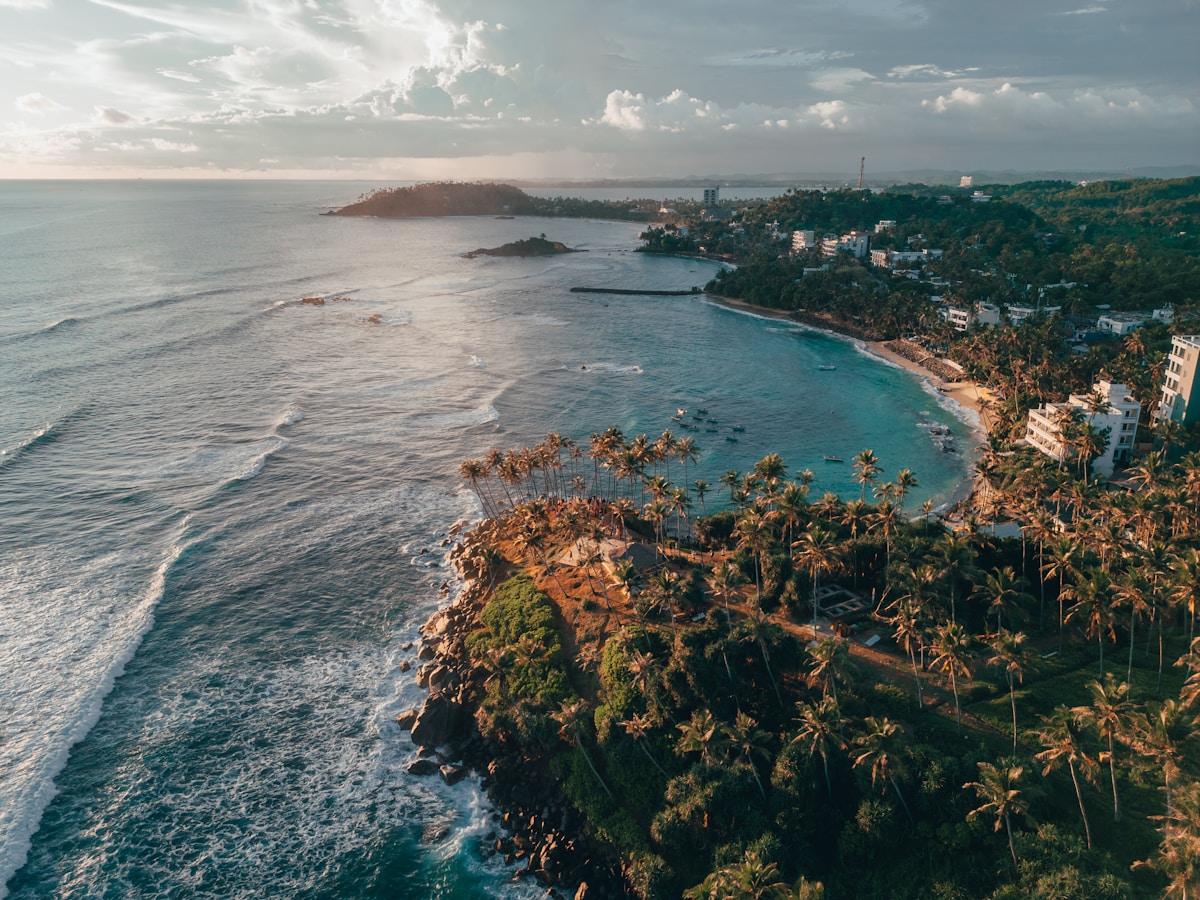
The main beach is an 800-metre arc of sand on a small bay sheltered from ocean swell by Parrot Rock, a rocky headland at the eastern end. The water is calm and safe for swimming from November to April during the dry season on the south coast. The beach has beach bars and sunbed hire, but is not overcrowded by Sri Lankan beach standards except during Christmas and New Year week, when it fills considerably.
The western end of the beach is calmer and tends to have fewer sunbeds. The area near Parrot Rock at the east end is better for snorkelling - the rocks and shallow reef attract fish and occasional turtles.
Whale Watching
Mirissa Harbour is the main departure point for whale watching on the south coast. Tours run November to April, with the peak season for blue whale sightings in January to March. Blue whales - the largest animals ever to have lived, reaching 25–30 metres - are sighted on approximately 80–90% of trips during peak season.
Tours depart between 6am and 6:30am and return by 10–11am. Cost: approximately $35–50 per person, typically including a light breakfast on board. Several operators run from the harbour; the quality varies. Look for boats that maintain responsible distance guidelines (100m minimum approach to whales) and carry a hydrophone for underwater listening. Book a Mirissa whale watching tour in advance during January–March - popular boats sell out days ahead in peak season.
The open sea beyond Mirissa can be rough, particularly early in the season (November–December). If you are susceptible to seasickness, take medication the night before.
Coconut Tree Hill
A 15-minute walk from the eastern end of Mirissa beach leads to Coconut Tree Hill, a small promontory above the ocean covered in tall coconut palms that lean dramatically toward the sea. It is one of the most photographed spots on the south coast. The views from the hilltop take in the bay, the ocean, and the fishing harbour below. No entry fee. Best in the early morning or late afternoon when the light is good.
Secret Beach
About 15 minutes on foot west of Mirissa beach, past the fishing harbour, Secret Beach is smaller, quieter, and has no sunbeds or beach bars. The walk along the coast path from the main beach is straightforward. Good for those who want to avoid the main beach crowds.
Getting to Mirissa
From Galle: 38km by road. Local buses run between Galle and Matara and stop in Mirissa - fare around LKR 60–80, journey time 1 hour. Tuk-tuk from Galle: approximately LKR 1,000–1,500.
From Colombo: Take the Southern Expressway toward Matara (exit at Pinnaduwa for the fastest route), then continue east on the A2 coast road. By bus from Colombo, take an express to Matara and alight at Mirissa junction. Total journey: 3 hours.
From Tangalle (36km west): Bus or tuk-tuk on the A2 coast road; about 45 minutes.
When to Go
November to April: Best season. Seas are calm, whale watching operates, and the beach is swimmable. December and January are peak months - accommodation fills and prices rise.
May to October: Southwest monsoon season. Seas become rough and whale watching tours stop or reduce significantly from May. The beach is swimmable on calm days but currents are stronger. This is the low season - accommodation is cheap and the town is quiet.
Practical Notes
- Mirissa town is small - there are no large resorts, only guesthouses and boutique properties
- The main accommodation zone runs from the fishing harbour to Coconut Tree Hill
- Book accommodation 2–3 months ahead for December–March
- ATMs are available in Mirissa town; the nearest large bank branch is in Matara (10km east)
- Restaurants and beach bars are concentrated on the main beach road
- Jellyfish appear in the bay during April–May; swim with caution at this time
For whale watching, snorkelling, and day tours from Mirissa - including early-morning blue whale trips and Unawatuna snorkel boats - book ahead during the November–April peak season when good operators fill up fast.
Search hotels in Mirissa on Booking.com - compare all options and filter by area, rating, and price.
More in Mirissa
- Beaches in Mirissa
- Where to Eat in Mirissa
- Day Trips in Mirissa
- Things to Do in Mirissa
- Whale Watching in Mirissa
- Where to Stay in Mirissa
- Mirissa vs Unawatuna
Related Guides
- Whale watching guide - blue whales, responsible operators, what to bring, and sighting rates
- Snorkelling and diving on the south coast - reef sites and dive operators near Mirissa
- Galle travel guide - 38km west; Galle Fort, restaurants, and day trips
- Tangalle travel guide - 55km east; quieter beaches and Rekawa turtle nesting
- Yoga retreats in Sri Lanka - several retreat centres operate near Mirissa and Weligama
- Southern coast itinerary - Mirissa in context of the full south coast route
Frequently Asked Questions
- How far is Mirissa from Colombo?
- Mirissa is approximately 150km from Colombo, about 3 hours by road via the Southern Expressway. By bus, take an express to Matara and alight at Mirissa junction.
- What is the best time to visit Mirissa?
- November to April is the best season - seas are calm, the beach is swimmable, and whale watching operates. January and February are the peak months for blue whale sightings. December and January are the busiest overall; accommodation fills and prices rise.
- When is Mirissa whale watching season?
- Whale watching runs from November to April, departing from Mirissa Harbour. The peak season for blue whale sightings is January to March, when sighting rates reach 80–90% per trip. Tours depart between 6am and 6:30am.
- What is Coconut Tree Hill in Mirissa?
- Coconut Tree Hill is a small promontory about 15 minutes' walk from the eastern end of Mirissa beach, covered in tall coconut palms that lean dramatically toward the sea. It is one of the most photographed spots on the south coast, with views over the bay and the fishing harbour. There is no entry fee.
- How do I get from Galle to Mirissa?
- Mirissa is 38km from Galle. Local buses run between Galle and Matara and stop in Mirissa - the fare is around LKR 60–80 and the journey takes about 1 hour. A tuk-tuk from Galle costs approximately LKR 1,000–1,500.
- Is Mirissa worth visiting outside peak season?
- Yes, though with adjusted expectations. During the low season (May–October), the town is quiet, accommodation is cheap, and the beach is still pleasant on calm days. Whale watching tours stop or reduce significantly from May, and seas can be rough during the southwest monsoon.
Upcoming Events in Mirissa
Whale Watching Season - Mirissa
mirissa
Whale Watching Season Mirissa 2026–27, November–April. Blue whales, sperm whales, and spinner dolphins sighted on daily boat tours.
Book an experience
Top experiences in Mirissa
Explore the best tours and activities in Mirissa , with instant confirmation and free cancellation on most bookings.
Planning to visit? Browse hotels in Mirissa, free cancellation on most bookings.