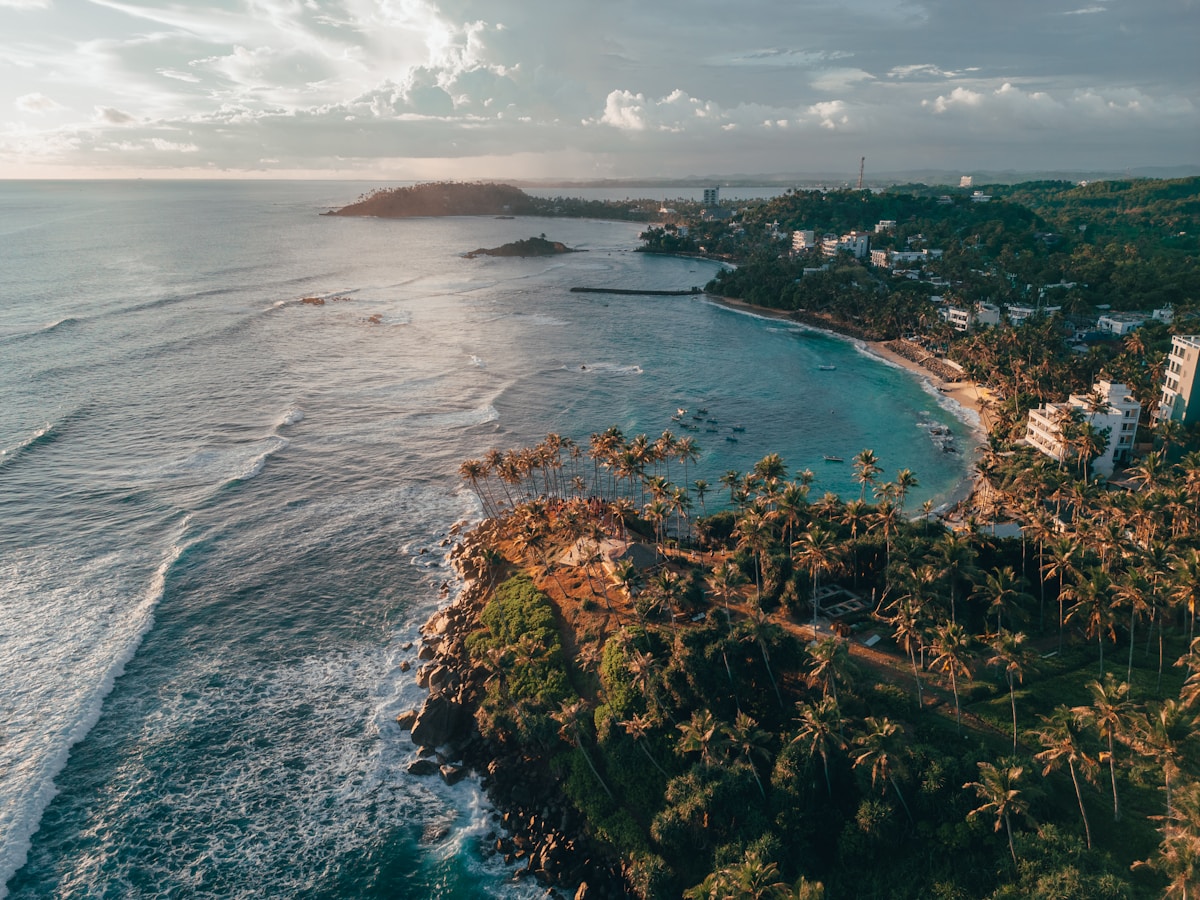
Mirissa sits at the centre of a stretch of south coast that has several distinct beach options within easy reach. The main beach handles most visitors; quieter alternatives are a short walk or tuk-tuk ride away.
Mirissa Beach (Main Beach)
The main beach at Mirissa is an 800-metre arc of sand on a sheltered bay. The bay is partly protected from ocean swell by Parrot Rock at the eastern end, which keeps the water relatively calm during the dry season (November–April). The sea is generally safe for swimming during this period - the shore break is gentle and currents are mild close to shore.
The western half of the beach is quieter and tends to have fewer sunbed operators. The central section has the highest concentration of beach bars and restaurants. Sunbed hire is available from around LKR 300–500 for a pair of chairs and an umbrella.
Busy periods: Christmas to New Year (December 25 – January 5) sees the beach fill considerably, with higher prices across accommodation and beach services. January and February are busy but manageable. March and April are quieter.
Search hotels in Mirissa on Booking.com
No lifeguards: There are no lifeguards on Mirissa Beach. The sea is generally safe in calm conditions but current awareness is important. During the transition period (April–May), easterly currents can become stronger - swim parallel to shore if you feel drift.
Parrot Rock
Parrot Rock is the rocky headland at the eastern end of Mirissa Beach, about a 5-minute walk from the main beach area. The rocks form a small promontory that shelters the bay. Snorkelling around the base of the rocks reveals coral, reef fish, and occasional sea turtles - hawksbill turtles are sometimes seen here. The water clarity is good November–April.
The top of Parrot Rock is a popular sunset viewpoint. A short scramble up the rock face (there are basic footholds) reaches the flat top with views over the bay, the fishing harbour, and the ocean. Best accessed in the late afternoon.
Secret Beach
Secret Beach is 15 minutes on foot west from Mirissa’s main beach, past the fishing harbour. The path follows the coast. The beach itself is smaller, rockier at the edges, and has no beach bars or sunbed hire - which is the point. It is rarely crowded except on the busiest days of the peak season.
The swimming here is good on calm days. Bring your own snorkel gear if you want to explore the rocks. No facilities on the beach; bring water.
Polhena Beach and Turtle Snorkelling - 8km east (Matara)
Polhena is a small beach and marine reserve near Matara, about 8km east of Mirissa on the A2 road. Green turtles and hawksbill turtles are present year-round, reliably seen while snorkelling in the shallow reef area. The best time is morning, when the turtles are most active near the surface.
There is a small entry fee (around LKR 200) and snorkel hire is available on the beach (LKR 300–500). The water is calm - Polhena is partially protected by a reef - and the turtle encounters are among the most accessible and consistent on the south coast without needing a boat. Guided snorkelling and beach tours from Mirissa can combine Polhena with other coastal highlights in a single morning.
Tuk-tuk from Mirissa: approximately LKR 400–500.
Weligama Bay - 30km west
Weligama Bay is a broad, shallow bay about 30km west of Mirissa, making it a half-day trip in either direction. The bay’s main appeal is beginner surfing - the waves are gentle, consistent, and break over a sandy bottom. Surf schools along the beach charge around $25 for a 1.5-hour lesson including board hire.
The bay is also one of the most photogenic on the south coast, partly because of the stilt fishermen - a tradition where fishermen sit on wooden poles driven into the seabed to fish over the reef. The practice is now largely tourism-oriented, but the visual is distinctive.
Tuk-tuk from Mirissa: approximately LKR 800–1,000 one way.
Sea Conditions and Safety
November to April (dry season, southwest): The calmest and best period for all beaches in the area. Currents are mild, water clarity is high, and all beaches are swimmable.
April–May: Transition period. Jellyfish appear in the bay during April and May - usually moon jellyfish, which sting but are not dangerous. Check for reports locally before entering the water. Currents also increase during this period.
May to October (southwest monsoon): The southwest monsoon brings rough seas and stronger currents to the south coast. All beaches in the area are affected. Mirissa Beach is usually swimmable on calmer days, but the open swell increases significantly. Beach bars reduce hours and some close. Whale watching stops.
No lifeguards: No beach in this area has permanent lifeguard coverage. Swim in designated areas and observe local advice about conditions.
Planning Your Sri Lanka Trip?
- Book tours & activities in Mirissa
- Find hotels in Mirissa
- Travel insurance for Sri Lanka
- Get a Sri Lanka eSIM
- Find flights to Sri Lanka