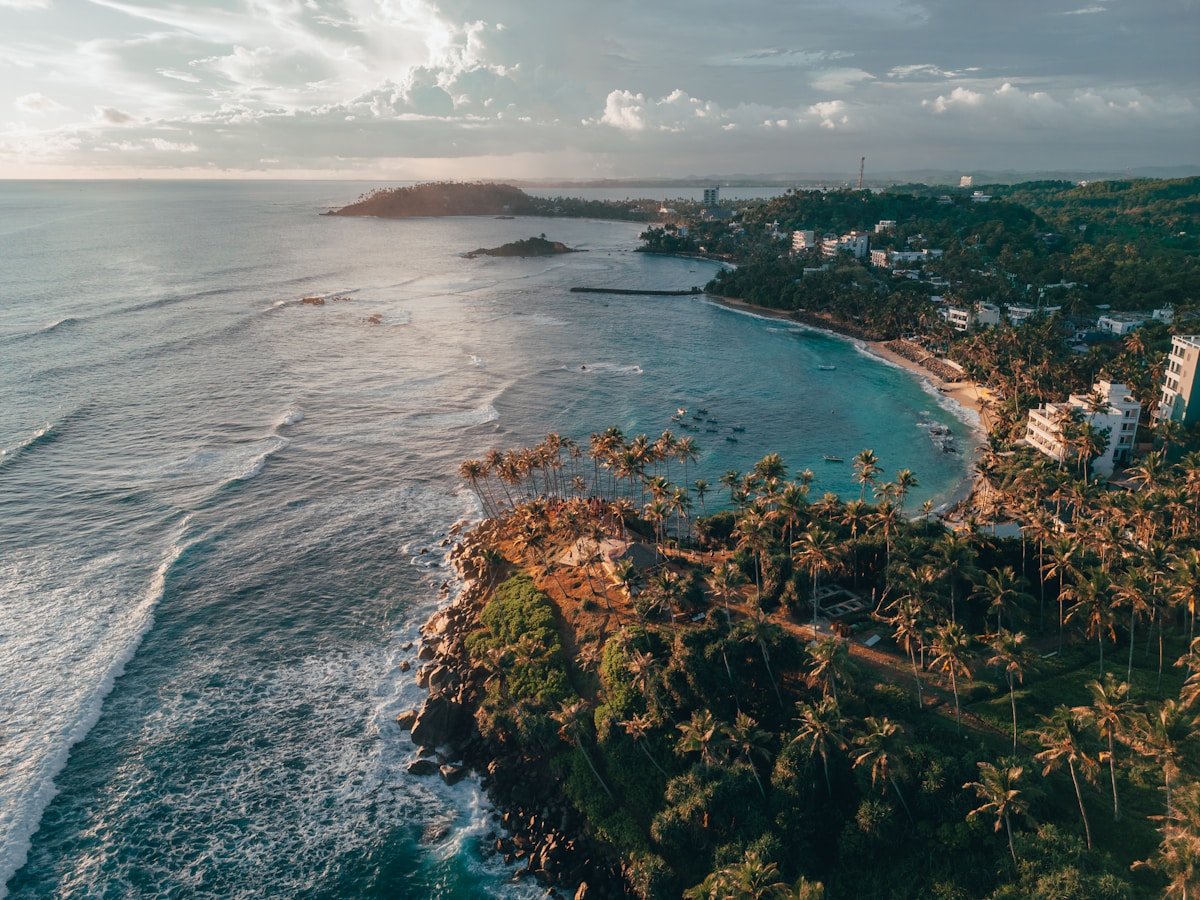
Search hotels in Mirissa on Booking.com
The waters off Mirissa on Sri Lanka’s south coast are among the most reliable places in the world to see blue whales. These are the largest animals to have ever lived - adults reach 25–30 metres in length and weigh up to 150 tonnes - and the migratory corridor they use runs through the deep water south of Sri Lanka’s continental shelf, a few kilometres off Mirissa Harbour.
The whale watching industry here has grown significantly since the early 2000s. Several dozen operators now work out of Mirissa, ranging from responsible and well-equipped to overcrowded and poorly managed. The difference in experience matters.
Species Regularly Sighted
Blue whales (Balaenoptera musculus): The primary draw. Sri Lanka’s south coast sits on a known migratory route used by Indian Ocean blue whales. Sightings are not guaranteed but the rate is high - around 80–90% of trips during January–March encounter at least one blue whale. Groups of two or three are not unusual. The blows (water spouts reaching 9–12 metres) are often visible before the whale surfaces.
Sperm whales (Physeter macrocephalus): Present year-round in smaller numbers. Sperm whales dive to extreme depths to hunt squid and can hold their breath for 60–90 minutes. Sightings involve watching for the distinctive blow (angled forward and to the left) and, occasionally, the flukes raised before a dive.
Bryde’s whales (Balaenoptera edeni): Seen less frequently than blue or sperm whales, but present in these waters throughout the year.
Spinner dolphins (Stenella longirostris): Groups of 50–150 or more are commonly encountered on the outward or return journey. They frequently bowride and approach boats. Some groups in this area number several hundred.
Orca (Orcinus orca): Occasional. Not a regular sighting but recorded in Sri Lankan waters, including off the south coast.
Best Season
January to March is the peak period for blue whale sightings. Sea conditions are generally calm and visibility is good. This is when demand for tours is highest.
November and December mark the opening of the season. Weather and seas are more variable in November - the northeast monsoon is still tapering off and conditions can be choppy. December improves considerably.
April: The season winds down toward the end of April as the southwest monsoon approaches from the Bay of Bengal. Sightings continue, but sea conditions become less predictable.
May to October: Most whale watching tours stop. The southwest monsoon brings rough seas and the Mirissa harbour is not always safe for small boats.
How Tours Work
Departure: Tours depart from Mirissa Harbour between 6am and 6:30am. The early start puts you in the best conditions - seas are calmest in the morning, and blue whales are more active at the surface in lower light.
Duration: Tours last 3 to 4 hours. Most return to the harbour by 10–11am. A typical trip involves 1 to 1.5 hours of motoring to the deeper water beyond the continental shelf, followed by 1 to 2 hours searching and observing, then a return journey.
On board: Most operators include a basic breakfast (usually bread, fruit, and water) in the cost. Bring extra food and water for a full morning. The boat is open to the elements; sun protection is important even on overcast days - the reflected glare off the water is significant.
Cost: Approximately $35–50 per person, with some variation. Cheaper options exist but often cut corners on boat size, engine quality, and crew experience.
Choosing an Operator
This is the most important decision. The quality of operators in Mirissa varies widely.
What to look for:
- Boats with a legal capacity of under 20 passengers (smaller boats get closer views, are more manoeuvrable, and give a better experience)
- A stated commitment to the responsible whale watching guidelines issued by the Department of Wildlife Conservation (Sri Lanka): minimum 100m approach distance to whales, engines cut to idle when alongside whales, no circling of animals
- Hydrophone equipment for underwater listening - experienced skippers use this to locate whales before surfacing
- Experienced crew (look for operators with a track record rather than those offering the cheapest price)
What to avoid:
- Boats that approach closer than 50m to whales
- Operators who allow passengers to jump in near whales
- Large overcrowded boats (30+ passengers)
- Reports of harassment of animals (check recent reviews before booking)
Book through your guesthouse, which will usually have a preferred operator relationship, or book directly at the harbour the evening before. Morning walk-up is sometimes possible but popular operators fill up. Pre-booking a Mirissa whale watching tour online is the most reliable way to secure a spot with a vetted operator during peak season.
What to Bring
- Seasickness medication: Take the night before if you know you are susceptible. The open water beyond Mirissa can be rough even in good conditions, and a 3–4 hour boat trip is long enough for symptoms to develop. Dramamine or Stugeron are widely available in Sri Lankan pharmacies.
- Sun protection: Sunscreen, sunglasses, and a hat. The reflected glare off the Indian Ocean is intense even when it is overcast.
- Layers: Mornings on the water can be cool, particularly early in the season (November–December). A light wind layer is useful.
- Camera: A telephoto lens (200–300mm or more) is useful for whale photography. Smartphone cameras struggle at range. A waterproof case or dry bag for your camera is worth having.
- Water and snacks: Supplementary to what is provided.
Ethics and Wildlife Notes
Blue whales are the most endangered of the great whales. The Indian Ocean population has recovered slowly from 20th-century whaling but remains at a fraction of pre-whaling numbers.
The growth in whale watching around Mirissa has brought concerns about cumulative disturbance - multiple boats surrounding individual whales simultaneously. When in the water with whales present, experienced guides will position the boat to allow whales to approach on their own terms rather than pursuing them. Support operators who demonstrate this approach.
Sighting Rates
During peak season (January–March), experienced operators report an 80–90% sighting rate for blue whales. A trip with no sightings is possible - the ocean is large and these are wild animals. Most quality operators will offer a partial refund or repeat trip on a non-sighting day, though policies vary. Ask before booking.
Planning Your Sri Lanka Trip?
- Book tours & activities in Mirissa
- Find hotels in Mirissa
- Travel insurance for Sri Lanka
- Get a Sri Lanka eSIM
- Find flights to Sri Lanka