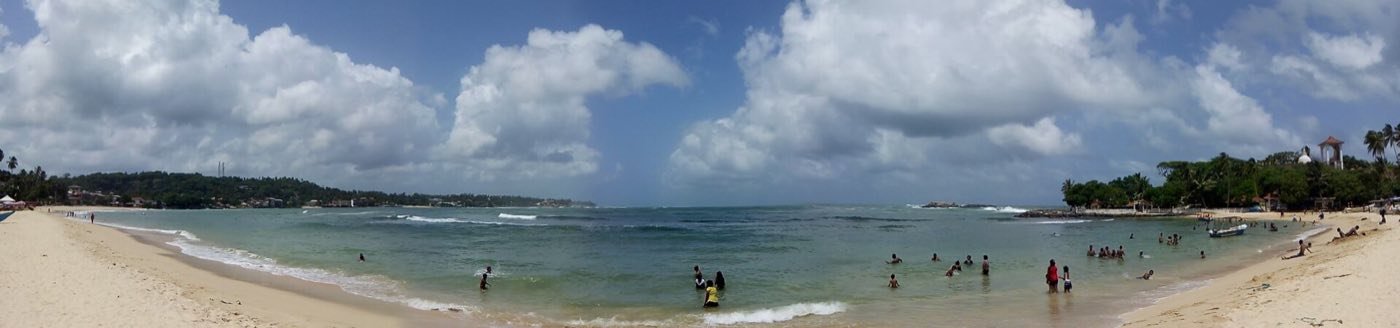
Unawatuna is a horseshoe bay about 8 km east of Galle, with roughly 1 km of sand sheltered by rocky headlands. It is the most developed beach on this part of the south coast, with a continuous row of restaurants and guesthouses, but it also has a reef, a quiet jungle cove and a hilltop pagoda within a short walk. This guide lists what is worth doing, with costs and timings. For the overview, see our Unawatuna guide.
Swim and Relax on the Bay
The bay is calm and swimmable from November to April. The western end is shallower and gentler, while the eastern end towards the rocky point has more current and better snorkelling. Sunbeds are available along the beach, and most beach restaurants give you a bed if you order food and drinks. December to March is the busy season, and April and November are much quieter. There are no permanent lifeguards, so take care in rougher conditions. For a comparison of sand and sea across the area, see our Unawatuna beaches guide.
Snorkelling the Reef
The best snorkelling in the bay is the reef at the eastern end, near the headland below Rumassala Hill. In calm weather visibility is good and the shallow reef holds a range of reef fish. Snorkel hire from beach operators costs about LKR 300 to 500 (as of 2026). For deeper dives and PADI courses along the coast, our south coast snorkelling and diving guide lists the sites and seasons.
Jungle Beach
Jungle Beach is a small rocky cove on the far side of the headland. Walk the coastal path through Rumassala forest (about 10 minutes) or take a tuk-tuk for roughly LKR 150 to 200 from the main beach. The water is calmer and clearer than in the main bay, and the rocks and deeper water draw more marine life. There are no beach bars, so bring food, water and your own snorkel if possible, since hire is not guaranteed. It suits anyone who prefers quiet to convenience.
Japanese Peace Pagoda
The white pagoda above the beach was built in 1978 by the Nipponzan Myohoji Buddhist order, which has built similar pagodas around the world. The walk up through Rumassala forest takes 15 to 20 minutes. The pagoda itself is simple, and the main reward is the view over the bay and coast from the hilltop. Go in the morning or late afternoon to avoid the heat, and dress modestly.
Rumassala Hill Walks
The forested hill behind the bay has walking trails and is a reasonable spot for birdwatching, with species recorded that are unusual for coastal lowland forest. Local belief links the hill to the Ramayana, and the forest is considered sacred by many Buddhists. Wear closed shoes and avoid walking alone at dusk.
Day Trips from Unawatuna
- Galle Fort (8 km west): the Dutch-era fortification is a UNESCO World Heritage Site. Allow half a day for the ramparts, lanes and lighthouse. See our Galle things to do page.
- Mirissa whale watching (about 30 km east): trips run from November to April. See our Mirissa whale watching guide.
- Weligama surf (about 35 km east): beginner lessons on a forgiving bay. See things to do in Weligama.
- Sinharaja Forest (2 to 3 hours north): a UNESCO rainforest for birding.
Getting Around
From Galle, tuk-tuks cost about LKR 250 to 350 and take 15 minutes. Coastal buses on the Galle to Matara line stop at Unawatuna junction, a 5-minute walk from the beach. By train, the nearest station is Galle, 8 km away, then take a tuk-tuk. From Colombo, the Southern Expressway to Pinnaduwa and the A2 takes around 2.5 hours.
A Simple Plan
Morning: snorkel the eastern reef while the water is calm. Midday: lunch on the beach road. Afternoon: walk to Jungle Beach or up to the pagoda, then a tuk-tuk to Galle Fort for sunset on the ramparts.
Where to Stay and Book
Unawatuna has everything from basic beach huts to boutique guesthouses. Properties set back from the beach road are quieter at night. Read our guide to where to stay in Unawatuna for areas and price tiers, then search Unawatuna hotels on Booking.com. For snorkelling, Galle Fort and whale watching trips, browse Unawatuna tours and activities.