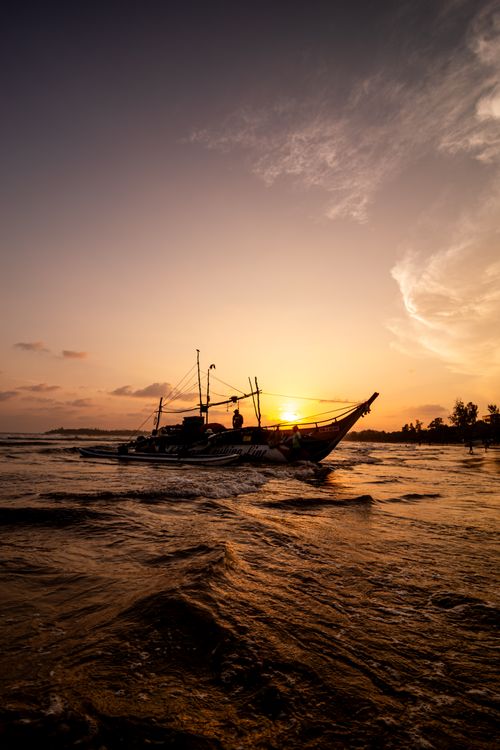
Weligama is the south coast’s answer to Canggu or Tamarindo: a surf town that has quietly become a functioning remote-work base without becoming a laptop-factory. The bay is wide and forgiving for learner surfers. The town has actual infrastructure — a decent supermarket, a pharmacy, ATMs, a post office, and a growing number of cafes that have upgraded their internet precisely because the nomad market is worth keeping. Monthly rents are significantly below Galle Fort prices. And it is only 20 minutes by tuk-tuk from the whale-watching boats at Mirissa.
This is the base to choose if your work schedule is flexible and you want the surf lifestyle to be a daily reality rather than a weekend trip.
Why Weligama Works for Remote Work
Three things separate Weligama from other south-coast towns: connectivity infrastructure, community, and value for money.
Connectivity: SLT fibre has reached several cafes on the main strip and around the bay. The best spots — see the cafe list below — reliably hit 20–50 Mbps download and 15–25 Mbps upload. That handles video calls, cloud uploads, and most async work comfortably. It is not Colombo, but it is a meaningful step above the 4G-hotspot dependence that characterises most of the hill country.
Community: There is a real nomad community here, and it self-organises. Regulars gather at the same cafes at predictable times, surf together in the mornings, and share apartment leads and visa information in WhatsApp groups. You will not be working alone in a resort town — there are other people with laptops who understand the rhythm of a surf-work day.
Value: Galle Fort is prettier, has better restaurants, and has faster internet in its cafes — but rents are 40–60% higher and the guesthouse market is thin. Weligama offers similar working conditions at a noticeably lower cost of living.
Best Cafes and Coworking Spots
WeligaWork Café (near the main beach road): The nomad anchor of Weligama. Reliable fibre at 30–50 Mbps, power sockets at every table, good filter coffee, and a management that actively supports the working-visitor trade. Opens from 7:30am. Gets busy mid-morning; arrive early for the best seats.
Hangtime Surf Café: Positioned closer to the bay with sea views, speeds run 20–35 Mbps. Less reliable in the evenings when the beach crowd arrives. Good for morning work sessions; share a table with surfers checking forecasts.
Boda Boda Café: Slightly further from the beach, quieter during mid-morning hours. Internet runs at 20–40 Mbps. Good for long focused sessions when the beachfront cafes are full.
Mirissa (3 km east): Captain’s Table and several cafes near the beach have adequate Wi-Fi for lighter tasks. Not as reliable as Weligama’s main cafes for serious work sessions but fine for a change of scene in the afternoon.
For all-day working sessions, your own accommodation’s internet is rarely sufficient — plan to work from cafes rather than treating the guesthouse Wi-Fi as a primary connection.
SIM Card and Backup Connectivity
Pick up a Dialog tourist SIM at Bandaranaike International Airport on arrival. Coverage on the Galle Road (the coastal highway linking Colombo, Galle, Weligama, and Mirissa) is solid 4G. In Weligama town, Dialog 4G typically delivers 15–30 Mbps on mobile data, which is a workable backup when cafe Wi-Fi fails.
A 30-day data package with 20–30GB costs approximately LKR 1,500–2,500 ($5–8). Top up at any Dialog dealer in town.
For international connectivity before arriving or as a preparatory eSIM, see our Sri Lanka eSIM guide.
Accommodation in Weligama
Guesthouses near the bay: The best value option for short-stay nomads. Rooms with AC and guesthouse Wi-Fi start from approximately LKR 3,500–5,500/night ($12–18). Monthly rates negotiated directly are often 30–40% below the per-night price.
Private apartments: The real target for stays of a month or more. Studios and one-bedroom apartments within walking distance of the main cafe strip rent for approximately LKR 80,000–150,000/month ($270–500) including utilities. Ask guesthouse owners and local real estate agents — most listings are word-of-mouth. WhatsApp groups shared in the cafe community are the fastest route.
Surfer hostels: Dorm beds from LKR 1,500–2,500/night ($5–8). Useful for the first few nights while you find a longer-term setup, but not workable for sustained productivity.
A few properties offer direct sea views with the bay below the terrace. The premium for that view is typically an extra LKR 20,000–40,000/month — worth it if the beach is the point.
Scooter Rental and Getting Around
A scooter is the right vehicle for the Weligama-Mirissa strip. Rentals cost approximately LKR 1,200–1,800/day ($4–6) or LKR 20,000–30,000/month ($65–100) from agencies in town. An international driving licence is technically required but enforcement is minimal; drive cautiously on the Galle Road (heavy truck traffic) and never during heavy rain.
Weligama town, the main cafes, the beach, and the local market are all walkable. Mirissa is 3 km east — a 10-minute scooter ride or a LKR 150–250 tuk-tuk.
Galle Fort is 17 km west — worth visiting for a day, reachable by bus (LKR 60) or tuk-tuk (LKR 600–800 one-way).
Monthly Cost Breakdown
| Category | Monthly Cost (LKR) | Monthly Cost (USD approx.) |
|---|---|---|
| Apartment (1BR near beach) | 80,000–150,000 | $270–500 |
| Food (mix local + cafes) | 60,000–100,000 | $200–330 |
| Scooter rental | 20,000–30,000 | $65–100 |
| Coworking café spend | 15,000–25,000 | $50–85 |
| SIM card (30-day data) | 1,500–2,500 | $5–8 |
| Misc (transport, pharmacy) | 8,000–15,000 | $25–50 |
| Total | ~185,000–320,000 | $615–1,070 |
These are realistic mid-range figures for 2026. At the lower end you are in a basic room and eating mostly local food. At the upper end you have a private apartment with AC, eat at beachside cafes regularly, and rent a scooter for the full month.
The Surf and Work Schedule
The rhythm that most nomads settle into in Weligama: surf from 6:30–9:30am (the bay is reliable for beginners and intermediate surfers throughout the dry season), arrive at a cafe by 9:30–10am, work through until 1–2pm, eat a local rice-and-curry lunch (LKR 350–600), back to work from 3–6pm, and then whatever Mirissa or the beach sunset has to offer. It is a functional day that does not feel like a sacrifice.
Surf lessons from local schools on the bay cost approximately LKR 3,000–5,000 ($10–17) for a two-hour session. Most nomads who stay longer than two weeks rent a board by the week (LKR 1,500–2,000/day) rather than taking daily lessons.
Visa Planning for Longer Stays
The tourist ETA allows 30 days on arrival, extendable to 3 months and then 6 months through the Immigration Department in Colombo. See the full process in our Sri Lanka digital nomad visa guide.
For the south coast specifically: plan to make the Colombo immigration trip early (book it in the calendar, not as an afterthought). The round trip from Weligama to Battaramulla in Colombo takes the better part of a day — allow for it.
Travel Insurance
Sri Lanka requires evidence of travel insurance for visa extensions. Many nomads use EKTA for coverage that satisfies this requirement. See EKTA insurance for Sri Lanka for policies that meet the documentation standard.
Getting to Weligama
From Colombo: The most comfortable option is the coast train from Fort Station to Weligama (2.5–3 hours, LKR 250–1,000 depending on class). Book a seat in the observation car if available — the coastal section south of Aluthgama is genuinely spectacular. Alternatively, a private taxi or Pickme (Sri Lanka’s ride-hailing app) runs approximately LKR 6,000–9,000 for the 150 km journey.
From Galle: Buses run every 20–30 minutes and cost LKR 60–80 (45 minutes). Tuk-tuk is LKR 500–700 one-way.
From Bandaranaike Airport: Private transfer approximately LKR 8,000–12,000 (3 hours). The train route requires changing at Colombo Fort Station.