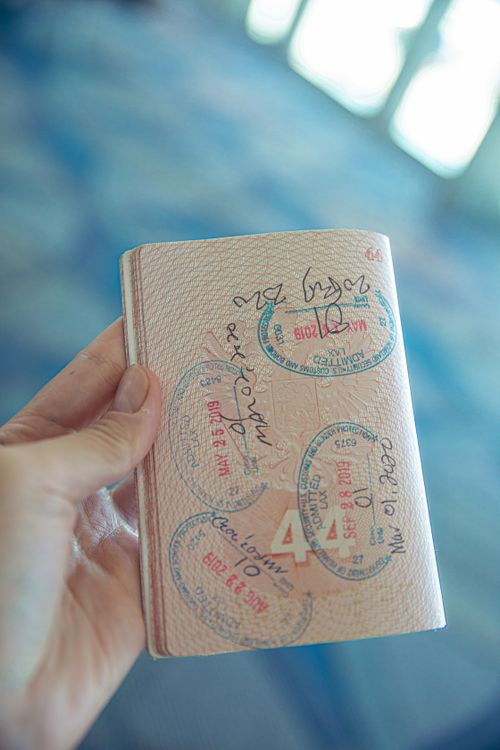
Sri Lanka has no dedicated digital nomad visa. The practical reality for most remote workers in 2026 is the tourist ETA system: 30 days on arrival, extendable twice up to a 6-month maximum, followed by an exit-and-re-entry cycle if you want to stay longer. Understanding the mechanics of that system — who handles extensions, what documents are required, what insurance is needed, and how the exit-re-entry calculus works — is the core of visa planning for Sri Lanka.
This guide covers the full process for 2026. For the general visa overview and exemption list, see our Sri Lanka visa and entry requirements guide.
The ETA: What You Get on Arrival
The Electronic Travel Authorisation (ETA) is the entry permit for most nationalities visiting Sri Lanka. Apply online at eta.gov.lk before travel — the system is functional but occasionally slow, so apply at least 48 hours before departure.
What the ETA gives you:
- 30 days stay from the date of arrival
- Double-entry (you can exit and re-enter once within the validity period)
- Applicable for tourism, visiting family, and short business visits
ETA cost: Approximately USD 35–50 depending on nationality (2026 rates). Some nationalities receive free ETA.
ETA eligibility: Most Western, East Asian, and Southeast Asian nationalities are eligible. Check the current exemption and eligible list at eta.gov.lk before applying — the list updates periodically.
Nationalities requiring a visa on application (not ETA): A small number of nationalities must apply through the Sri Lanka High Commission or Embassy rather than the online ETA portal. Verify your status before travel.
First Extension: 30 Days to 3 Months
The first extension adds roughly 2 months, bringing your total permitted stay to approximately 3 months from arrival.
Where: Department of Immigration and Emigration, 41 Ananda Rajakaruna Mawatha, Battaramulla, Colombo 10120. Not in central Colombo — Battaramulla is a suburb east of the city centre. By tuk-tuk from Colombo 3: approximately 30–40 minutes, LKR 600–800.
When to apply: Within the validity of your current ETA — before it expires. Apply with at least 5–7 days remaining on your visa. Do not wait until the last day.
Documents required:
- Passport (valid for at least 6 months beyond your intended stay)
- 2 passport-size photographs (35x45mm, white background)
- Completed application form (available at the Immigration Department counter)
- Confirmed accommodation evidence — hotel booking printout, signed rental agreement, or guesthouse letter
- Proof of onward travel — a flight booking out of Sri Lanka, even a refundable or flexible ticket
- Proof of sufficient funds — a recent bank statement showing at least USD 200–300 available per remaining month (the figure is not officially codified but expect scrutiny if funds appear very low)
- Valid travel insurance covering your extended stay (see insurance section below)
Cost: Approximately USD 60–100, paid in hard currency at the finance counter. Bring USD, euros, or GBP in cash as a backup — card acceptance is sometimes unreliable.
Processing time: Usually same-day or next-day. Some applicants receive their extended stamp within a few hours; others are asked to return the next morning. Plan to spend 2–4 hours at the office. Arrive as early as possible (doors open at 8:30am).
Practical note: The Immigration Department is a busy government office. Dress neatly. The process is straightforward but requires patience. Officers are generally professional; having all documents organised in a single folder makes the process smoother.
Second Extension: 3 Months to 6 Months
If you want to stay beyond 3 months, apply for the second extension before your first extension expires. This brings your total stay to a maximum of 6 months from the original arrival date.
Same process and location as the first extension. The documents are identical, but you may be asked for more substantial proof of accommodation (a monthly rental agreement rather than just a hotel booking) and continued proof of insurance.
Cost: Approximately USD 100–120 for the second extension (slightly higher than the first).
Important: The 6-month limit is from the original date of arrival — not from when each extension was granted. If you arrived on January 1 and received a 30-day ETA, your maximum permitted departure date is June 30, regardless of when each extension was processed.
Travel Insurance Requirements
The Immigration Department requires proof of valid travel insurance for visa extensions. This is not optional — officers at Battaramulla check for it, and applications without insurance documentation are sent away to obtain coverage before processing.
The insurance document must show:
- Your full name (matching your passport)
- Coverage dates that cover your extended stay period
- Medical coverage and repatriation coverage (minimum amounts are not officially stated, but EUR 30,000 medical / EUR 30,000 repatriation is a safe benchmark)
EKTA Traveling offers travel insurance that meets this standard and covers nomad-duration stays. See EKTA insurance for Sri Lanka for current policies and pricing.
Do not purchase insurance as a rushed afterthought the morning of your extension appointment. Buy it at least 3–5 days before, print the policy certificate, and verify the coverage dates are correct before leaving for Battaramulla.
The Business Visa Option
Sri Lanka offers a business visa for those with legitimate business relationships in the country. This requires:
- A letter of invitation from a Sri Lankan company
- Evidence of the business relationship (contract, correspondence, company documents)
- Application through the Sri Lanka High Commission or Embassy before arrival (not available on arrival)
This is relevant for nomads who have incorporated locally, are working with Sri Lankan clients, or have a formal business connection. For the majority of nomads working for foreign employers or clients from Sri Lanka, the tourist ETA extension route is more practical.
Working on a Tourist Visa: The Legal Reality
The tourist visa does not authorise employment in Sri Lanka. However, remote work for a foreign employer where income is deposited outside Sri Lanka is widely practised and generally tolerated. No dedicated enforcement mechanism targets remote workers on tourist visas.
The distinction that matters legally:
- Working remotely for a foreign employer (income paid outside Sri Lanka): Grey area, widely tolerated
- Providing services to Sri Lankan businesses or clients for payment in Sri Lanka: Not permitted on a tourist visa
For practical purposes, most nomads operate on the tourist ETA without issue. If your situation involves Sri Lankan business income or a significant local business footprint, seek local legal advice.
Exit and Re-Entry: Beyond 6 Months
After exhausting the 6-month maximum, you must exit and re-enter on a new ETA.
Common exit routes from the south coast:
- Colombo to Chennai (SpiceJet, SriLankan, IndiGo): ~1 hour, often under USD 50–80
- Colombo to Bangkok (SriLankan, Thai): ~3.5 hours, USD 100–200
- Colombo to Kuala Lumpur (SriLankan, AirAsia, Batik): ~3.5 hours, USD 80–150
- Colombo to Malé (SriLankan): ~1.5 hours, often USD 80–130
Minimum time outside: No official minimum period is stated in Sri Lanka’s immigration rules. Most nomads spend 2–5 days outside before returning; some return after 24 hours. However, immigration officers have discretion to refuse re-entry to visitors with a pattern of very short absences over multiple long stays.
Re-entry reality: Re-entry is generally granted without issue. Having a plausible story — visiting a specific place, attending an event, meeting a friend — helps. Officers become more suspicious if your passport shows many short India trips precisely separated by 6-month Sri Lanka stays.
Flight logistics: Book from Colombo rather than from your south-coast base. Bandaranaike International Airport is in Katunayake, 35 km north of Colombo. From Weligama or Galle, allow 3–3.5 hours for the journey to the airport.
Key Immigration Contacts
- Department of Immigration website: www.immigration.gov.lk
- ETA portal: www.eta.gov.lk
- Immigration Department address: 41 Ananda Rajakaruna Mawatha, Battaramulla, Colombo 10120
- Immigration Department phone: +94 11 532 9000
Before You Extend: Quick Checklist
- Passport valid for 6+ months beyond intended stay
- 2 passport photos (white background)
- Accommodation proof (hotel booking or rental agreement)
- Onward flight booking (refundable is fine)
- Bank statement (last 3 months, showing sufficient funds)
- Travel insurance certificate (dates covering extended stay, medical + repatriation coverage)
- USD or EUR cash for the extension fee
- Allow a full day in Colombo; arrive at Immigration by 8:30am
For connectivity planning during your stay, the Sri Lanka eSIM guide covers arrival SIM options and data packages that keep you connected between coworking spaces.