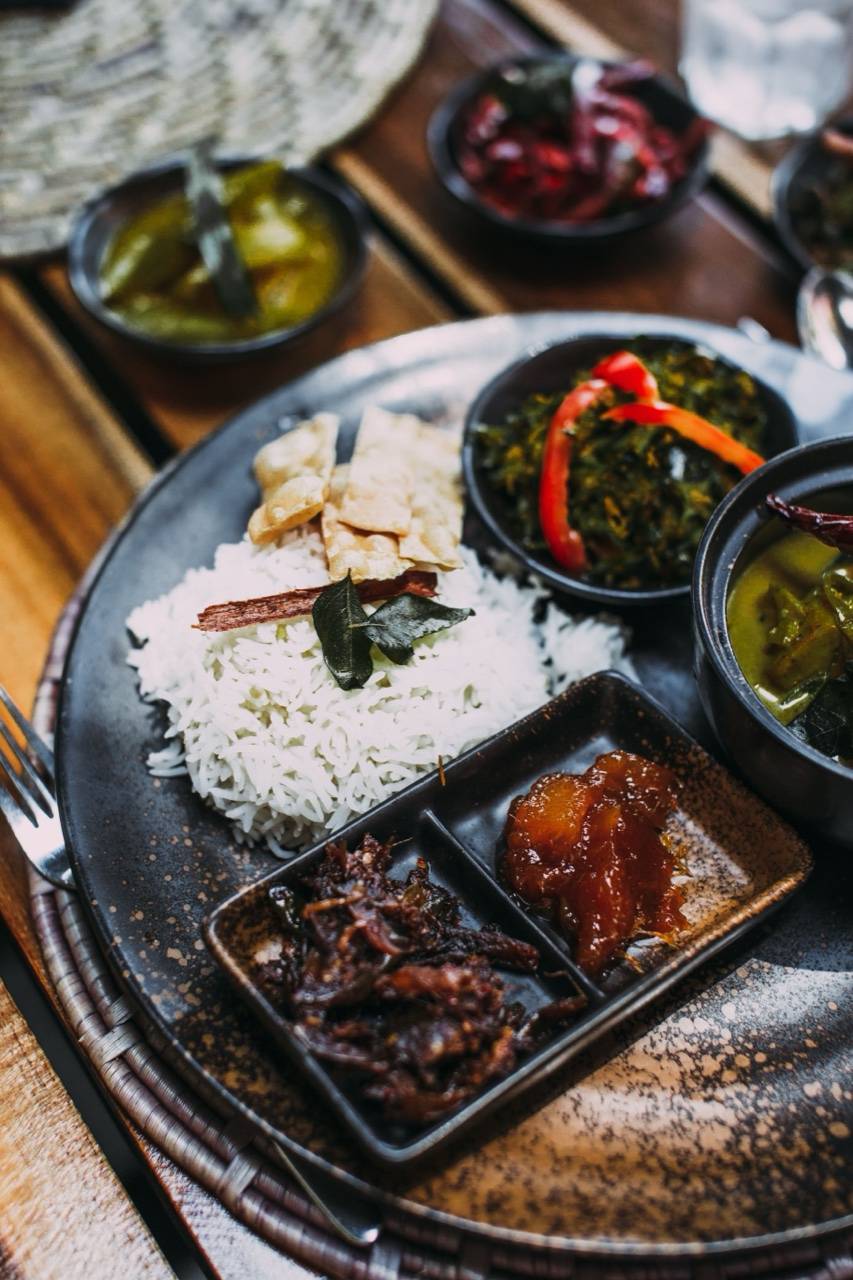
Arugam Bay is Sri Lanka’s surf capital - a small, low-key town on the southeastern coast that draws surfers, backpackers, and slow-travel types who settle in for weeks at a time. The food scene reflects the crowd: a mix of Sri Lankan rice and curry, fresh lagoon seafood, and café culture with the kind of smoothie bowls, avocado toast, and fresh juices that follow surf tourism anywhere in the world.
It is not a sophisticated restaurant destination. The main strip is about 2km of guesthouses, surf shops, and restaurants, and you can walk the whole thing in twenty minutes. But what Arugam Bay does well - fresh grilled seafood from the lagoon, honest Sri Lankan cooking, and the easy rhythm of eating on the beach - it does genuinely well.
The Main Strip
Almost all the restaurants in Arugam Bay sit along or just off the single main road that runs parallel to the beach from the northern end of the bay down toward the lagoon. The northern section is where most surf culture concentrates: beachside cafés with hammocks, big juices, and menus heavy on Western breakfast items alongside Sri Lankan staples. The southern section, toward the lagoon, is where the better seafood restaurants are concentrated.
Walking the strip before choosing where to eat is the right approach. Menus are chalked on boards and posted on walls; prices are visible; and the style of each place - whether it’s a local canteen, a surf café, or a proper sit-down seafood restaurant - is obvious from the outside.
Most restaurants open from around 7am for breakfast and stay open through dinner until 10pm during high season (May–October). Outside this window, closures are common.
Sri Lankan Rice and Curry
The local canteens at the northern end of the main strip serve the most authentic and cheapest Sri Lankan food in Arugam Bay. A full rice and curry plate - red rice with three or four curries, sambol, papadam - costs LKR 400–650. The curries change daily based on what’s available: at Arugam Bay this means a lot of fish and prawn dishes alongside the standard vegetable options.
Sooriya Tourist Rest near the main junction is one of the longest-running local restaurants and is where many budget travellers eat. The rice and curry is proper and filling - not adapted for tourists. Fish curry here is made with the catch from that morning’s boats. Around LKR 450–600 per person.
Guesthouses with kitchens are a significant part of eating in Arugam Bay. The smaller family guesthouses, especially away from the main strip, often cook on request - the owner or their family prepares a home-style rice and curry for guests for LKR 500–800. This is consistently where travellers report eating their best meals. Ask your guesthouse whether they cook on request.
The eastern Sri Lanka cooking style has some differences from the south coast: mustard seed tempering is more pronounced, coconut milk is used generously, and fish features heavily in the curries because the fishing community here has direct access to the Indian Ocean and the lagoon.
Seafood
The Arugam Bay lagoon south of the main beach produces the seafood that makes this town worth eating in. Lagoon prawns - locally caught, grilled over charcoal with garlic, lime, and chilli - are the thing to order. The prawns here are large and sweet, better than what you get at similar prices in Mirissa or Unawatuna, because the lagoon is less intensively fished and the town is smaller.
Mama’s Restaurant at the lagoon end of the strip is the most consistently recommended seafood restaurant. It has been operating for over two decades and is family-run. Grilled prawns from approximately LKR 1,800–2,500 for a substantial portion; grilled fish (generally snapper, barramundi, or whatever was caught that morning) from LKR 1,200–1,800; crab from LKR 2,000 when available. The preparation is simple - good seafood, fire, lime - and that simplicity works.
The lagoon-side shacks at the far southern end of the bay are cheaper than Mama’s but the quality is comparable. These are less established businesses - some are seasonal pop-ups operated by fishing families - and the menu is whatever was caught. Expect LKR 1,200–2,000 for a full grilled prawn plate.
Timing matters for seafood quality: eat early in the evening (6–7pm) when the day’s catch has been prepared that afternoon. Later arrivals sometimes find a narrowed selection.
Devilled dishes - devilled cuttlefish, devilled prawns - are popular at the mid-range restaurants on the main strip. The eastern Sri Lankan version uses dried red chilli and a touch of soy sauce, making it tangier and drier than the Colombo version. Worth ordering if you see cuttlefish on the menu.
Surfer Cafés and Breakfast
The surf culture brought a certain type of café to Arugam Bay that you now find at every surf town from Bali to Portugal: all-day brunch menus, smoothie bowls with tropical fruit, cold brew coffee, and bowls of granola with coconut yoghurt. Arugam Bay has these, and they are well-executed given the location.
Spice Trail near the centre of the main strip is popular for breakfast and afternoon food. Smoothie bowls with fresh mango and dragon fruit run LKR 700–900; egg dishes (poached, scrambled, omelette) come with good bread; the iced coffees are strong. Doubles as a reliable Wi-Fi spot.
Hideaway toward the northern end of the bay has a relaxed setting with beachfront seating and a menu that spans Sri Lankan rice and curry at lunch to pasta, burgers, and grilled fish at dinner. Breakfast bowls LKR 600–900; dinner mains LKR 1,000–1,800. The quality is consistent and the setting - directly on the beach - is the best in the bay.
Fresh Juice and Drinks
Every café on the main strip does fresh juice - king coconut, watermelon, pineapple, mango - at LKR 200–400 per glass. The quality is generally excellent because the fruit comes from the eastern province where it’s grown locally rather than transported from Colombo.
King coconut served directly from the nut is everywhere on the beach and along the main road - roadside sellers with carts charge LKR 80–120. This is the best thing to drink after surfing or a hot afternoon of tuk-tuking between surf points.
Beer is available at most restaurants and guesthouses; the most common brands are Lion Lager and Carlsberg. A bottle of Lion runs LKR 400–500 at restaurants. Arrak (Sri Lankan coconut arrack) is available at some places; the local cocktail is arrack and ginger beer.
Budget Eating Off the Strip
Walking one or two streets back from the main strip finds the cheapest eating in Arugam Bay. Small Muslim family restaurants in the neighbourhood between the strip and the lagoon serve rice and curry with fish or chicken for LKR 300–450. These are primarily aimed at local workers and are not signposted for tourists - walk until you see plastic chairs and a pot of rice, then go in.
Eastern Sri Lanka has a significant Muslim population and the cooking reflects this: no pork, and a style of curry that uses more dried spice and less coconut milk than the Sinhalese Buddhist tradition. The biriyani from these spots - fragrant rice with chicken or mutton, served on request in larger portions - is worth the detour.
Eating in Low Season
Arugam Bay is genuinely quiet between November and April when the swell drops and most tourists leave. Several of the main tourist restaurants and cafés close entirely during this period. The local canteens and family restaurants stay open year-round. If you visit off-season, food options narrow considerably: expect rice and curry from a handful of local spots, with limited Western alternatives and some fresh produce harder to source.
If visiting in low season, ask your guesthouse what’s open before going out to eat - there’s nothing more dispiriting than walking the main strip and finding half the shutters down.
Practical Notes
Most restaurants on the main strip accept cash only. ATMs in Arugam Bay are limited (one reliable ATM near the main junction as of 2026) and sometimes run out of cash during peak season. Bring cash from Colombo or Ella - don’t rely on Arugam Bay ATMs to fund a week of seafood dinners.
Tap water is not safe to drink. Bottled water is available everywhere; a 1.5-litre bottle costs LKR 80–120. Most cafés serve filtered water with meals.
Mosquitoes are active in the evenings near the lagoon end of the strip. Restaurants with fan seating or breezy positions are preferable to enclosed rooms after dark. Most of the established restaurants on the main strip have thought about this.
Seafood allergies are worth communicating clearly - many dishes in Arugam Bay contain prawn or fish paste as a base ingredient without it being listed separately on the menu. If you are still choosing where to sleep, search hotels in Arugam Bay and pick a base within easy reach of these places to eat.