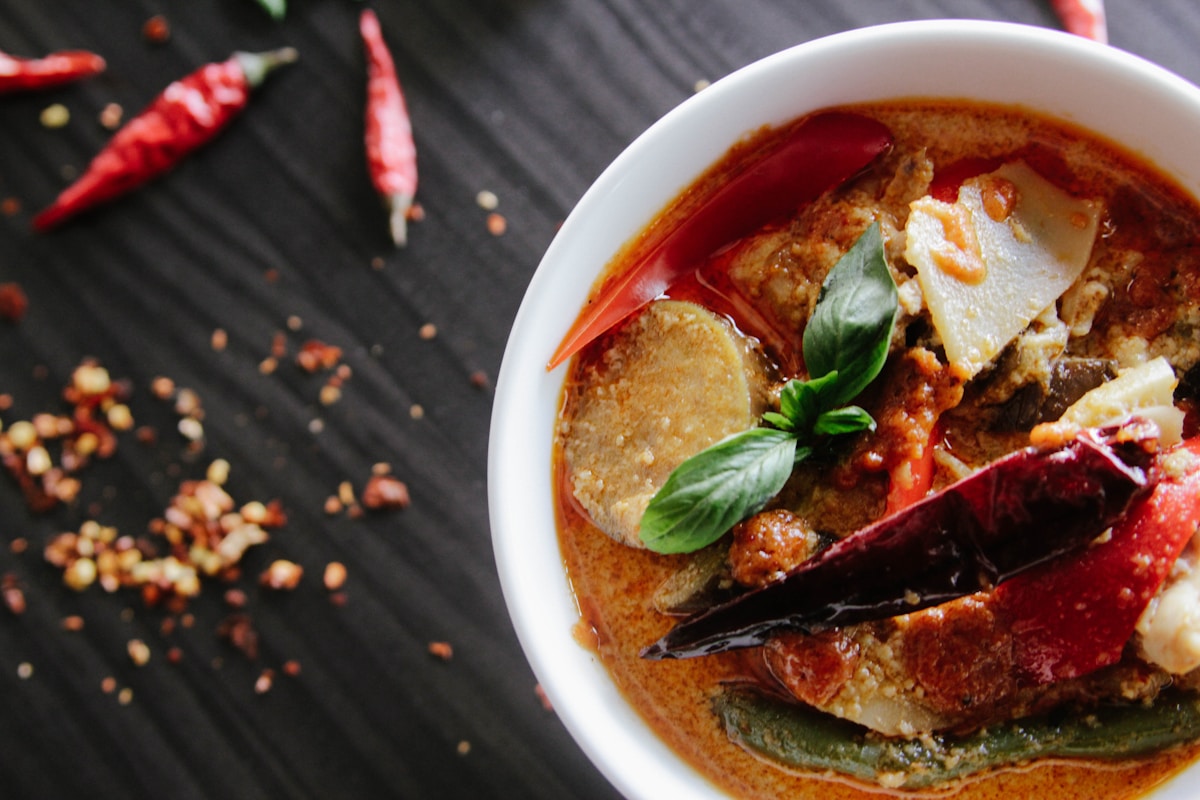
Sri Lankan food rewards the curious. The island’s cuisine is built around a handful of core techniques - fermentation, coconut milk, tempering spices in oil - deployed across an enormous range of dishes. These are the twenty you should not leave without trying.
1. Rice and Curry (Bath and Curry)
The national meal. Steamed rice surrounded by three to eight small preparations - always a dhal, usually a vegetable curry, a protein, and condiments. Each component is cooked separately and the balance of the plate is the cook’s art.
Where to try it: Any local restaurant (called a “hotel” in Sri Lanka) that serves a midday lunch spread. Upali’s in Colombo 3 is a reliable mid-range option. Price: approximately LKR 350–700 as of 2026. Vegetarian: Yes (in vegetarian versions; specify no fish or meat).
2. Egg Hopper (Bittara Appa)
A bowl-shaped fermented rice pancake cooked in a small wok - crispy at the thin rim, soft in the thick centre - with a whole egg cracked in before the batter sets. Served with pol sambol and dhal, typically at breakfast or dinner.
Where to try it: Street stalls and smaller restaurants in the evening; most Colombo neighbourhoods have at least one hopper stall. Price: approximately LKR 60–120 per hopper. Vegetarian: Yes.
3. Milk Hopper
A sweeter, creamier version of the plain hopper - the batter uses more coconut milk and is thicker, with a softer set. Usually served with treacle (kithul palm syrup) and coconut cream as a dessert or sweet breakfast option.
Where to try it: Hopper stalls and breakfast restaurants across the country. Price: approximately LKR 50–100. Vegetarian: Yes.
4. String Hoppers (Idiyappam)
Steamed discs of thin rice noodles pressed through a mould. No flavour on their own - they are a vehicle for curry. Usually served at breakfast with coconut milk and dhal, or with a coconut sambol. Found across the country from Colombo to Jaffna.
Where to try it: Breakfast restaurants and street stalls from early morning. Price: approximately LKR 100–200 for a plate of six. Vegetarian: Yes.
5. Kottu Roti
Flatbread (roti or layered parotta) chopped on a griddle with metal blades - a sound you hear from outside the restaurant. Mixed with egg, shredded vegetables, and your choice of chicken, beef, cheese, or seafood. One of the definitive Sri Lankan street food experiences.
Where to try it: Pilawoos in Kollupitiya, Colombo; any town’s night market. Price: approximately LKR 450–900. Vegetarian: Available as vegetable or cheese kottu.
6. Dhal Curry (Parippu)
Red lentils cooked with coconut milk, turmeric, and tempered with mustard seeds, curry leaves, and dried chillies. Present at virtually every Sri Lankan meal. Mild enough to serve as a counterpoint to hotter curries, and a reliable indicator of a kitchen’s broader quality.
Where to try it: Any local restaurant - this is the baseline dish. Price: Usually included as part of a rice-and-curry set. Vegetarian: Yes (and vegan if no Maldive fish is added).
7. Pol Sambol
Freshly grated coconut mixed with red onion, chilli, lime juice, and Maldive fish (dried tuna). Served as a condiment at virtually every meal. Ranges from mild to fiercely hot. The Maldive fish gives it depth that plain coconut lacks.
Where to try it: Any rice-and-curry restaurant. Price: Included with rice and curry. Vegetarian: Contains Maldive fish - not vegetarian/vegan.
8. Jackfruit Curry (Polos)
Young jackfruit cooked in a spiced coconut-milk gravy. The texture of young jackfruit genuinely resembles shredded meat - not as a culinary trick but as a natural property of the fruit at this stage. A staple of Sinhalese Buddhist cooking, where it substitutes for meat on poya (full moon) days.
Where to try it: Mid-range and local restaurants throughout the country. Price: Part of rice-and-curry sets, approximately LKR 100–200 as a side. Vegetarian: Yes (vegan if no Maldive fish in the preparation - worth asking).
9. Lamprais
A Dutch-Sri Lankan (Burgher) dish: rice cooked in meat stock, packed with several curries, a blachan (shrimp paste), a Dutch-style meatball (frikkadel), and a cutlet, wrapped in a banana leaf and baked. The banana-leaf cooking melds the components into a unified flavour. A specific, historical dish that has survived largely through Colombo’s Burgher community.
Where to try it: Dutch Burgher Union (Colombo), Fab bakery (Colombo), certain lunch counters in the Fort and Pettah areas. Price: approximately LKR 800–1,500 as of 2026. Vegetarian: No.
10. Ambul Thiyal (Dry Fish Curry)
A sour, intensely flavoured dry fish curry from the south of Sri Lanka, made with tuna (or seer fish) cooked with goraka (dried gamboge fruit), which gives it a distinctive sourness and a nearly black colour. Almost no liquid - the fish absorbs the spice paste entirely. One of the most characteristic flavours of southern Sri Lankan cooking.
Where to try it: Southern coastal restaurants - Galle, Matara, Weligama. Price: Part of a rice-and-curry set or approximately LKR 300–600 as a single portion. Vegetarian: No.
11. Crab Curry (Jaffna Style)
Mud crab cooked in a fiercely spiced gravy with tamarind and dried chilli - the most celebrated dish of Jaffna Tamil cooking. The heat level is serious; the sourness is genuine. Served with idiyappam or rice.
Where to try it: In Jaffna itself for the most authentic version. Ministry of Crab in Colombo’s Dutch Hospital complex is the most famous restaurant version (approximately LKR 5,000–12,000 per person). Vegetarian: No.
12. Devilled Prawns
A Sri Lankan-Chinese fusion dish that has become completely mainstream - prawns (or chicken, beef, or squid) stir-fried with onion, tomato, capsicum, and dried chilli in a glossy sauce. More sweet-and-savoury than the name suggests, though a good version has heat. Found on most restaurant menus across the country.
Where to try it: Most mid-range restaurants in tourist areas; Chinese-Sri Lankan restaurants in Colombo. Price: approximately LKR 800–2,000 for a portion, depending on size and location. Vegetarian: Available with vegetables or tofu in some restaurants.
13. Kiri Bath (Milk Rice)
Rice cooked in coconut milk until thick and set, then cut into diamond shapes. Eaten at auspicious occasions - New Year, weddings, the first day of a new job - as well as at ordinary breakfast. Paired with lunu miris (red onion and chilli paste) or jaggery. Soft, slightly sweet, and ceremonially significant.
Where to try it: Breakfast spots around Sinhala New Year (April 14), but available year-round at traditional restaurants. Price: approximately LKR 100–250 as a breakfast item. Vegetarian: Yes (vegan if coconut milk only, no dairy - the traditional version uses coconut milk).
14. Watalappam
A steamed or baked coconut milk pudding with jaggery (kithul palm sugar), eggs, and spices - cardamom, nutmeg, cloves. Dense, sweet, and deeply coconut-flavoured. Malay Muslim in origin and concentrated in Colombo and the western coastal towns. The best versions have a clean, non-grainy texture and a strong caramel note from the kithul sugar.
Where to try it: Muslim-owned restaurants and sweet shops, particularly in Pettah and Colombo 10. Price: approximately LKR 150–300 per portion. Vegetarian: Yes.
15. Vadai (Parippu Vadai)
Deep-fried lentil fritters - crispy exterior, slightly soft interior, flavoured with onion, green chilli, and curry leaves. A common street snack sold from morning into the afternoon. Quick, cheap, and very moreish.
Where to try it: Street food stalls in Pettah market in Colombo, near bus stands, and at markets throughout the country. Price: approximately LKR 30–80 per piece. Vegetarian: Yes.
16. Isso Vadai (Prawn Vadai)
A variation on standard vadai with a whole prawn pressed into the top of the fritter before frying. Larger and more indulgent than plain vadai. Most associated with Galle Face Green in Colombo, where stalls have been selling them on the seafront for decades.
Where to try it: Galle Face Green food stalls, Colombo; markets throughout the coastal areas. Price: approximately LKR 100–200. Vegetarian: No.
17. Pol Roti
A flatbread made from wheat flour, grated coconut, onion, and chilli, cooked on a griddle. Thicker and more substantial than plain roti, with a distinct coconut flavour. Usually served with coconut sambol or a curry. A standard breakfast alongside hoppers and string hoppers.
Where to try it: Breakfast restaurants and local cafes throughout the country. Price: approximately LKR 60–150 per roti. Vegetarian: Yes.
18. Gotukola Sambol (Pennywort Salad)
Raw gotukola (Centella asiatica, a type of pennywort) finely chopped with grated coconut, red onion, green chilli, and lime juice. Has a slightly bitter, grassy flavour that is an acquired taste but cuts through heavy curries effectively. Widely credited locally with health properties.
Where to try it: Part of rice-and-curry sets at traditional restaurants. Price: Included with most rice-and-curry plates. Vegetarian: Yes (vegan if no Maldive fish - ask).
19. Pittu
Steamed cylinders of ground rice and grated coconut. No flavour on their own - always served with coconut milk and a curry, or with jaggery as a sweet version. The texture is slightly crumbly. A common breakfast option in both Sinhalese and Tamil areas.
Where to try it: Breakfast restaurants throughout the country. Price: approximately LKR 100–200 for a portion. Vegetarian: Yes.
20. Kithul Treacle and Curd
Buffalo curd (thick, tangy yoghurt) served with kithul palm treacle (a dark, slightly smoky syrup similar to molasses but with more complexity). One of the simplest and most satisfying Sri Lankan desserts. Available at roadside stalls and restaurants across the country, particularly in the south and hill country.
Where to try it: Roadside stalls between Kandy and Nuwara Eliya; any traditional restaurant as a dessert option. Price: approximately LKR 150–300. Vegetarian: Yes.
A Note on Prices and Availability
Prices above are approximate as of 2026 and will vary by location - tourist-facing restaurants in Galle Fort or Colombo’s Cinnamon Gardens charge significantly more than local restaurants in the same city. The best value is almost always at a local establishment away from the main tourist strip, where a full rice-and-curry spread costs a fraction of the tourist-menu price for comparable or better food.
For more detail on where to eat in specific cities, read our Sri Lankan food guide or browse the city guides for Colombo, Galle, and Kandy. If you want to learn how to cook these dishes yourself, book a Sri Lanka cooking class - Kandy and Galle both have well-regarded half-day classes where you prepare a rice and curry spread from scratch with a local cook.