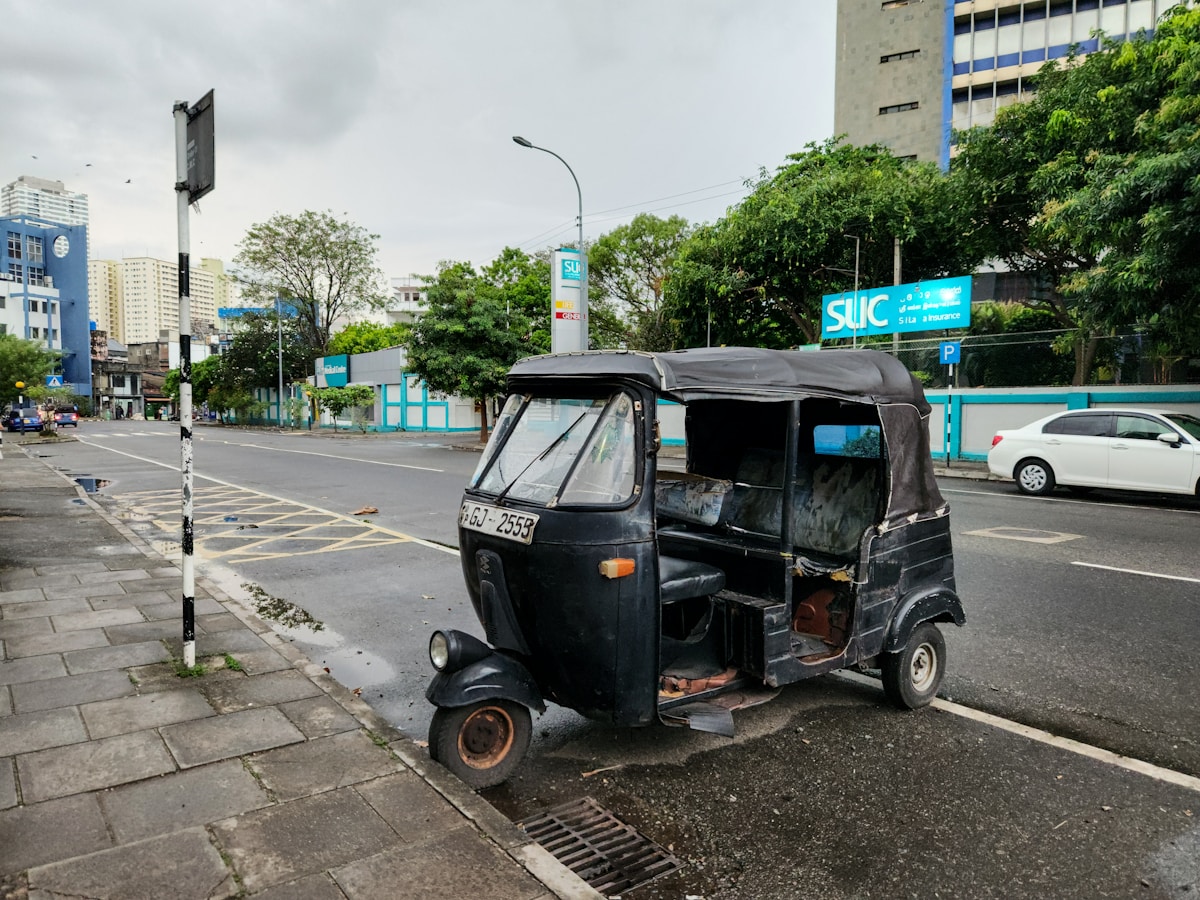
Renting a tuk-tuk and driving yourself around Sri Lanka is one of the more adventurous ways to see the island. It trades the efficiency of a car hire for flexibility, spontaneity, and the kind of roadside encounters that happen when you’re moving slowly through a village rather than past it in an air-conditioned sedan. This guide covers everything you need - operators, costs, the temporary licence process, and which routes actually suit self-drive.
Who This Is For
Tuk-tuk rental works best if you have at least some experience with motorcycles, scooters, or other small-engine vehicles, and you’re comfortable with imperfect road surfaces. If you’ve never driven anything with manual controls, practicing in a car park before heading onto public roads is strongly advised. Tuk-tuks are three-wheeled and handle differently from four-wheeled vehicles - they can tip sideways at speed.
If you’re content to be a passenger and want someone else to handle navigation and mechanical issues, hiring a driver (with or without a tuk-tuk) is the simpler option.
Rental Operators
Several dedicated tuk-tuk rental operators have established themselves in Sri Lanka specifically to serve foreign travellers. The two most frequently recommended:
TukTuk Rental (tuktukrental.com) is one of the larger operators, with vehicles available from Colombo and pickup from Bandaranaike Airport. They handle the temporary licence paperwork as part of the rental process, provide breakdown support, and offer GPS rental units. Expect to pay approximately $14–22 USD per day depending on the vehicle and rental duration. Multi-week discounts are available.
Holiday TukTuk (holidaytuktuk.com) operates out of Colombo and Negombo and offers a similar setup - temporary licence support, roadside assistance across popular routes, and well-maintained vehicles. Day rates run approximately $15–25 USD. They also offer a one-way rental between selected cities if you don’t want to retrace your route.
Both operators have English-speaking staff and clear booking systems. Booking online at least one week in advance is advisable for peak season (December–March).
Beyond these, smaller guesthouses in tourist towns (Ella, Mirissa, Unawatuna) sometimes offer informal tuk-tuk rentals without the same support infrastructure. These are cheaper but come with higher risk if something goes wrong mechanically.
Search hotels in Sri Lanka on Booking.com
The Temporary Driving Licence
Any foreign national driving a tuk-tuk in Sri Lanka legally requires a temporary Sri Lankan driving licence. This is a real requirement, not optional - if you’re involved in an accident without one, insurance becomes void and local police can impose fines.
The process:
- Take your home country driving licence to the Department of Motor Traffic in Werahera, Colombo (or use the operators’ arranged service, which handles this for you)
- Pay the fee: approximately LKR 4,500–6,000 (around $15–20 as of 2026)
- The temporary licence is issued on the same day in most cases; some operators take one to two working days
Important: the temporary licence is valid for one year from issue. Your home licence must be in English or accompanied by a certified translation.
The rental operators listed above assist with this process - TukTuk Rental and Holiday TukTuk both include licence facilitation as part of their service. This saves a trip to the DMT yourself.
What a Day Rate Covers
A standard rental from an established operator at approximately $14–22 USD per day typically includes:
- The tuk-tuk itself (usually a Bajaj RE or similar, 200–200cc three-wheeler)
- Third-party liability insurance
- Breakdown roadside assistance contact
- Basic tools kit in the vehicle
Not included: Fuel (petrol, available at every petrol station island-wide, approximately LKR 340–360 per litre as of 2026), parking fees, and any damage beyond normal wear.
Fuel economy on a tuk-tuk is good - expect approximately 30–40km per litre in flat terrain, less in the hill country. A full tank costs around LKR 1,500–2,000 and lasts 150–200km on flat roads.
Routes Worth Considering
Southern Coast Loop (7–10 days, 400–500km) Colombo → Hikkaduwa → Galle → Mirissa → Tangalle → (inland return via Udawalawe or Matara). Flat roads, good tarmac, manageable distances. This is the most popular tuk-tuk route - the coast road is well-marked and the distances between stops are short. If you prefer a driver to handle the route, compare car hire options in Sri Lanka for a more comfortable alternative to self-drive.
Hill Country (5–7 days, 300–400km) Colombo → Kandy → Nuwara Eliya → Ella → Wellawaya (then back to coast or Colombo). Dramatically scenic, but the engine climbs to 2,000+ metres and mountain roads have sharp switchbacks. Test the brakes carefully before heading into the hills.
Cultural Triangle (4–5 days, 300km) Colombo → Dambulla → Sigiriya → Anuradhapura → Polonnaruwa. Relatively flat, good roads. Covers the major ancient sites. Combines well with a northern extension to Jaffna if time allows.
Full Island Circuit (14–21 days) Many travellers combine the coast and hill country into a longer loop. The east coast (Trincomalee, Arugam Bay) adds approximately 5–7 days. Allow extra time on east coast roads, which are generally in worse condition than the south and west.
Insurance
Third-party insurance is included with reputable rental operators. This covers damage to other vehicles and property - not damage to your own tuk-tuk.
Personal accident cover is not standard in most Sri Lankan tuk-tuk rentals. Your travel insurance should cover you personally - check that your policy covers motorised vehicle rentals (some exclude anything with an engine above a certain cc rating, though 200cc is generally within standard travel cover limits). Confirm this before you depart home.
Practical Notes
- Fuel: Regular petrol only. Never diesel. Sri Lanka petrol stations (IOC, Lanka IOC, Ceypetco) are found in every town of reasonable size
- Phone: the PickMe and Uber apps don’t work for car hire, but Google Maps functions well for navigation. Download offline maps before you start
- Parking: Tuk-tuks can park almost anywhere a bicycle can. Urban parking fees where applicable are minimal (LKR 100–200)
- Rain: Tuk-tuks offer limited weather protection. A waterproof jacket is essential for hill country where afternoon rain is frequent. Your luggage goes in the back - a dry bag is worth using
- Traffic in Colombo: driving through Colombo at peak hours in a tuk-tuk is slow and stressful. Most operators will pick up from the airport and allow you to start your route from Negombo or Galle, avoiding the city entirely
Alternative: Hiring a Driver
If tuk-tuk driving isn’t your preference, hiring a private driver with a car (or a driver-tuk-tuk) gives you the same flexibility without the effort. Driver rates for full days run approximately $40–70 USD including fuel. For multi-week trips, a driver can work out cheaper than you’d expect once you factor in the licence, insurance, and stress of navigation.