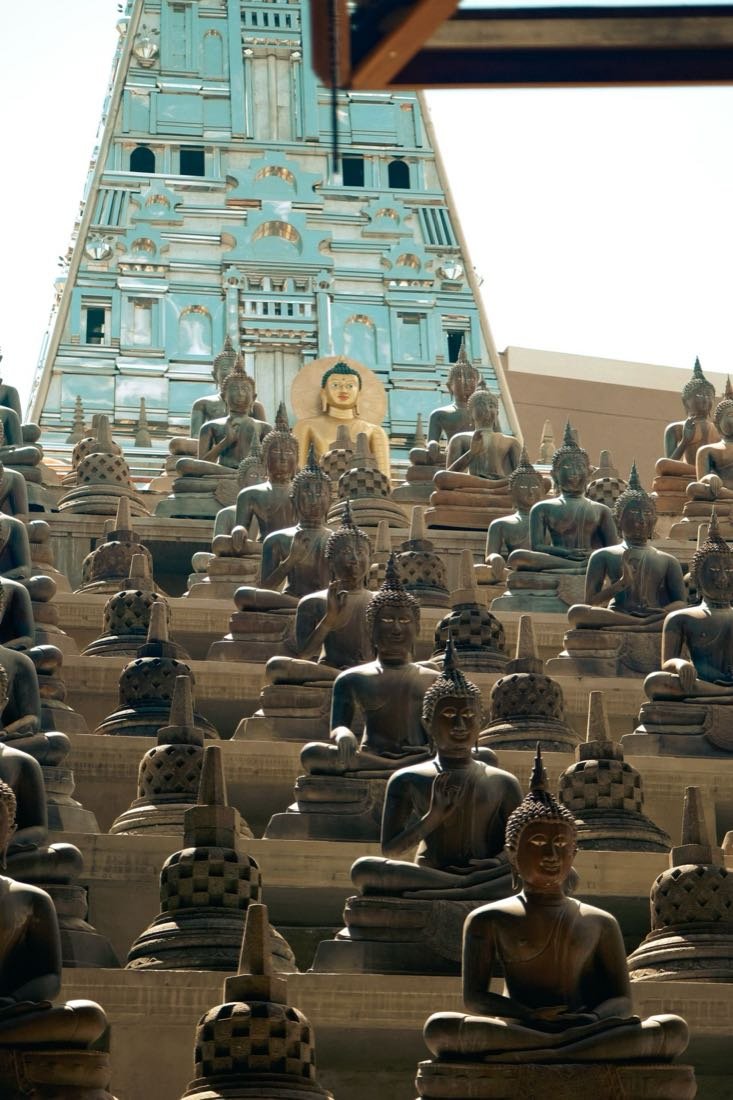
Gangaramaya Temple is the Buddhist complex most visitors to Colombo end up in, and for good reason. It sits on the edge of Beira Lake in Colombo 2, a short tuk-tuk ride from Fort, and it is part working temple, part museum, part architectural experiment. The mix is unusual: Sinhalese, Thai, Indian and Chinese influences all show up in the buildings, and the offerings in the museum range from ancient Buddha images to vintage cars. Most Colombo things to do lists put it first, and it is easy to see why.
History and what the temple is
Gangaramaya was founded in the late 19th century by the monk Hikkaduwe Sri Sumangala Thera and has grown ever since into a combined shrine, meditation centre, library, school and museum. Under its later chief incumbent, Galaboda Gnanissara Thera, it became known for social work and for starting the modern Navam Perahera procession. The result is a complex that feels more lived-in than the city’s colonial landmarks: monks cross the courtyards, devotees leave lotus and jasmine at the shrine rooms, and schoolchildren arrive in groups.
Entry fee and opening hours (as of 2026)
Foreign visitors pay a ticket, and published figures range from roughly LKR 300 to LKR 500, usually including entry to the Seema Malaka pavilion. Sri Lankan residents pay far less or enter on donation. Because the fee is revised without notice and travel sites disagree, confirm the price at the ticket desk and keep small notes handy. Opening hours are generally listed as early morning until about 8 or 10 pm, with the museum on shorter hours. The quietest time is the first hour after opening, and late afternoon gives the best light on Beira Lake.
The main sights
Shrine rooms and Bodhi tree. The main image house holds a seated Buddha, with smaller shrines around it. Worshippers pour water at the Bodhi tree, a sapling of the Sri Maha Bodhi at Anuradhapura, and the courtyard is lined with rows of seated Buddha statues and miniature stupas.
The museum. This is the part people remember. Donations received over decades are displayed with little editing, so ivory carvings and gilded Buddha images sit near antique watches, ceremonial robes, vintage motorcycles and cars. Treat it as a cabinet of curiosities rather than a curated collection. Labels are limited, so a guide or a guided Colombo city tour adds a lot of context.
Seema Malaka. The floating meditation pavilion on Beira Lake was designed by Geoffrey Bawa and is reached by walkways from the main temple. Its low roofs, clustered Buddha statues and still water make it one of the calmest corners of central Colombo. It is a place for quiet rather than photos taken at arm’s length, and visitors are asked to keep voices down and avoid pointing cameras at worshippers.
Dress code and etiquette
Shoulders and knees must be covered, and shoes and hats come off before entering any shrine room. Never pose with your back to a Buddha image or touch statues. Handing offerings or money to monks is not done, particularly by women, so use the donation boxes. Staff can and do turn away visitors in shorts or sleeveless tops, so a sarong in your daypack saves a wasted trip.
Poya days and the Navam Perahera
Poya, the monthly full moon holiday, is when Gangaramaya is busiest. Families in white bring flowers and lamps, and chanting carries across the lake into the evening. The temple’s biggest event is the Navam Perahera, held at the February full moon, with elephants, drummers and dancers moving past Beira Lake. Our Navam Perahera guide covers the 2027 date, route and viewing spots, and for Vesak the temple also puts up lantern displays, described in our Vesak guide.
How to combine it with Pettah and Galle Face
Gangaramaya works well as a half-day anchor. A sensible order is:
- Start at opening time at Gangaramaya and Seema Malaka (60 to 90 minutes).
- Take a tuk-tuk to Pettah for the market streets and the Colombo Hindu temples in the same district, about 10 to 15 minutes away.
- Break for lunch around Fort or on the lake, then walk or ride to Galle Face Green for sunset, kite flyers and street snacks.
If you want a ready-made route with commentary, Colombo tours bundle the temple, Pettah and the Fort area into a single morning. For a base within reach of all of it, see our where to stay in Colombo guide, or compare Colombo hotels near Beira Lake.
Getting there
The temple stands on the Beira Lake shore in Colombo 2, around 2 km from Fort Railway Station. A tuk-tuk from Fort should cost in the region of LKR 400 to 800 as of 2026 if you agree the price first, or you can use a ride-hailing app. It is also walkable from Slave Island in the evening cool. For wider background on Sri Lanka’s Buddhist traditions and visitor etiquette, the national tourism board’s site at srilanka.travel is a useful official reference.