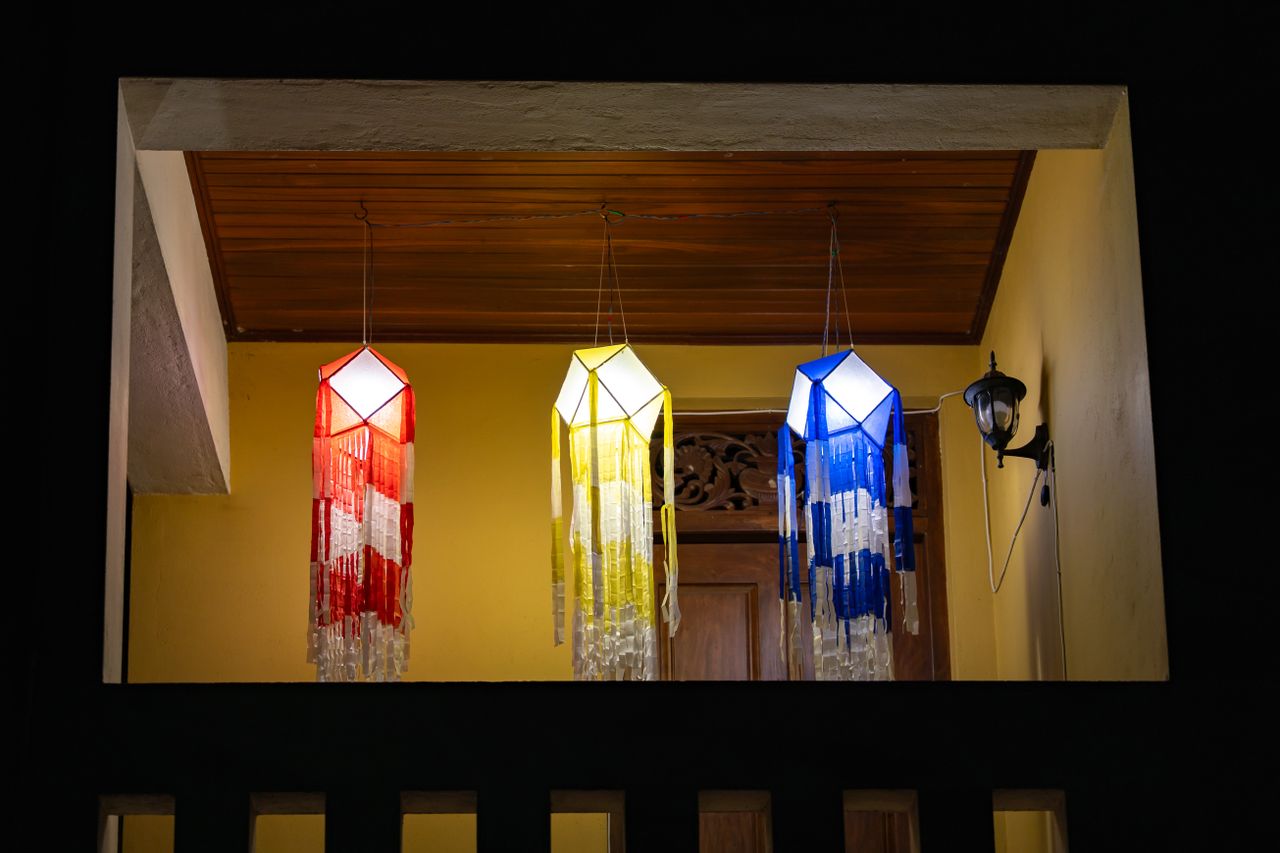
Vesak is the holiest day in Sri Lanka’s Buddhist calendar. It falls on the full moon of May and marks the birth, enlightenment, and passing of the Gautama Buddha, all believed to have occurred on the same lunar date thousands of years apart. The celebrations last two days (both are public holidays) and transform the country visually: lanterns hang from every home, pandals light up road junctions, and thousands of dansala (free food stalls) line the streets.
For a traveller present in Sri Lanka during Vesak, it is one of the most memorable things to witness. There is nothing quite like watching a Sri Lankan city turn to lantern light after dark.
What Vesak Is
Vesak (also written Wesak, from the Pali word Vesakha) is the principal Buddhist festival of the Theravada tradition followed in Sri Lanka. Unlike Christmas or Diwali, it is not primarily a family-at-home celebration, but a public, communal outpouring of devotion. Devotees dress in white, visit temples, offer flowers and incense, observe the five precepts, and perform acts of dana (giving) throughout the day.
The evening is when Vesak becomes visually extraordinary. Sri Lanka has its own distinctive Vesak traditions built up over centuries:
Lanterns: every home, shop, and temple hangs paper lanterns of varying complexity, from simple spheres to elaborate multi-tiered constructions lit by candles or LEDs. Street lantern competitions are held across the country, with intricate handmade designs judged in local neighbourhoods.
Pandals (thoranas): large illuminated screens erected at road junctions, depicting scenes from the life of the Buddha or the Jataka tales. The largest pandals in Colombo can be 20 to 30 metres wide and are illuminated by thousands of coloured bulbs. Pandals typically go up several days before Vesak and remain lit for the two festival nights.
Dansala: temporary roadside stalls operated by temples, businesses, and community groups offering free food and drinks to passers-by. On Vesak night, every main road in Sri Lanka has dansala at regular intervals. You will be waved in regardless of who you are. Accept the hospitality graciously.
When It Takes Place
Vesak falls on the full moon of the Sinhalese lunar month of Vesak, which corresponds to May in the Gregorian calendar. The exact date shifts year to year:
- 2026: 30 May (with 31 May as the public holiday following)
- 2027: 20 May
The Sri Lanka government issues a gazette notification confirming the official date each year. Both the full moon day and the day after are public holidays. Alcohol sales are prohibited on both days.
Vesak Week, the period of roughly a week centred on the full moon, sees heightened activity at major temples. The main celebrations concentrate on the evening and night of the full moon itself.
Where to Experience Vesak
Kelaniya: the Kelaniya Raja Maha Vihara, 11km northeast of Colombo, is the most actively visited temple during Vesak. The temple is associated with a visit by the Buddha himself, making it among the most sacred in Sri Lanka. On Vesak night, the temple and surrounding streets fill with hundreds of thousands of devotees. Lantern displays and processions surround the temple. See the Kelaniya Raja Maha Vihara guide for what to see at the temple itself.
Colombo: the Gangaramaya temple on Beira Lake is the most prominent Vesak venue in the city. The lake itself is lit with floating lanterns. Several of Colombo’s main roads along Galle Road and R.A. de Mel Mawatha host large pandals. The Colombo travel guide covers which neighbourhoods are best for street-level celebrations.
Kandy: the Temple of the Tooth holds special Puja (prayer ceremonies) on Vesak that are more elaborate than on regular evenings. The town’s main streets and lakefront are decorated with lanterns. For those already planning to visit Kandy, timing arrival to coincide with Vesak adds a layer of cultural depth to the trip.
Anuradhapura: as the ancient capital of Theravada Buddhism in Sri Lanka, Anuradhapura takes on particular significance during Vesak. The sacred Bo tree (Sri Maha Bodhi), a direct cutting from the original tree under which the Buddha attained enlightenment, draws enormous numbers of pilgrims. The moonlit ruins and white-clad devotees make for a deeply atmospheric experience.
Practical Considerations
Transport: Vesak is one of the busiest travel days in Sri Lanka. Buses and trains to Kelaniya, Kandy, and Anuradhapura fill completely. If you plan to travel on the full moon day, book reserved train seats well in advance or arrange private transport.
Photography: pandals and lanterns photograph well after dark. A moderate wide-angle lens works for pandal overall shots; a longer lens captures detail on illuminated temple facades. Inside temple precincts, ask before photographing devotees in active prayer. Flash photography disturbs worshippers.
Food and alcohol: most restaurants open as usual, but expect limited menus and possible early closing on Vesak day. Alcohol is not served at any licensed premises on full moon days in Sri Lanka. Dansala are free and often offer rice and curry, string hoppers, and sweet drinks.
Dress: white is traditional and appreciated, but not required of visitors. Loose, light cotton clothing is practical in the May heat. For temple entry, shoulders and knees must be covered. See the temple etiquette guide for the full picture.
Accommodation: book ahead if arriving for Vesak, especially in Kelaniya, Kandy, or Anuradhapura. The Sri Lanka in May monthly guide covers weather and overall conditions for a May visit.
Plan Your Visit
Vesak is the one festival where almost every town in Sri Lanka celebrates simultaneously, making it possible to experience it wherever you are. That said, Kelaniya and Anuradhapura offer the most authentic temple-centred experience, while Colombo offers the most spectacular street pandals. Guided Colombo cultural tours run during the Vesak period and include visits to the major pandals after dark.
For accommodation close to the main Vesak sites, hotels in Kandy and hotels in Colombo should be booked several weeks ahead of the festival date.
Related Guides
- Kelaniya Raja Maha Vihara - Sri Lanka’s most visited Buddhist temple and the main Vesak venue near Colombo
- Temple etiquette in Sri Lanka - how to dress and behave at Buddhist sites
- Kandy travel guide - accommodation, the Temple of the Tooth, and what else to do
- Anuradhapura travel guide - the sacred ancient capital and the Sri Maha Bodhi
- Sri Lanka in May - weather, crowds, and other events in May
- Kandy Esala Perahera - the other major Buddhist festival, held in August