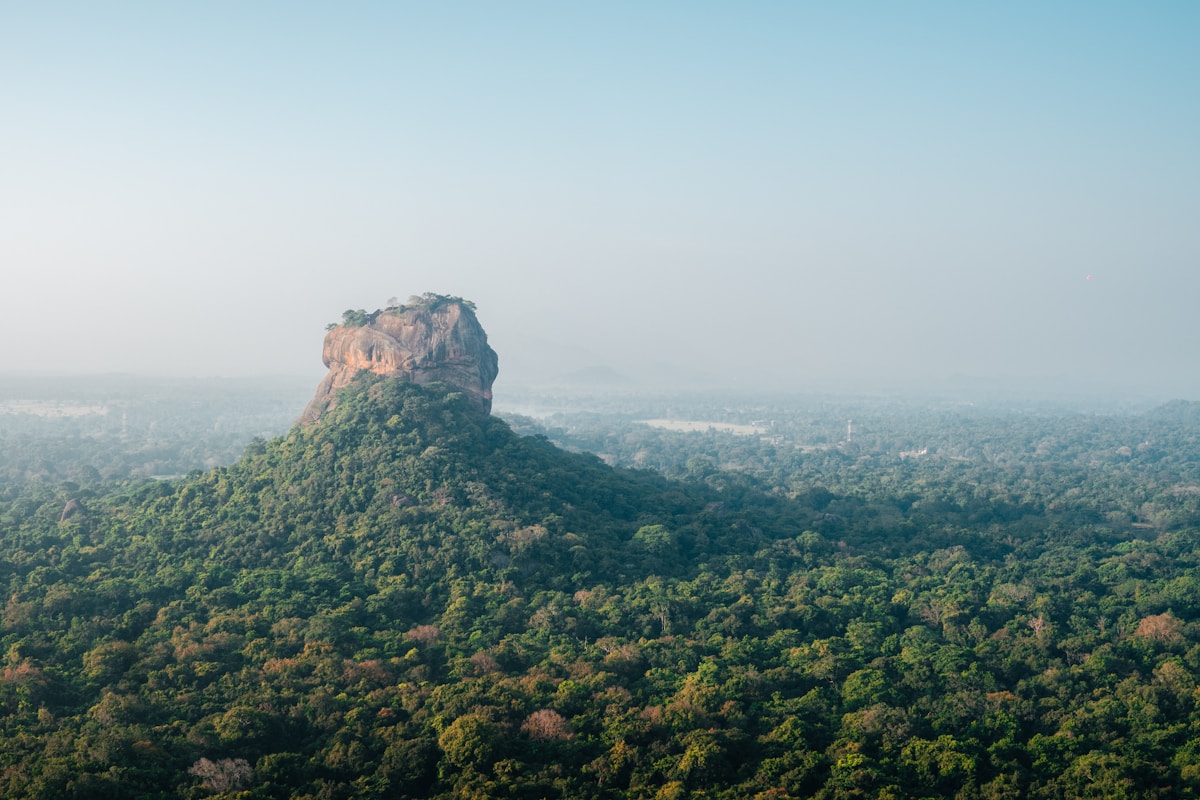
Sigiriya is the most striking site in Sri Lanka. A volcanic rock plug 200 metres high rises vertically from the flat central plains - on its summit, a 5th-century king built a palace complex that is part fortress, part pleasure garden, and entirely improbable. The frescoes painted on the cliff face 1,400 years ago are among the oldest and best-preserved in Asia. The views from the top extend across unbroken jungle to the horizon in every direction.
It is also one of the most visited UNESCO World Heritage Sites in Sri Lanka, which means getting it right requires some planning. Timing, ticket logistics, and the decision between Sigiriya itself and the adjacent Pidurangala Rock all matter.
What Is Sigiriya
Sigiriya (Lion’s Rock) was developed by King Kashyapa I between approximately 477 and 495 CE. Having usurped the throne from his father and killed him, Kashyapa chose this remote rock as his royal seat - partly for its defensive position, partly, some historians argue, because its isolation reflected the scale of his ambition. The palace complex on the summit included a throne room, water gardens, and mirror walls. When Kashyapa’s brother reclaimed the throne, the site was abandoned and later used as a Buddhist monastery.
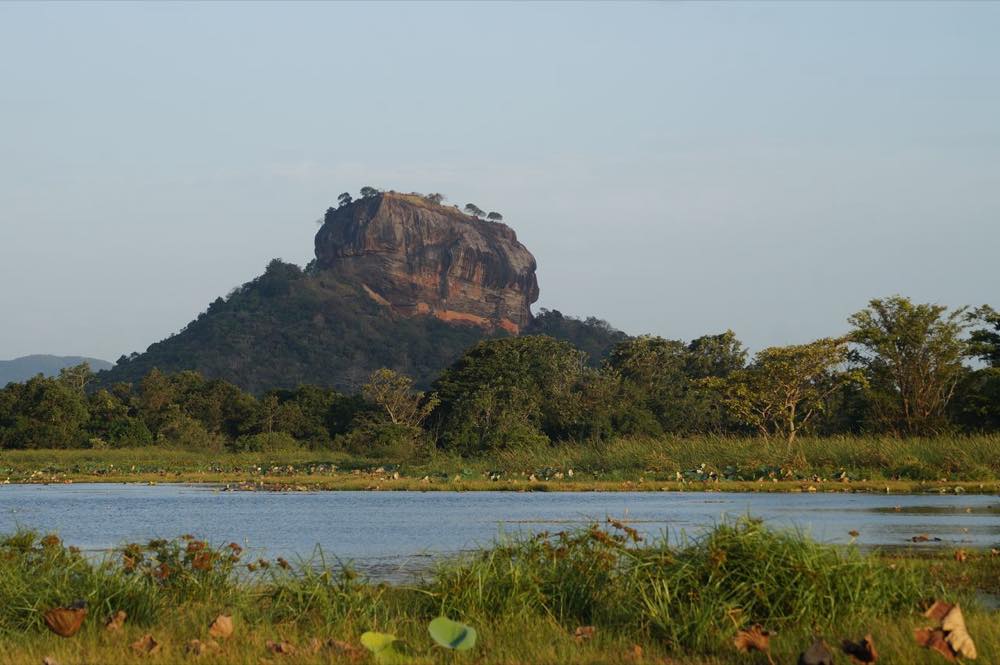 Sigiriya Rock at first light.
The name comes from the original entrance: a giant lion gateway at the base of the final ascent, built from brick and plaster. Only the paws remain, but they are substantial - each the size of a small room - and walking between them before the final staircase gives the climb its character.
Entry Fees
As of 2026, entry fees are set at a dual pricing structure:
- Foreign adults: approximately USD 35 per person (payable in USD, LKR equivalent, or by card)
- Foreign children (6–12): approximately USD 20
- Sri Lankan nationals: approximately LKR 1,000 (around USD 3)
- SAARC nationals: reduced rate, approximately USD 15
The fee structure has shifted several times in recent years; verify current prices at the official Cultural Triangle Ticket website or at the site entrance before arrival. Tickets can be purchased at the gate (card accepted; queue can be long) or, during high season, in advance from the Central Cultural Fund booking system.
The Sigiriya entry fee is among the highest for a single site in South-East and South Asia - a frequent point of frustration for travellers on tight budgets. The price reflects both the site’s UNESCO status and the Sri Lankan government’s strategy of managing visitor numbers through cost.
Combined Cultural Triangle tickets covering Sigiriya, Polonnaruwa, Anuradhapura, and Dambulla were discontinued for day visitors; current bundled options exist for multi-day cultural region passes. Check the Cultural Triangle website for current bundle availability.
When to Visit: Sunrise vs Afternoon
Sunrise (Opening at 07:00)
The gate opens at 07:00. Arriving for the opening is the most popular strategy among visitors who prioritise both views and cool temperatures. The ascent takes 45 to 60 minutes depending on fitness and crowd conditions; a 07:00 start puts you on the summit by 08:00, before the midday heat sets in and before coach tour groups arrive en masse.
The light at sunrise and early morning is also better for photography - the flat central plains stretch out under soft light, and the jungle below is often partly wrapped in mist.
Trade-off: The 07:00 opening means some visitors attempt to be first in the queue, which builds from around 06:30. Unless you specifically want the summit to yourself, arriving at 07:15 to 07:30 achieves the same cooler conditions with less competition for tickets.
Afternoon (Closing at 17:30)
The site closes at 17:30; last entry is typically 17:00. An afternoon visit (departing around 15:00 to 16:00) offers softer golden light in the late afternoon and a less crowded ascent. The summit experience in the late afternoon - sun dropping toward the western horizon, long shadows across the plains - is genuinely beautiful.
Trade-off: The climb is physically demanding in heat. Mid-afternoon (12:00 to 14:30) is the worst time to attempt it - hot, exposed, and crowded with visitors who started late. If you choose afternoon, go properly late (14:30 departure minimum) or accept the heat.
Our recommendation
For most visitors, early morning is the better call. The combination of cooler air, better light, and smaller crowds at the top makes the logistics of a 06:30 start worthwhile. If you’re staying in Sigiriya village or Dambulla, the logistics are easy.
The Climb Itself
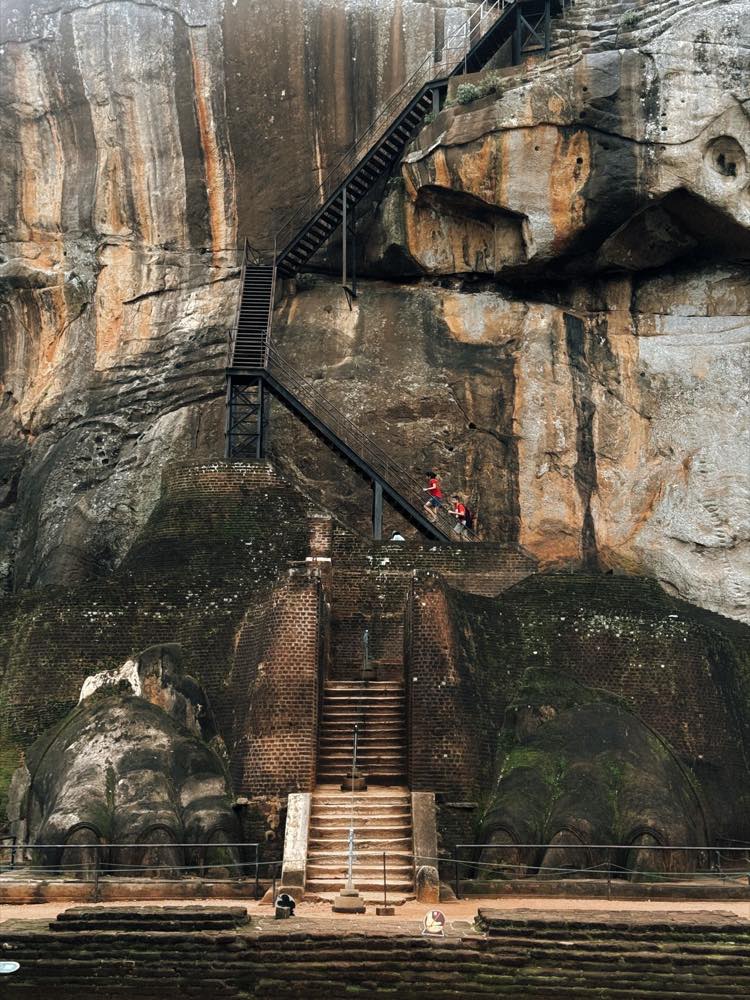 The staircase near the Lion Gate, the start of the final climb.
The ascent is divided into four distinct sections:
Water Gardens (base level): The formal gardens at the base were once fed by an intricate hydraulic system - pools, fountains, and symmetrical landscaping that still functions partially after 1,500 years. Worth taking slowly on your way in.
Boulder Garden and Frescoes: The path winds through enormous boulders before climbing a metal staircase to the fresco pocket - a sheltered cavity where the famous Sigiriya Damsels are painted. Approximately 21 of the original 500+ figures survive. Photography of the frescoes with a flash is prohibited; natural light shots are fine. The staircase to the fresco level is narrow and can bottle-neck.
Mirror Wall: Immediately after the frescoes, the path follows the original mirror wall - a polished plaster surface so reflective that Kashyapa could see himself in it, according to chronicles. Visitors have been writing on the wall since the 8th century; many of those inscriptions are themselves historically significant. Do not add to them.
Lion’s Paws and Final Ascent: The most dramatic section. A wide metal staircase climbs steeply between the original lion’s paws to the summit. The stairs are exposed, with a sheer drop on one side and a handrail on the other. Not suitable for anyone with severe vertigo; those who find the final section too exposed can stay at the lion’s paws level, which itself has significant historical remains and good views.
Summit: The palace ruins are extensive enough to explore for 30 to 45 minutes. The throne room foundation, the Royal Pool (a swimming pool cut into the rock), and the edge views in all directions are the highlights. A map from the ticket office shows the original layout.
Total ascent: approximately 1,200 steps. Allow 45 to 60 minutes up, 30 to 40 minutes down. Wear shoes you’re comfortable climbing stairs in; sandals work but sneakers are better. Bring water.
Fitness level: Moderate. The section between the Lion’s Paws is steep and uses a metal cage stairway - those with a serious fear of heights may find this section challenging. Children are manageable from around age 8–9 with supervision, though crowd pressure on narrow sections can be intense during busy periods.
Wet season note: The rock is slippery when wet. Check the forecast before visiting - December to April is dry and hot; May to September brings rain but far smaller crowds.
Pidurangala Rock: The Alternative View
Pidurangala Rock sits approximately 700 metres north of Sigiriya and offers the most famous angle on Lion’s Rock - the eye-level view of Sigiriya reflected in the surrounding jungle that appears on most travel photography. The climb is shorter (approximately 45 minutes), the trail rougher, and the entry fee considerably lower.
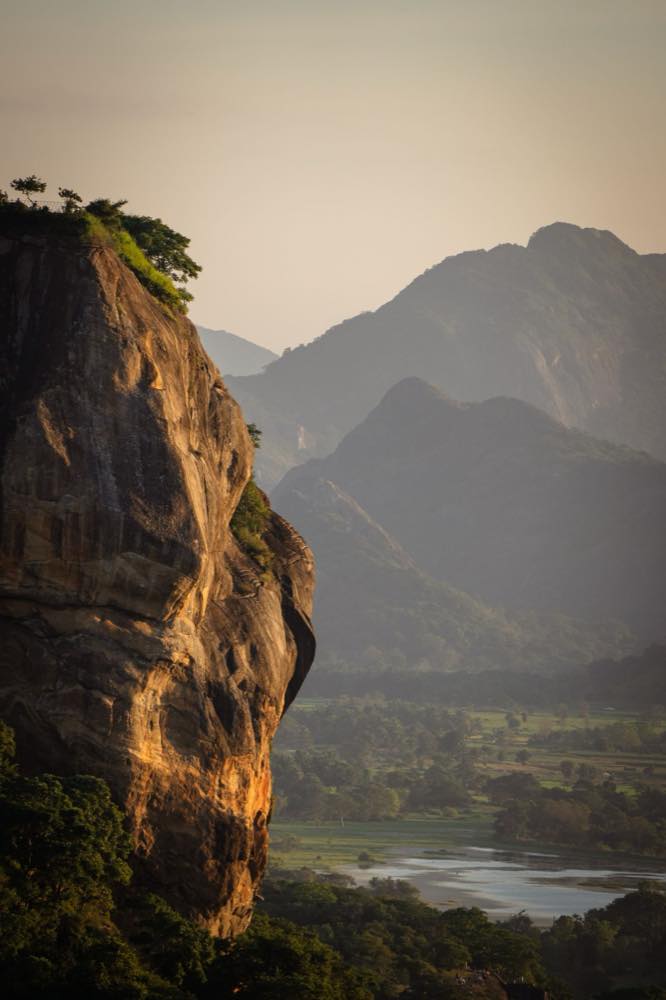 Rock cliffs and valley in the Sigiriya area.
Entry fee: approximately USD 5 per person as of 2026 (paid at the monastery at the base; cash only).
What you see: From the Pidurangala summit - a flat rock field - Sigiriya fills the western horizon, floating above the treeline. At sunrise, the light catches the east face of Lion’s Rock perfectly. This is the sunrise shot most photographers are after.
The climb: Steeper and more scramble-heavy than Sigiriya’s engineered staircase. The final section involves pulling yourself up over boulders using fixed ropes. Not technical but physically demanding. Allow 45 minutes for the ascent.
When to do it: Sunrise on Pidurangala, combined with a mid-morning visit to Sigiriya itself, is the recommended two-site combination. The Pidurangala summit at sunrise (before 06:00) involves torches and an unlocked monastery gate; some mornings the gate isn’t open until 06:30. Check the current access situation with your guesthouse before planning a pre-dawn start.
Combined Itinerary: Sigiriya + Pidurangala
Most visitors can comfortably do both sites in a single day:
- 05:30 - Depart for Pidurangala. Torch required for the early part of the climb.
- 06:00–07:00 - Pidurangala summit for sunrise views of Sigiriya.
- 07:30 - Descend and breakfast in the village.
- 08:30 - Arrive at Sigiriya gate (open from 07:00). Buy tickets and enter.
- 09:00–11:00 - Climb Sigiriya, explore water gardens and summit.
- 11:30 - Return to accommodation or depart for Dambulla.
This combination gives you the best of both sites with manageable heat and crowd timing. Rushing Sigiriya to check it off in an hour is a mistake; the water gardens and boulder garden sections are worth proper attention.
Practical Logistics
Getting there: Sigiriya is approximately 170 km from Colombo (3.5 to 4 hours by road via A1 and A6). From Kandy, it is approximately 90 km (2 hours). From Dambulla (the nearest city), it is 18 km and reachable by tuk-tuk for approximately LKR 500–700. There is no direct train service; the nearest station is Habarana (about 25 km away). For guided day tours from Colombo or Kandy that include transfers, entry, and a guide, browse Sigiriya tours or book a Sigiriya day tour on Klook.
Accommodation: Staying in Sigiriya village or Inamaluwa (5 km south) puts you within 15 minutes of the site. Dambulla is a larger town with more options and approximately 30 minutes by tuk-tuk. Hotels in Sigiriya and Inamaluwa book out quickly during peak season (December–March) - reserve at least a week ahead.
Dress: No specific dress code at the site, but the climb is physical - loose, comfortable clothing is practical. At the Buddhist monastery at the base of Pidurangala, modest dress (covered shoulders and knees) is expected.
Wildlife: Hornets nest in the boulder garden sections and have caused incidents when disturbed by crowds. Move quickly and quietly past the known hive areas; guides know where they are. Occasional monitor lizards and toque macaques are harmless but bold. Don’t feed the monkeys.
What to bring: Water (at least 1 litre per person), hat, sunscreen, a small snack. Food vendors operate at the base. There are no food stalls on the summit or mid-climb.
For a broader cultural triangle itinerary incorporating Sigiriya, Polonnaruwa, Anuradhapura, and Dambulla, see our 10 days cultural triangle guide. Day tours from Dambulla combining the cave temples and Sigiriya can be booked via GetYourGuide. For the full country context, our two weeks in Sri Lanka itinerary places Sigiriya in the context of a complete island route. If your plans are still flexible, the last-minute tours page lists same-day and next-day guided Sigiriya climbs with availability.