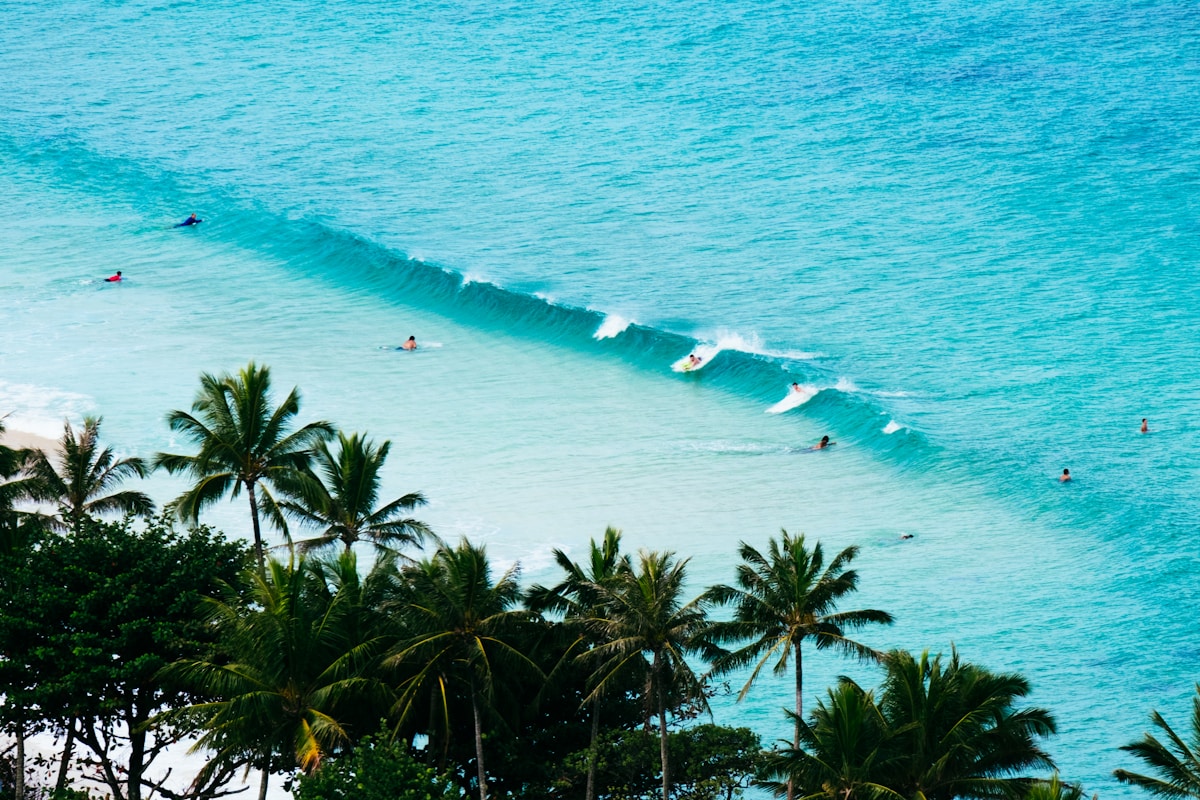
Sri Lanka runs two distinct surf seasons on opposite coasts, which means there is never a wrong time of year to surf here - only a wrong coast. The Indian Ocean swells that close down the south-west from May to October power the east coast into one of Asia’s most celebrated point breaks. When the monsoon reverses in November, the south and west wake up, and Weligama’s gentle rollers fill with learners.
Whether you’re paddling out for the first time or hunting a right-hander that holds at double overhead, Sri Lanka has something specific to offer. The cost is low, the water is warm, and the density of good breaks within a small island means you can sample three or four different spots in a week without long travel days.
Which Coast, Which Season
| Coast | Best Months | Key Spots | Skill Level |
|---|---|---|---|
| East coast | May–October | Arugam Bay, Pottuvil, Whisky Point | All levels |
| West/South coast | November–April | Weligama, Hikkaduwa, Hiriketiya | Beginner–Intermediate |
| Kite surfing (northwest) | May–October | Kalpitiya | Kite only |
East coast (Arugam Bay): April to October. Best from May to September when Indian Ocean ground swells generate long, clean rights at Main Point. This is a pro-level season - Arugam Bay hosted a WSL Qualifying Series event, and the line-up during peak season reflects that. Beginners can still find calmer alternatives at Baby Point.
South and west coast (Weligama, Hikkaduwa): November to April. Milder swells make this the better window for beginners. Weligama Bay is specifically well-suited for first-timers; the break is forgiving and the bottom is sand. Hikkaduwa offers reef breaks that suit intermediate surfers and a lively beach scene.
The transition months (April/May and October/November) can overlap, with the coasts trading conditions. In practice, the east coast fires earlier than most first-time visitors expect - late April can already be excellent.
Arugam Bay
Arugam Bay is the reason many surfers visit Sri Lanka in the first place. Main Point is a right-hand point break that peels for 300 metres on a good swell - long, consistent rides that work from waist-high to well overhead. The wave holds shape at higher sizes better than most reef breaks in the region, which is why it attracts experienced surfers from Europe and Australia during the May-to-September window.
The bay itself is a thin strip of beach backed by a single road with guesthouses, surf shops, and cafes. It has the feel of a surf town rather than a tourist resort - an important distinction. Restaurants close early in low season, the electricity supply is inconsistent, and the road from Colombo (via Monaragala) takes six to seven hours. None of that bothers serious surfers. If it bothers you, Hikkaduwa is easier. To compare guided surf sessions and boat trips in Arugam Bay, browse Arugam Bay surf tours.
Key breaks at Arugam Bay:
- Main Point - the headline right-hander. Best at 3–6 feet. Crowds are real during July–August.
- Whisky Point (5km north of the village) - a longer, more mellow right that works well for intermediate surfers and is less crowded than Main Point.
- Pottuvil Point (6km north, near Crocodile Rock) - a heavier wave suited to experienced surfers only.
- Baby Point - small, sheltered, good for beginners when the main point is pumping overhead.
- Elephant Rock - a beach break with a shorter ride, accessible in front of the elephant sanctuary.
- Crocodile Rock - hollow, shallow reef break for experienced surfers only. Named optimistically rather than ironically; crocodiles are occasionally spotted in the nearby lagoon.
Weligama
Weligama is the go-to beginner destination on the south coast. The bay curves gently, the swell wraps around a small island (Taprobane Island) and arrives already cleaned up. Waves break predictably on a sandy bottom, which means wipeouts don’t hurt and learners can focus on technique rather than survival.
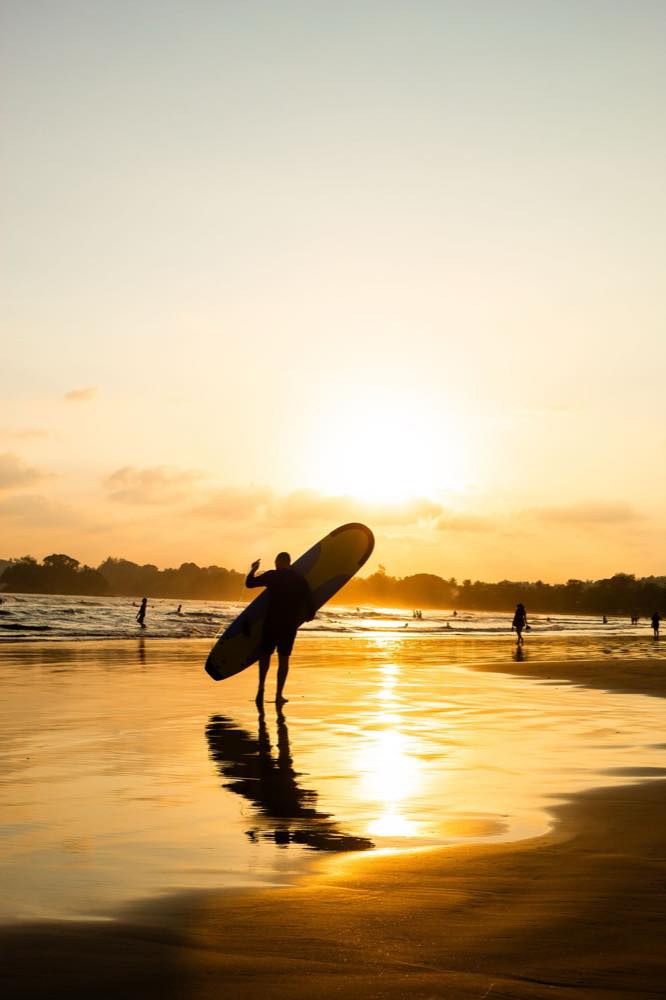 Sunset on Weligama beach.
The town has grown significantly around surfing - there are now more surf schools here than proper restaurants. Competition has kept lesson prices reasonable, and most schools offer packages combining lessons with accommodation. For multi-day surf camps and school packages, browse Weligama surf tours for local operators, or explore island-wide options if you plan to surf multiple spots.
Approximate lesson prices in Weligama as of 2026:
- Group lesson (2 hours, board + instructor): approximately LKR 3,500–5,000 (USD 10–16)
- Private lesson (1 hour): approximately LKR 5,000–7,000 (USD 16–22)
- 5-day beginner surf camp (lessons + guesthouse): approximately USD 200–350 depending on accommodation standard
Weligama Surf School
One of the longer-established operations, with Sri Lankan instructors who have been teaching for 10+ years. The school offers group and private lessons from November to April, plus a certification path for those who want to progress through levels. Good for solo travellers who want to join a structured group.
Surf-and-Stay Packages in Weligama
A surf school attached to a small guesthouse that makes packages easy - bed, breakfast, and two sessions a day. Instructors speak solid English and the school is capped at 8 students per instructor, which is a meaningful limit in a town where some operations run groups of 20.
Mambo’s Surf School
Run by a local family, Mambo’s is known for flexible scheduling and patient instruction. Popular with older beginners who find the structured camp format uncomfortable.
Hikkaduwa
Hikkaduwa is a more complex surf destination than Weligama. The reef breaks here suit intermediate to advanced surfers; the beach break is manageable for beginners but less forgiving than Weligama’s sand bottom. The town is larger, noisier, and more party-oriented than the south coast’s quieter alternatives, which suits some visitors and not others.
Key breaks at Hikkaduwa:
- Hikkaduwa Reef - the main spot, a right-hander over coral that works best at 3–5 feet. Reef boots recommended.
- Narigama Beach - a beach break better for beginners; softer waves, forgiving bottom, less consistent.
- Thiranagama - a faster, more hollow wave 3km south, popular with local surfers.
The coral reef at Hikkaduwa is also one of Sri Lanka’s better snorkelling spots, which means the lineup occasionally shares space with glass-bottom boat traffic. Early mornings and late afternoons are cleaner.
Other Notable Breaks
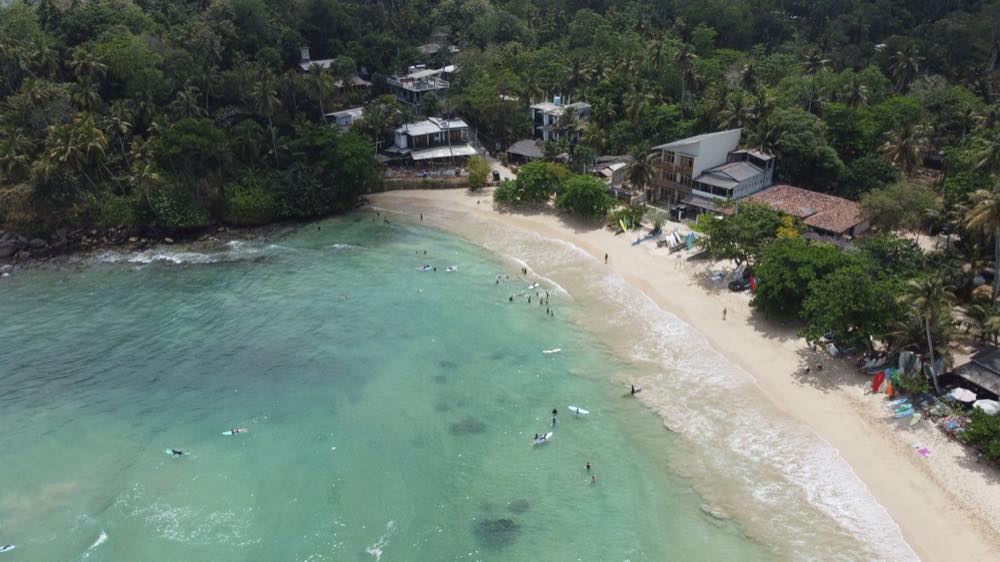 The sheltered bay at Hiriketiya.
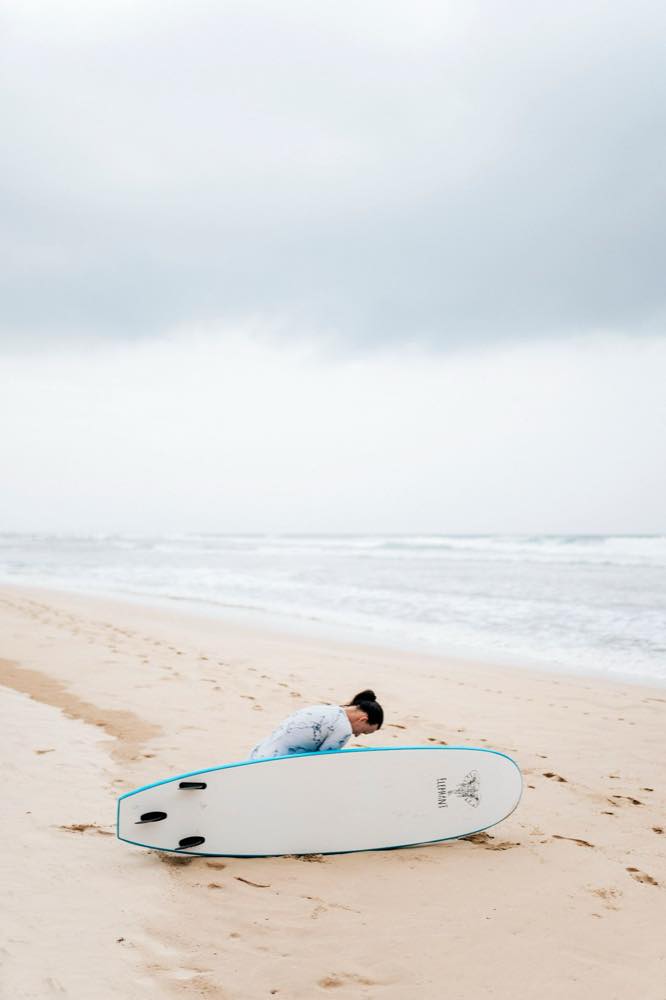 A quiet morning on Ahangama beach.
Mirissa - Mirissa Beach itself is usually too sheltered for consistent surfing, but Secret Beach (15 minutes west along the coast) can produce fun waves when the swell direction is right. Mirissa is better known as the whale-watching capital of Sri Lanka; if you’re based there, check Secret Beach conditions before writing it off.
Hiriketiya - a horseshoe bay south-east of Dikwella that has emerged as the south coast’s other beginner spot. The bay shape focuses and softens the swell; the bottom is mixed sand and reef. More relaxed atmosphere than Weligama, slightly better wave quality on its day.
Midigama - between Weligama and Dikwella. Three breaks within 500 metres: Rocky Point (right over sharp reef, advanced), Lazy Left (slower left, intermediates), and Ram’s Left (beginners). A short drive from Weligama and worth visiting once you’re past the basics.
Kalpitiya - on the north-west coast, primarily known for kitesurfing rather than surfing. Strong seasonal winds from May to October make it the best kite spot on the island. Surfboards are less useful here.
Equipment
Most surf schools include a board in lesson prices. For independent hire outside lessons:
- Foam (softboard) hire: approximately LKR 1,500–2,500 per day
- Fibreglass shortboard/longboard hire: approximately LKR 2,000–3,500 per day
- Reef boots (essential at Hikkaduwa): approximately LKR 300–500 per day hire, or buy for LKR 1,500–2,500
Rash vests are strongly recommended - the equatorial sun reflects off the water and a four-hour session without sun protection will cause a serious burn. Wax is available at all surf shops.
Getting to the Surf Spots
Arugam Bay: No direct public transport from Colombo; the most practical option is the intercity bus to Monaragala (approximately 5 hours, LKR 500–700) and then a connection to Arugam Bay (approximately 2 hours). Private hire from Colombo costs approximately LKR 20,000–30,000 and takes 6–7 hours.
Weligama and Hikkaduwa: Both are on the coastal rail line from Colombo Fort. The Matara Intercity Express takes approximately 2 hours 45 minutes to Weligama (from LKR 450 second class as of 2026). Hikkaduwa is a 30-minute tuk-tuk ride or one stop further by train.
For a broader south coast trip combining surfing with other activities, the southern coast itinerary covers Weligama, Mirissa, and Tangalle in sequence.
Practical Notes
The water temperature in Sri Lanka stays around 27–29°C year-round. No wetsuit required; a rash vest is sufficient. Helmets are not standard practice here - worth requesting at schools for beginners, especially on reef breaks.
Surfboard travel: major airlines allow surfboards as oversized baggage for an additional fee (approximately USD 50–100 each way; check your carrier). Sri Lanka Customs does not charge duty on personal surfboards brought in for your own use.
Respect for local surfers matters. Arugam Bay’s Main Point has a well-established local surf culture; during peak season the lineup can be competitive. Take waves in turn, don’t snake, and paddle out with awareness of who was already waiting.
Most surfers base in Arugam Bay during the east coast season and Weligama or Hikkaduwa during the south coast season. Hotels in Arugam Bay and Hotels in Weligama both have surfer-friendly guesthouses with board storage and early breakfasts.