Sri Lanka has a relaxed approach to tipping. Unlike some destinations where a service tip is written into the social contract, here it sits firmly in the realm of genuine appreciation - given when service genuinely warrants it. That said, the country’s tourism industry pays modestly, and a well-placed tip makes a real difference to the person receiving it. Here is what to know before you go.
The Local Attitude Toward Tipping
Sri Lankans do not tip each other in everyday life. At a local rice-and-curry shop, a roadside kottu stall, or a neighbourhood bakery, leaving extra money on the table would be unusual and might even cause confusion. Tipping is understood to be a tourist practice - something visitors from higher-cost countries do at tourist-facing businesses.
This matters because it removes the social pressure you might feel elsewhere. Nobody at a local eatery is watching to see whether you left a tip. But at guesthouses, tour operators, and hotel restaurants that serve primarily international visitors, the culture has shifted. Staff there have come to expect and depend on tips as a supplement to base wages that rarely reflect the real cost of living.
The rule of thumb: tip at businesses that cater to tourists; do not stress about it at local spots.
Service Charge and VAT - Read Your Bill First
Before tipping anything, check your restaurant bill carefully. Many tourist restaurants and hotel dining rooms in Sri Lanka add a 10% service charge automatically. Some also add 15% VAT on top. That means a LKR 3,000 meal can become LKR 3,750 before you have opened your wallet.
If the service charge appears on the bill, the default answer to “should I tip?” is: no, unless service was genuinely exceptional. The service charge is supposed to be distributed to staff - though in practice, how that works varies by establishment. If you want to make sure a specific server benefits directly, a small cash tip handed to them personally is the clearest way to do it.
Restaurants and Cafes
Local rice-and-curry shops and market stalls: No tip expected. Round up if you like, or leave small coins.
Mid-range tourist restaurants: 10% of the bill is standard if no service charge is already included. On a LKR 2,500 bill (roughly USD 8), that is LKR 250 (about USD 0.80). Leave it in cash on the table rather than adding it to a card payment - cash tips reach staff more directly.
Upmarket and hotel restaurants: 10% if no service charge is on the bill; LKR 500-1,000 extra (USD 1.50-3) for exceptional service even when the charge is included.
Beach bars and cafes: Rounding up or adding LKR 100-200 is fine.
Taxis and Tuk-Tuks
Metered taxi apps like PickMe and Uber operate in Colombo and a few other cities - tips are not expected on these rides, though you can tip in cash if the driver helped with heavy luggage or was unusually helpful.
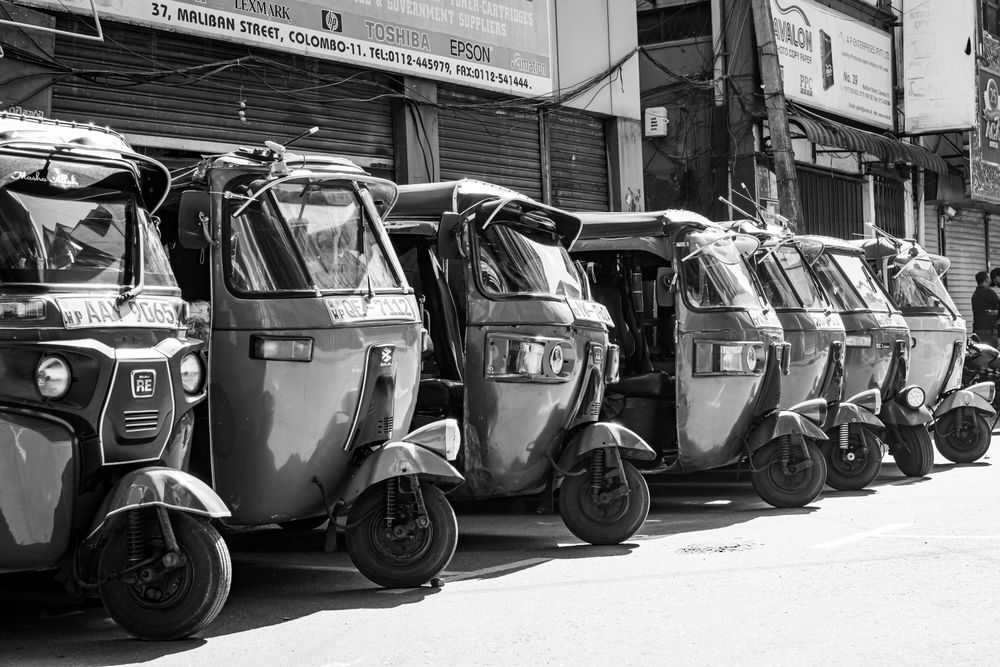
For traditional tuk-tuks on negotiated fares, rounding up to the nearest clean number is the norm. On a LKR 450 ride, paying LKR 500 is perfectly natural.
For half-day or full-day tuk-tuk hire, where a driver has been waiting for you at sites and helping navigate, a tip of LKR 300-500 (USD 1-1.50) at the end is a fair and welcome gesture.
Private car hires through guesthouses or tour operators: LKR 500-1,000 per day (USD 1.50-3) for the driver, paid at the end of each day or at the end of the trip.
Tour Guides
Guides at major sites like Sigiriya, the Temple of the Sacred Tooth in Kandy, and Yala National Park earn a base fee that is rarely generous. Tipping is expected and appreciated.
- Private guide for a day trip: LKR 1,000-2,000 per person (USD 3-6)
- Multi-day private tour: LKR 1,000-1,500 per day (USD 3-4.50), given at the end of the tour
- Group tour guide: LKR 300-500 per person per day (USD 1-1.50)
The quality of the guide matters here more than the formulas above. A guide who brings a historical site to life, handles logistics smoothly, and adapts the day to your interests is worth tipping at the top of the range.
Hotels and Guesthouses
Porters: LKR 100-200 per bag (USD 0.30-0.65) is appropriate when someone carries bags to your room.
Housekeeping: LKR 200-300 per night (USD 0.65-1) left on the pillow with a note if you want to be clear it is for the cleaner. At budget guesthouses, LKR 100-200 is fine.
Concierge: If a front desk team member goes out of their way to book restaurants, arrange transport, or solve a problem, LKR 500-1,000 (USD 1.50-3) handed discretely at the end of your stay is a thoughtful gesture.
Tipping at the hotel bar or restaurant follows the restaurant rules above - check for service charge first.
Spas and Salons
The wellness tourism sector in Sri Lanka, particularly Ayurvedic spas, is used to international visitors and tipping of 10-15% is fairly standard.
- Ayurvedic treatment (60-90 min): LKR 500-1,000 tip on top of the treatment cost (USD 1.50-3)
- Standard massage: LKR 300-500 (USD 1-1.50)
- Salon haircut: Rounding up by LKR 100-200 is enough; tipping is not a strong norm in local salons
Cash vs. Digital Tipping
Cash is king for tipping in Sri Lanka. Card payments are increasingly common in tourist restaurants and hotels, but the tip field on card machines often goes into a general pool or may not reach the individual who served you. If you want your tip to land with the right person, hand it over directly in cash.
Keep a supply of small-denomination rupee notes - LKR 50, 100, and 200 notes - in a separate pocket from your larger bills. You will use them more often than you expect, and fumbling for change in front of a tuk-tuk driver or spa therapist takes the warmth out of the gesture.
Common Mistakes Tourists Make
Tipping twice without realising it. The service charge sits quietly at the bottom of the bill. Missing it and adding another 10% on top means you have tipped 20% - not a tragedy, but worth knowing.
Tipping in foreign currency. Leaving USD or GBP notes as a tip is common among tourists who have run out of rupees. Most staff cannot spend foreign currency easily - they need to find a bank or money changer and will likely lose a percentage in the process. Rupees are always more useful.
Tipping through the card machine. As noted above, this route is unreliable. Cash tip, handed directly, is always the better option.
Over-tipping drivers at the expense of guides. Some visitors tip their private driver generously but give nothing to the site guide who spent three hours explaining history and culture. Both deserve recognition - split your tip budget accordingly.
Assuming no tip is needed because service was average. In Sri Lanka, many service workers are softly-spoken and understated by training and culture. Excellent service here does not always announce itself loudly. If your guide was accurate, patient, and helpful - tip them, even if they never asked.
For more on managing money day-to-day in Sri Lanka, see our practical guide to budgeting in Sri Lanka.