Sri Lanka’s south coast runs roughly 250km from Colombo to Tangalle, anchored by a string of beaches that each have their own character. The stretch is compact enough that you can move between them by bus or tuk-tuk in an hour or two, but different enough that picking the right base makes a real difference to your experience.
The main season runs November to April. Outside those months, the southwest monsoon brings rough seas and unreliable weather to this stretch of coast - some beaches stay lively, many don’t.
Hikkaduwa
The oldest tourist beach on the south coast, Hikkaduwa has been receiving visitors since the 1970s and it shows - the strip along the main road is busy with restaurants, dive shops, surf schools, and guesthouses. It’s not the quietest or most scenic beach on this list, but it has some specific things that no other south coast beach matches.
Search hotels in Sri Lanka on Booking.com
The reef and marine park: Hikkaduwa Marine National Park protects a coral reef directly offshore. Sea turtles are reliably present year-round, coming inshore to feed on seagrass beds within easy snorkelling distance of the beach. Glass-bottom boat operators line the beach and offer 20-minute reef tours for LKR 500–1,000 per person. Mask and snorkel rental is available from most dive shops for around LKR 300.
Surf: The break off Hikkaduwa beach works for intermediate surfers when swells are running. It breaks over reef, so beginners should head to Weligama instead.
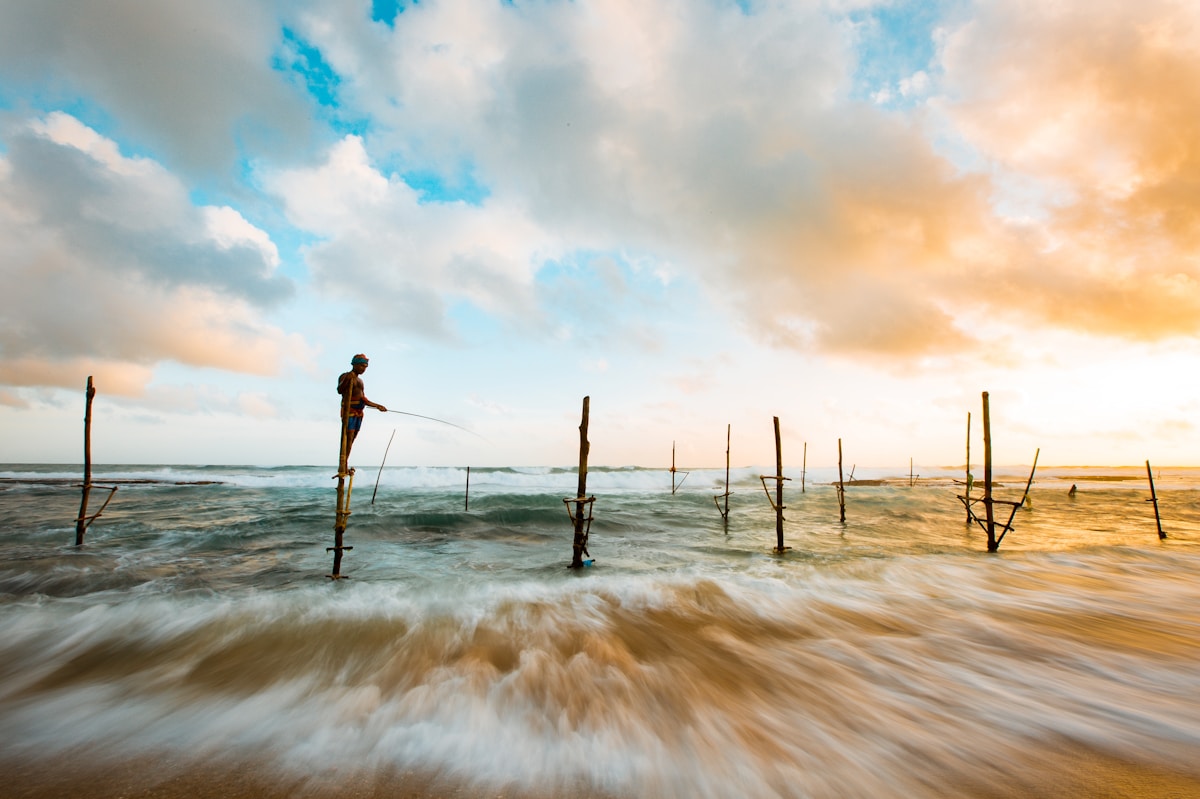
Stilt fishermen: The traditional stilt fishing technique - sitting on a wooden pole driven into the seabed - is still practised around Hikkaduwa and nearby Ahangama. Sunrise is the best time to see it in operation; later in the day, some stilt fishermen charge for photos.
Getting there: Hikkaduwa is 90km south of Colombo on the coastal rail line. Trains are regular and take about 2.5 hours. Budget accommodation from around $25–50 per night; mid-range $60–120.
Unawatuna
A 10-minute drive south of Galle Fort, Unawatuna sits inside a curved bay with a shallow reef on both sides that breaks up ocean swell and keeps the inner beach calmer than most on this coast. It’s one of the better swimming beaches on the south coast for that reason.
The beach is compact - about 500 metres of sand, heavily lined with restaurants and guesthouses. At peak season it fills with a mix of backpackers, families, and day-trippers from Galle.
Best for: calmer swimming, proximity to Galle (a major sightseeing destination 10 minutes away), and a good range of accommodation at various price points.
Diving: Several dive shops operate from Unawatuna. The reef has coral and some wreck diving including the Rangoon, a British WWI-era steamship. Water visibility is best November–April.
Budget accommodation: From around $25–60 per night for guesthouses on the beach road. Mid-range $80–150 for hotels with sea views.
Mirissa
The most photogenic beach on the south coast - Mirissa’s cove has a sweeping arc of sand with coconut palms leaning over the water and a small rocky headland on one end. It’s the departure point for whale watching boats in season and has the most active beach bar and nightlife scene on this stretch of coast.
Whale watching: Mirissa is the primary departure point for blue whale and sperm whale watching in Sri Lanka. Boats depart daily from Mirissa Harbour at 6am from November through April, returning by midday. Blue whales are reliably sighted in this season - these are the largest animals on Earth and seeing one at close range is a significant wildlife experience. Expect to pay LKR 3,500–5,000 per person for a reputable operator. Book through your guesthouse and choose a licensed vessel with whale watch certification - the industry is unregulated at the low end and overcrowding around whales is a concern. Book a Mirissa whale watching or beach tour in advance for peak January–March season.
Nightlife: Mirissa has the most bars of any beach on this list. The strip from the main beach to the harbour includes several beachfront bars that run until late. By south coast standards it’s lively; by Southeast Asia standards it’s modest.
Swimming: The main bay has fair swimming conditions in calm weather. The sea here is more exposed than Unawatuna; swell builds from the southwest and rough conditions are common during and just after the monsoon.
Budget accommodation: From around $30–70 for guesthouses near the beach. Mid-range beachfront rooms $100–200. Book well ahead for December–February.
Weligama
Weligama Bay is a long sweep of beach - almost 3km - popular with beginner surfers and families. The bay is wide and the surf break is consistent and forgiving, which is why a string of surf schools has set up here.
Surfing: Weligama is the best beginner surf spot on the south coast, with reliable low-power waves and an established school infrastructure. A 2-hour lesson including board hire costs approximately LKR 3,000–5,000. The break works best November–April.
The bay: Less scenic than Mirissa or Unawatuna but more spacious and less crowded. The town of Weligama behind the beach is genuinely local rather than a tourist strip.
Taprobane Island: A small private island 100 metres offshore from Weligama that can be rented as a whole (pricey) or viewed from the beach. Photogenic from shore.
Budget accommodation: Some of the best value on the south coast - around $20–50 for guesthouses in town. Mid-range from $60–120.
Hiriketiya
A bowl-shaped cove that became well-known among surfers and digital nomads around 2016–2018, Hiriketiya sits just off the main coastal road east of Dickwella. The beach is small - perhaps 200 metres - with a consistent surf break that works for intermediate surfers when south swells are running.
The low-rise cafes and guesthouses surrounding the cove are some of the most atmospheric on the south coast, and the food scene punches above the beach’s size. Hiriketiya gets less development than Mirissa or Unawatuna and retains a more relaxed character.
Best for: intermediate surfing, laid-back days, better food options relative to size, and a genuine low-key atmosphere.
Limitations: small beach, minimal nightlife, limited if you’re not into surfing.
Budget accommodation: Guesthouses from around $25–60. Mid-range $70–130. The best places book up early in season.
Tangalle
The furthest east of the main south coast beaches, Tangalle is also the least developed and the quietest. The main beach near the lagoon entrance is not particularly beautiful, but the headlands east of town have a series of quieter coves - Medaketiya Beach and the long stretch toward Rekawa - that offer some of the south coast’s least crowded sand.
Sea turtle nesting: Rekawa Beach, a short tuk-tuk ride from Tangalle, is one of the few reliable sea turtle nesting sites accessible to visitors in Sri Lanka. Local conservation groups run guided night walks (November–April is peak nesting season) allowing visitors to observe green and leatherback turtles coming ashore to lay eggs. This is an organised and controlled experience - arrive through the local conservation group rather than independently.
Peace and space: Tangalle is the best choice for visitors who want south coast sunshine without the tourist infrastructure. Fewer beach bars, fewer surf schools, more local life.
Getting there: Tangalle is roughly 195km from Colombo. The Colombo Fort–Matara rail line ends at Matara (2.5 hours on the fast train); Tangalle is another 30km east by bus or tuk-tuk. The journey takes about 3.5–4 hours total.
Budget accommodation: Some excellent value - guesthouses from $20–50. Mid-range $60–120.
Choosing Your Beach
| Beach | Best for | Avoid if |
|---|---|---|
| Hikkaduwa | Reef snorkelling, sea turtles, surf (intermediate) | You want quiet or unspoiled scenery |
| Unawatuna | Swimming, proximity to Galle, all-round convenience | You want to escape crowds |
| Mirissa | Whale watching, atmosphere, nightlife | You want calm swimming |
| Weligama | Beginner surfing, value, families | You want buzzy nightlife |
| Hiriketiya | Intermediate surf, atmosphere, food scene | You want a big beach |
| Tangalle | Quiet, space, turtle nesting | You want nightlife or easy transport |
Most travellers stay on the south coast for 4–7 days and visit 2–3 of these beaches rather than picking just one. The coastal bus and rail connections make movement between them quick and inexpensive. Book a Galle day tour to combine fort exploration with time at Unawatuna and the surrounding area - guided tours handle the transport between sites so you can spend more time on the beach.