Search hotels in Anuradhapura on Booking.com
Anuradhapura is Sri Lanka’s oldest city and its most extensive archaeological site, but the north-central plain surrounding it holds several more destinations that reward a longer stay. Mihintale, 13km east, is a half-day excursion that most visitors make alongside or instead of a second day in the main ruins. Wilpattu National Park to the west is Sri Lanka’s most rewarding leopard habitat. Aukana and Ritigala are less visited but genuinely impressive. Day tours from Anuradhapura covering Mihintale, Wilpattu, and Aukana are bookable through local operators.
Mihintale - 13km East
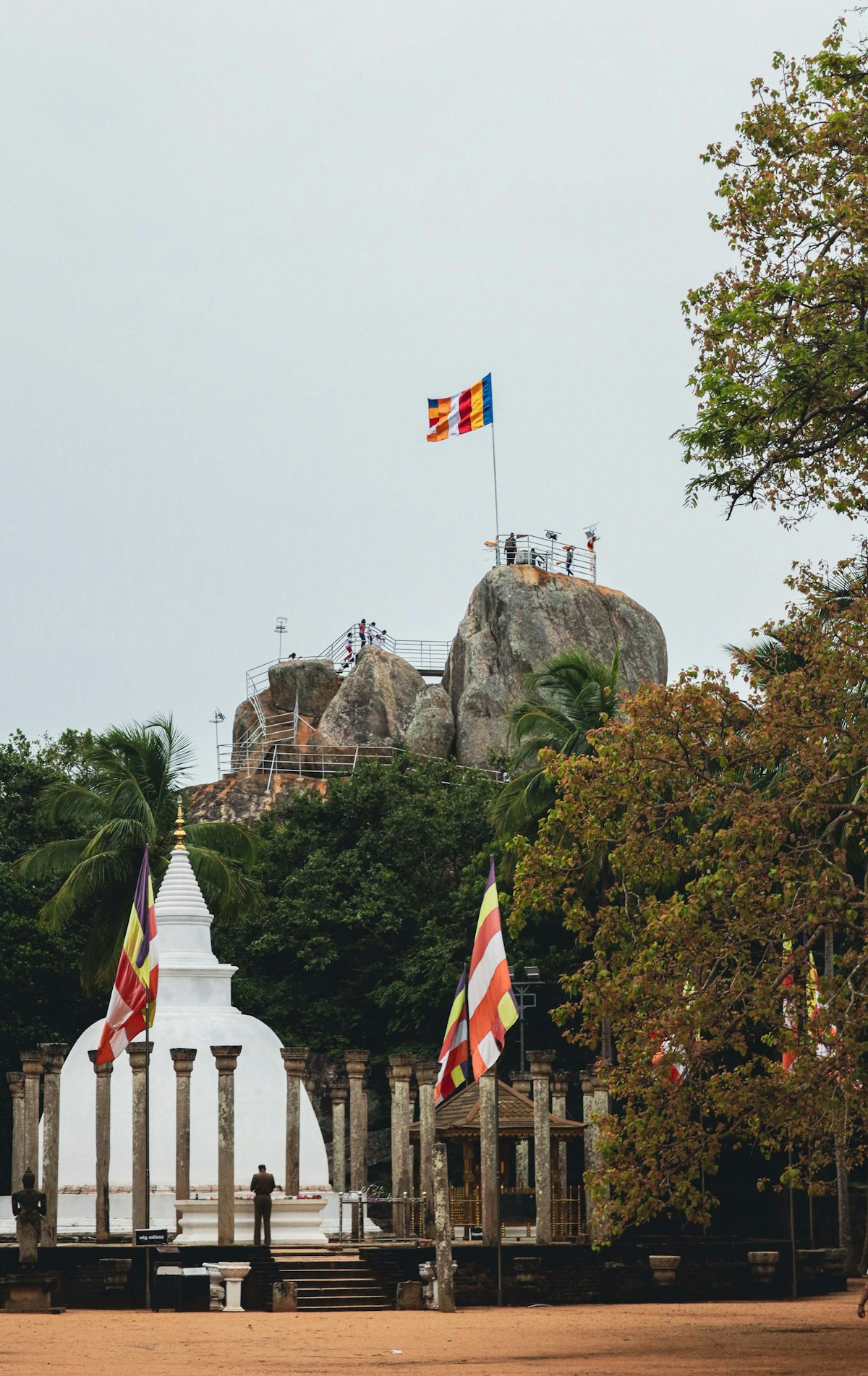
Mihintale is the site most closely associated with the introduction of Buddhism to Sri Lanka. According to the Mahavamsa chronicle, it was here in 247 BCE that the monk Mahinda, son of the Indian Emperor Ashoka, encountered King Devanampiyatissa of Anuradhapura during a hunt on this rocky hill, delivering the first Buddhist sermon on the island. The entire hill complex is considered sacred ground.
Getting there: Tuk-tuk from Anuradhapura approximately LKR 1,200–1,800 return with waiting time. The road is well-surfaced and takes about 20 minutes. Buses also run from Anuradhapura’s central bus station (LKR 50–80, 30 minutes).
The site: The main approach is via the ancient stone staircase - 1,843 steps ascending in several flights. The lower sections are wide and manageable; the upper flights are steeper. At the summit, the Maha Seya dagoba offers views across the dry zone plain. The Ambastale Dagoba marks the exact spot of Mahinda’s first sermon. The Sinha Pokuna (Lion Bath) - a 3rd-century BCE carved stone lion head used as a water spout - is one of the finest pieces of ancient craftsmanship on the site.
Entry: Approximately LKR 1,000 for foreign visitors as of 2026. Open daily from early morning. Visit before 10am to avoid the peak heat on the exposed stairway. The base area has a small food stall selling coconut water and short eats.
Wilpattu National Park - 30km West
Sri Lanka’s largest national park covers 1,317 square kilometres of dry zone forest, scrub, and wetland in the northwest of the island. Wilpattu’s defining feature is its villus - shallow, bowl-shaped lakes of rain-collected water scattered across the park, each surrounded by forest and sand edges that attract wildlife year-round.
Leopards: Wilpattu has one of the highest leopard densities in Asia, and sightings are more frequent here than in Yala, partly because Wilpattu receives fewer visitors. Leopards are most visible in the early morning (6am–9am) around the larger villus. Patient and slow circuit driving produces the best results.
Safari logistics: The Hunuwilagama entrance is the closest to Anuradhapura - about 1 hour by road. Most safaris are organised through guesthouses in Anuradhapura town. A half-day morning safari (6am–11am, 4 hours in the park) is the most productive. Jeep hire including park entry fees approximately LKR 8,000–12,000 per jeep (up to 6 passengers) as of 2026. Park entry for foreign visitors approximately LKR 4,000–5,000 per person on top of jeep hire.
Other wildlife: Sloth bear, spotted deer, elephant, sambur, and painted stork are all commonly sighted. Mugger crocodile inhabit the larger villus. Wilpattu is less consistently productive for elephants than Minneriya or Udawalawe but the overall diversity is high.
Aukana Standing Buddha - 50km Southeast
The Aukana Buddha (Avukana Rajamaha Viharaya) is a 12-metre standing stone Buddha carved from a single granite face in the 5th century CE during the reign of King Dhatusena. It is connected to the living rock only at its feet and base - a technical and artistic achievement rarely matched in ancient South Asian sculpture. The right hand is raised in the abhaya mudra (gesture of protection) while the left holds the robe.
Getting there: The road south from Anuradhapura to Aukana takes approximately 90 minutes. A hired tuk-tuk costs approximately LKR 4,000–6,000 return with waiting time. Alternatively, take a train to Kekirawa station (LKR 80–120, about 1 hour) and a tuk-tuk to Aukana (LKR 600–1,000 return).
Entry and visiting: Approximately LKR 1,000 for foreign visitors as of 2026. The Buddha stands inside a small modern shelter with the original rock face as a backdrop. Morning visits are recommended - the eastern light catches the facial features from around 7am–10am. A smaller standing Buddha carved at the same time sits unfinished nearby, visible behind the main figure. Allow 1–2 hours at the site.
Ritigala Forest Monastery - 40km Southeast
Ritigala is a protected forest reserve and the site of a 1st-century BCE forest monastery used by the Pamsukulika order - monks who practised extreme asceticism and lived apart from the main monastic centres. The ruins extend along a 2km stone path through thick forest, emerging around meditation terraces, bathing pools, and double-platform structures (parivenas) unique to this site.
Getting there: Tuk-tuk from Anuradhapura approximately LKR 3,500–5,000 return. The entrance to Ritigala Strict Nature Reserve is on the road toward Habarana. Entry approximately LKR 1,000 for foreign visitors as of 2026. A site guide at the entrance will walk you through the path - their knowledge of the ruins significantly enhances the visit (tip approximately LKR 500–1,000).
The experience: Ritigala’s atmosphere is markedly different from the open-plan ruins at Anuradhapura. The forest has reclaimed most of the structures, and the effect of encountering stone platforms and bathing pools emerging from dense canopy is unusually evocative. Birdwatching is good in the early morning - the reserve protects a significant dry-zone forest corridor.
Combining Excursions
A practical two-day plan from Anuradhapura:
- Day 1: Mihintale (morning, 6am–10am) + Wilpattu safari (afternoon, 3pm–7pm)
- Day 2: Aukana Buddha + Ritigala (full day with hired vehicle, LKR 8,000–12,000)
See our Anuradhapura ancient ruins guide for what to see within the main archaeological zone before planning excursions beyond it.
Planning Your Sri Lanka Trip?
- Book tours & activities in Anuradhapura
- Find hotels in Anuradhapura
- Travel insurance for Sri Lanka
- Get a Sri Lanka eSIM
- Find flights to Sri Lanka