Jaffna’s geography - a peninsula surrounded by a lagoon dotted with islands - makes boat trips an essential part of exploring the north. The islands accessible by ferry from the Kurikattu jetty are among the most distinctive places in Sri Lanka: Nainativu with its ancient Hindu temple, Delft with wild horses and Portuguese ruins, and Nagadeepa where Buddhist pilgrims come year-round. On the peninsula itself, Point Pedro and Casuarina Beach are straightforward tuk-tuk excursions.
Nainativu Island and the Nainainathar Temple
Nainativu (also called Nainai Deevu) is a small island in the Palk Strait, reached by a 15-minute ferry from Kurikattu jetty. The Nainainathar Shiva Temple here is one of the Paadal Petra Sthalams - 276 sacred Shiva temples celebrated in classical Tamil literature - and draws pilgrims from across the Tamil diaspora, particularly from India. Guided day trips from Jaffna covering Nainativu, Delft Island, and Casuarina Beach are available to book in advance.
Getting there: Tuk-tuk from Jaffna to Kurikattu jetty approximately 30km (1 hour, LKR 1,200–1,800). Ferries run approximately every 30 minutes from 6am–5pm (LKR 100–150 return for locals, foreign visitors approximately LKR 500–800 as of 2026). The ferry stops first at Nagadeepa Purana Vihara before continuing to Nainativu. Ask at the jetty for the current schedule.
On the island: The temple complex at the island’s centre can be walked in 30–45 minutes. Pilgrims make offerings of flowers, coconuts, and oil lamps. The atmosphere during major festival days (particularly in May–June) is extraordinary. The island is otherwise very small - a handful of families live here full time. Return ferries run throughout the day.
Nagadeepa - Buddhist Sacred Site
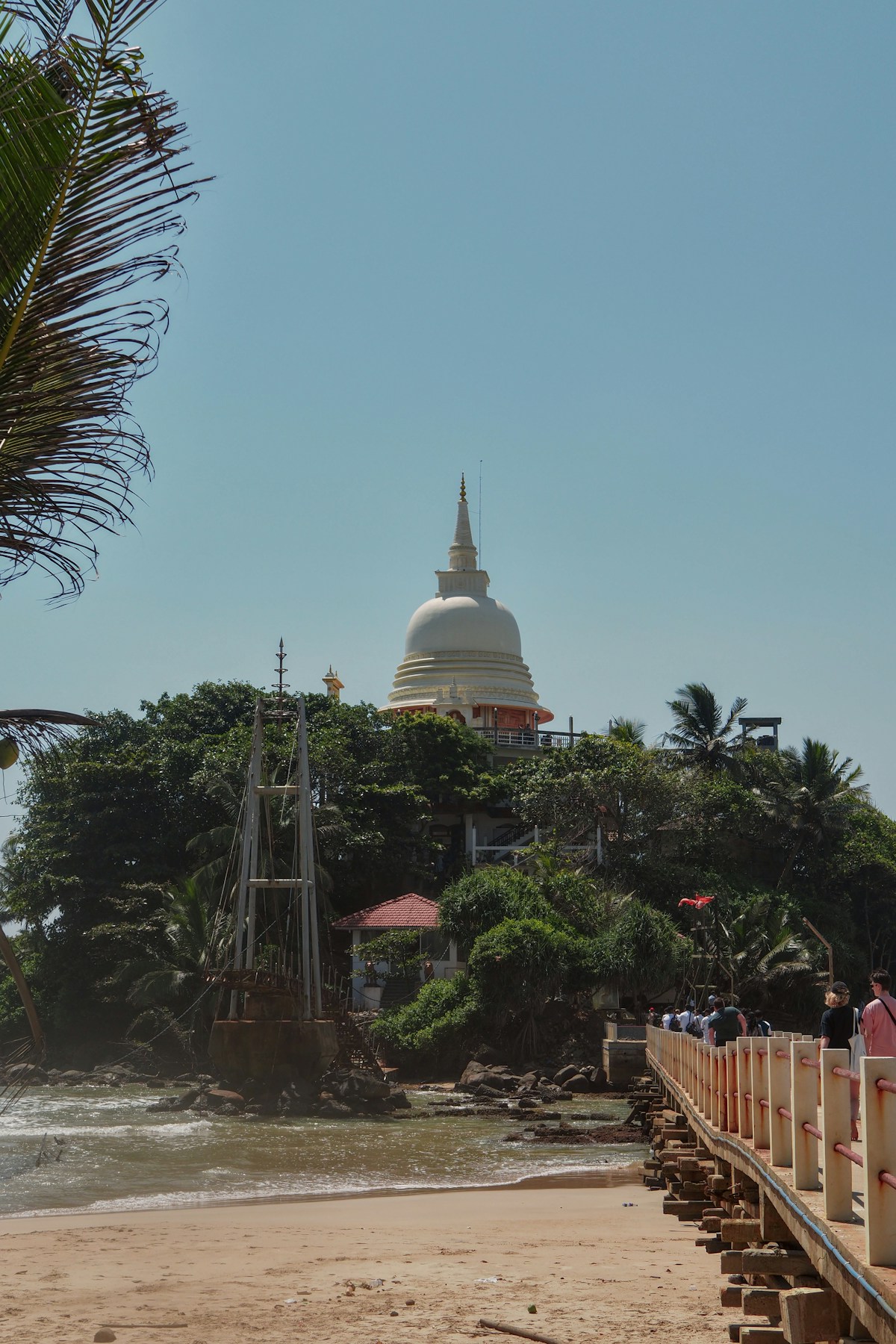
Nagadeepa Purana Vihara stands on a small island between the mainland jetty and Nainativu. According to the Mahavamsa chronicle, the Gautama Buddha visited this site during his second trip to Sri Lanka to resolve a dispute between two Naga kings. A Bo tree cutting from Anuradhapura and a jewelled throne said to mark the exact spot of the Buddha’s visit are the main relics.
Visiting: The ferry route passes directly through Nagadeepa - disembark, visit the temple (free entry; donations welcome), and reboard the next ferry to continue to Nainativu. The temple is busy with Buddhist pilgrims year-round; on full-moon poya days it is particularly crowded. The temple is open from early morning until late afternoon.
Delft Island (Neduntheevu)
Delft is the farthest and wildest of Jaffna’s islands. Its distinctive character comes from the combination of Dutch colonial ruins, Portuguese-era fortifications, ancient coral-stone walls, and a herd of horses that roam freely - descended from animals brought by Dutch colonists in the 17th century.
Getting there: Ferry from Kurikattu jetty departs at approximately 8am (check current schedule at the jetty). The crossing takes about 90 minutes. Return ferry departs Delft in the afternoon - only one crossing each way, so you’ll spend approximately 4–5 hours on the island. Passenger ferry approximately LKR 300–500 return as of 2026.
What to see: On arrival, local tuk-tuks meet the ferry (approximately LKR 1,000–2,000 for a full circuit of the island). Highlights include the Portuguese fort ruins near the jetty, the baobab tree (locally called the 400-year-old tree - possibly the oldest introduced specimen in Sri Lanka), the coral-stone walls built without mortar by ancient inhabitants, and the wild horse herd grazing along the western coast. The landscape is flat and sparse - more North African in character than tropical.
Practical notes: Bring food and water. There are no restaurants on Delft. Shade is limited. The morning ferry from Jaffna requires an early start.
Point Pedro - Sri Lanka’s Northernmost Point
Point Pedro is the northernmost town on the island and sitting at latitude 9°49’N, the place where Sri Lanka faces directly toward the Indian coast, 30km across the Palk Strait. The town has a lighthouse, a fishing harbour, and a small market area.
Getting there: Tuk-tuk from Jaffna approximately 37km (45 minutes, LKR 2,000–2,800 return with waiting time). Buses run from Jaffna town (LKR 80–120, approximately 90 minutes with stops).
What’s here: The lighthouse is the main landmark. The fishing harbour is active from around 5am and worth a morning visit. A circuit from Jaffna combining Point Pedro with Vallipuram Alvar Hindu Temple (5km south, one of the oldest in the north) and Casuarina Beach at Karainagar (15km west) makes a full-day northern peninsula loop. A hired tuk-tuk for this circuit costs approximately LKR 3,500–5,000 as of 2026.
Casuarina Beach, Karainagar
The best beach accessible from Jaffna is at Karainagar Island, 20km northwest of the city. The beach is named for the casuarina trees that line its shore and offer shade on what would otherwise be an exposed sandy strip. The water is extremely shallow and calm - a broad sandbar extends into the strait, making it suitable for paddling and swimming even for non-swimmers.
Getting there: Take the Karainagar bridge (road connects to the peninsula). Tuk-tuk from Jaffna approximately LKR 1,500–2,000 return. Bus from Jaffna bus station to Karainagar (LKR 60–100, about 45 minutes) or via Chavakachcheri for a scenic route.
Visiting: Best on weekday mornings - the beach fills with local families on weekends. A row of small stalls sells coconuts, short eats, and cool drinks. There is no admission charge. Karainagar village itself has a small church and a Hindu kovil visible from the beach road.
See our Jaffna history guide for background on the northern capital before your excursions.
Planning Your Sri Lanka Trip?
- Book tours & activities in Jaffna
- Find hotels in Jaffna
- Travel insurance for Sri Lanka
- Get a Sri Lanka eSIM
- Find flights to Sri Lanka