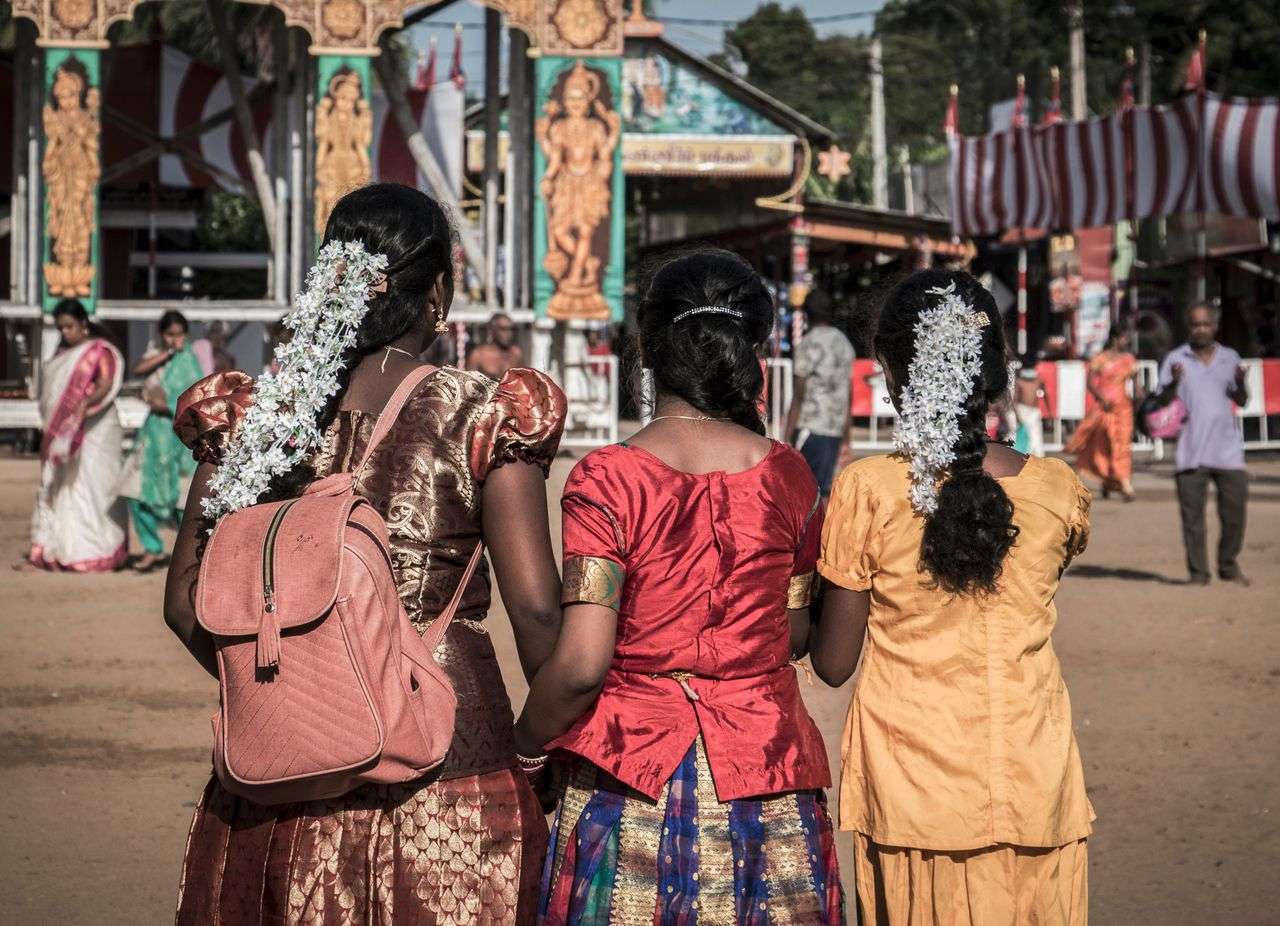
Jaffna sits at the northern tip of Sri Lanka, separated from Tamil Nadu by 64 kilometres of the Palk Strait. That narrow stretch of water is one of the most culturally significant crossings in South Asia. What came across it - language, religion, temple architecture, food traditions, and music - shaped a city that reads, sounds, and tastes unmistakably Tamil. For travellers who’ve visited Tamil Nadu, or who plan to, Jaffna operates as both a cultural echo and a continuation. For everyone else, it’s the most distinctive city in Sri Lanka precisely because it is so different from the rest of the island.
Understanding the Tamil heritage of Jaffna isn’t just background reading. It changes what you notice walking through the city - why the streets are lined with the kind of towering, god-encrusted gopurams you’d find in Madurai or Thanjavur, why the morning market smells of idli batter and sambar rather than rice and coconut roti, and why the palmyrah palm that dots every view of the flat northern peninsula is woven into the food, handicrafts, and livelihood of nearly every family here.
The Palk Strait: A Channel, Not a Wall
The straight-line distance from Jaffna to the Tamil Nadu coast is roughly the same as London to Paris. For most of recorded history, that distance was easily crossed by outrigger canoe. The ancient ferry route between Rameswaram in Tamil Nadu and Mannar Island in Sri Lanka - the legendary Pamban crossing - was used for at least two millennia by traders, pilgrims, settlers, and armies.
The Jaffna Kingdom, which controlled the northern peninsula from roughly 1215 to 1624, was a Tamil Hindu polity with direct political and cultural ties to the Vijayanagara Empire in South India. Its capital at Nallur, the royal temple, and the literary and religious traditions it supported were all continuous with Tamil South India - not a colonial imposition, but an organic extension of Tamil civilization across open water.
Portuguese conquest in 1624 interrupted the dynasty but not the culture. Dutch colonisers from 1658 and British from 1796 brought new administrative layers, but none penetrated the Tamil character of Jaffna’s daily life, which continued to be organised around the Hindu temple, the Tamil language, and South Indian culinary traditions.
The 26-year civil war (1983–2009), fought between the Sri Lankan government and the LTTE, did immense damage. An estimated 100,000 people died. Jaffna was heavily militarised - at times sealed entirely from the rest of Sri Lanka. The cultural life of the city was disrupted, displaced, and in some cases destroyed, most visibly in the 1981 burning of the Jaffna Public Library, which consumed approximately 97,000 books and manuscripts including irreplaceable palm-leaf texts in Tamil.
The war’s end in 2009 and the subsequent reconstruction is the reason Jaffna is now accessible to visitors at all. The recovery is real, visible, and ongoing.
Nallur Kandaswamy Kovil
Nallur is the anchor of Jaffna’s religious and cultural life. The current temple dates from 1734, built during the period of Dutch colonial rule by a Tamil chieftain who restored the kovil after earlier destruction. Its five-storey golden-ochre gopuram - the distinctive South Indian temple gateway tower - is encrusted with hundreds of sculpted Hindu deities in the Dravidian style you’d find at the Meenakshi Amman Temple in Madurai or the Brihadeeswarar in Thanjavur.
The temple is dedicated to Murugan, the Tamil god of war, youth, and wisdom. This is significant: while the rest of Sri Lanka is overwhelmingly Buddhist, the primary deity worshipped in Jaffna is the same Murugan honoured across Tamil Nadu. The religious continuity across the strait is near-total.
A visit to Nallur requires preparation. Men must remove shirts before entering; women should wear clothing covering shoulders and legs. Shoes are removed at the entrance. Photography inside the inner sanctum is not permitted - follow the cues of devotees around you. The temple opens at approximately 6am and closes during the mid-day hours (typically 12pm–4pm), reopening for the evening puja. Early morning is the best time: the light on the gopuram is softer, the crowds are manageable, and the smell of incense and temple flowers is at its most intense.
The annual Nallur Chariot Festival runs for 25 days in August and September, culminating in a massive procession of the temple chariot through the surrounding streets. Kavadi bearers - devotees who pierce their skin with metal skewers as an act of penitence - are a defining image. The festival draws hundreds of thousands of pilgrims from across Sri Lanka and the diaspora. If you’re in Jaffna during this period, book accommodation weeks in advance.
Nallur is not the only kovil worth visiting. The Nainativu Nagapooshani Amman Temple on Nainativu Island - reached by boat from Kurikadduwan jetty near Jaffna - is one of the most sacred Hindu temples in Sri Lanka. The island visit is part pilgrimage, part boat trip through the shallow emerald waters of the Jaffna Lagoon. Buddhist temples on Nainativu also attract pilgrims, making the island itself a quiet emblem of Sri Lanka’s dual heritage.
Tamil Food in Jaffna
Jaffna’s food is the clearest expression of its Tamil South Indian identity, and it differs significantly from the coconut-rich, milder cooking of Colombo or the south coast.
Jaffna crab curry is the headline dish - Jaffna mud crabs cooked in a deep-red gravy of dried chilies, curry leaves, goraka (a sour tamarind-like fruit), and coconut milk. The crab comes from the lagoons of the northern peninsula and is typically larger and meatier than what you’d find further south. Several restaurants in Jaffna serve it alongside rice, but the best versions are found in smaller family-run operations in the peninsula rather than tourist-facing restaurants in the city centre. Plan for fingers and some patience.
Palmyrah-based foods distinguish Jaffna from anywhere else in Sri Lanka. The palmyrah (Borassus flabellifer) is the symbolic tree of the Tamil north - it appears on political emblems, in Tamil poetry, and in dozens of everyday products. Palmyrah toddy (fresh sap tapped from the flower stem) is fermented into a mildly alcoholic drink. Unfermented neera is drunk chilled as a fresh juice. Palmyrah jaggery - crystallised syrup - is used in sweets. Nungu (the translucent seed of the young palmyrah fruit) is sold in markets in season (March–June), typically served chilled in its own water. It tastes faintly of coconut and osmotic water - cooling and unusual. If you visit in season, this is not optional.
The tiffin breakfast in Jaffna’s tea shops runs to idli (steamed rice and lentil cakes), dosa (thin fermented crepes), and medu vadai (fried lentil doughnuts), always served with sambar and coconut chutney. These are the canonical Tamil Nadu breakfast dishes. In Jaffna they arrive at 7am in tea shops that have been serving them the same way for decades. The continuity with Chennai’s breakfast culture is direct and intentional.
Jaffna mutton curry is significantly spicier than the rest of Sri Lanka and closer in character to the dry-spice preparations of Chettinad cooking in Tamil Nadu. If you’ve eaten in Chettinad or in the spicier corners of Chennai, the flavour reference point is clear.
For a deeper guide to what and where to eat, see our Jaffna food guide. Our dedicated Jaffna food guide covers the full range of dishes in more detail.
Language and Daily Life
Tamil is the first language of Jaffna. You’ll hear it everywhere - on the street, in shops, from the radio. Sinhala, Sri Lanka’s other official language, is present but secondary in the north. English is widely understood in Jaffna, particularly among the educated and business class.
Signs are written in Tamil script (and sometimes English). This is important for navigating the city and its history: the Tamil script visible everywhere - on kovil walls, on street signs, on the packaging of palmyrah products - is the same script used in Tamil Nadu. It is a daily, visible reminder of the cultural continuity across the strait.
Tamil is one of the world’s oldest living classical languages, with a literary tradition stretching back over 2,000 years. The Sangam poetry composed in the first centuries CE is still read in schools today. Jaffna’s library - rebuilt after its 1981 destruction - holds a significant collection of Tamil manuscripts and texts. The library is worth visiting even briefly, not just as a monument to what was destroyed but as a functioning cultural institution.
Post-War Rebuild and What You’ll See
The scars of the civil war are visible in Jaffna in ways that enrich rather than diminish a visit. This isn’t dark tourism - it’s historical context that the city itself doesn’t shy away from.
Jaffna Fort, originally built by the Portuguese and substantially rebuilt by the Dutch in 1680, shows clear signs of civil war damage: pockmarked walls, partially restored sections, structural repairs still in progress. The interior of the fort, which includes the ruins of a Dutch Reformed church, is freely accessible. The ramparts offer a view over the Jaffna Lagoon that makes the scale of the peninsula and its relationship to the sea immediately legible.
The Jaffna Public Library, rebuilt and reopened in 2003, is now a striking modern building replacing the one burned in 1981. It holds an archive of Tamil texts and is an active public library - not a memorial but a working institution. Worth a visit in the morning when local students are studying.
The Kovil Pillaiyar temples scattered through residential neighbourhoods are the most intimate expression of Tamil religious life in Jaffna - small, often painted in vivid yellows and reds, with fresh flower offerings and smoking incense. You’ll pass dozens walking through any residential area. They are not tourist attractions, and should be treated with the respect you’d give any active place of worship.
Comparing Jaffna and Tamil Nadu
Travellers who visit both find the cultural resonance striking. Tamil Nadu offers Dravidian temple architecture at its largest and oldest scale - the Brihadeeswarar at Thanjavur (11th century), the Meenakshi Amman at Madurai (17th century in its current form), the Shore Temple at Mahabalipuram (8th century). These are grander and more ancient than Nallur.
What Jaffna offers that Tamil Nadu doesn’t is the counterpoint to those temples: a Tamil city that exists within a Buddhist-majority island, shaped by the same religious and cultural traditions but also by the specific history of the Jaffna Kingdom, the colonial period, and the civil war. Jaffna is Tamil culture under pressure - surviving, rebuilding, and in places thriving. That context gives the kovils, the food, and the daily life of the city a different weight than you’d find in Tamil Nadu, where Tamil culture is the majority.
Our comparison series goes deeper on these parallels: Sri Lanka vs Tamil Nadu covers temples, food, festivals, and costs in detail. Sri Lanka vs South India broadens the frame to include Kerala and the Dravidian architectural tradition across the region.
Getting to Jaffna
By train: The Yal Devi express from Colombo Fort station is the recommended option. First and second class seats are comfortable; the journey takes approximately 6–7 hours. Book in advance through the Sri Lanka Railways website or at the station - seats sell out, particularly at weekends. The train route north through Anuradhapura gives a good sense of the landscape changing from the green Cultural Triangle to the drier, flatter north.
By air: SriLankan Airlines operates flights between Colombo (BIA at Katunayake) and Jaffna (JAF). The flight takes around 45 minutes. Useful if you’re short on time or combining a Jaffna visit with a flight in or out of the country.
By bus: Long-distance buses from Colombo’s Bastian Road terminal serve Jaffna in roughly 7–9 hours. Cheaper than train but significantly less comfortable.
From Tamil Nadu: No regular passenger ferry operates at the time of writing. The historical sea route between Rameswaram and Talaimannar (northwest Sri Lanka) has been discussed in government talks but services are intermittent. The practical routing remains Chennai–Colombo by air, then Colombo–Jaffna by train or air.
Once in Jaffna: The city itself is best explored by tuk-tuk or rented bicycle. Tuk-tuks are plentiful and cheap; agree on a price before you set off. The Jaffna Peninsula - including the causeway to Jaffna Island, Kayts Island, and the roads to Casuarina Beach - is manageable by bicycle if the heat allows (avoid midday riding from March to May).
When to Visit
October to March is the best period: temperatures in the low 30s, lower humidity, dry road conditions. Jaffna’s climate differs from the rest of Sri Lanka - it receives its main rainfall in the northeast monsoon (October–January), which means the rest of the year is dry and hot. The driest and most comfortable window is December–February.
August–September coincides with the Nallur Chariot Festival (exact dates shift with the Tamil calendar - check in advance). Accommodation must be booked well ahead; prices are higher.
April–May is the hottest period in the north - temperatures can reach 38°C. Not recommended for intensive sightseeing, though the palmyrah nungu season (fresh palmyrah seeds) peaks in this period.
A Final Note
Jaffna is not a ruin, a conflict zone, or a curiosity. It is a city with an unbroken cultural tradition extending back over two millennia, a food scene that rewards attention, a religious life that is vivid and accessible, and a rebuilt civic confidence that is unmistakable to anyone who spent time here before 2009 and returns now.
For travellers interested in the Tamil cultural world - whether coming from Tamil Nadu or discovering it for the first time - Jaffna is the most complete expression of that culture outside India. It is also, practically speaking, one of the most interesting and undervisited cities in Sri Lanka. The two facts are connected.