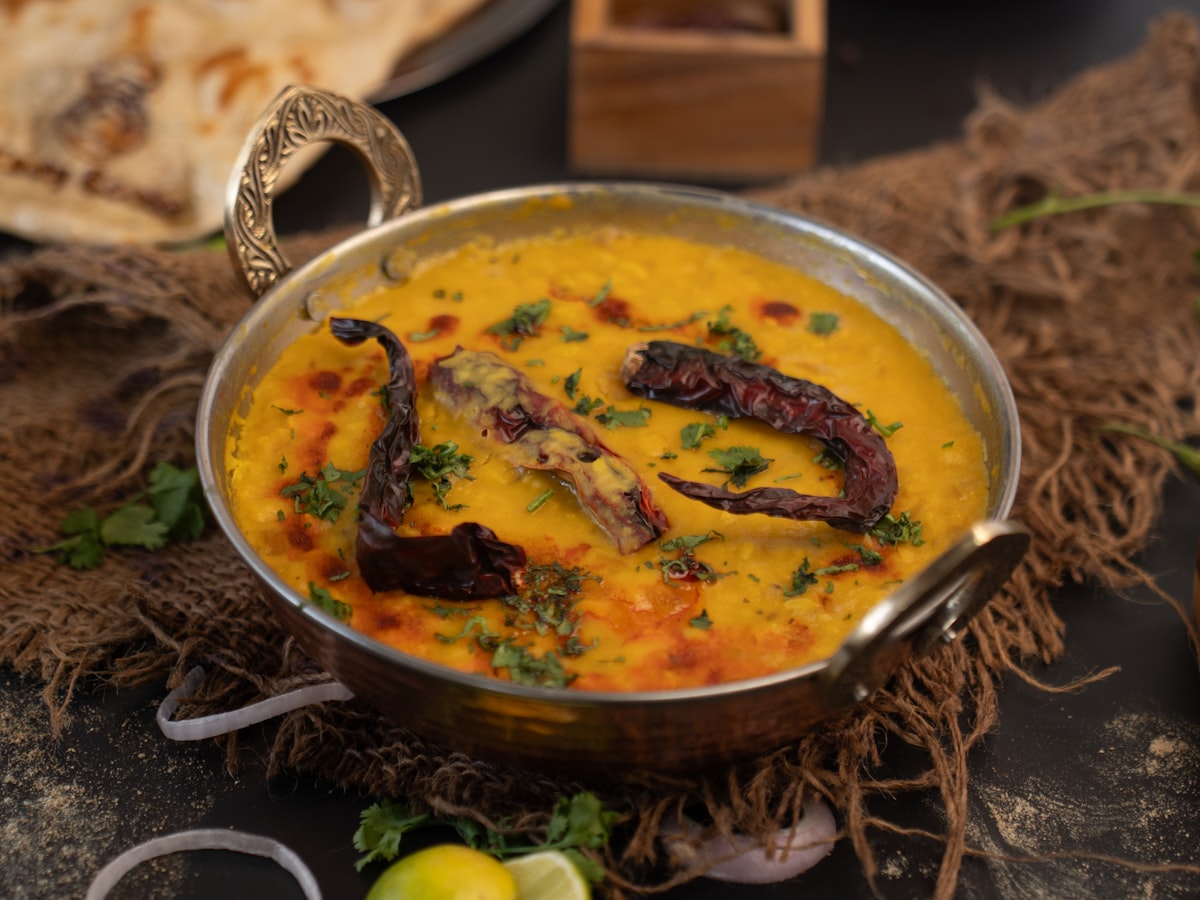
Sri Lanka is one of the most naturally vegan- and vegetarian-friendly countries in Asia. The majority Sinhala Buddhist culture has shaped a cuisine that treats vegetables and legumes as central ingredients - not substitutes. Dhal curry, jackfruit curry, coconut sambol, mallum (shredded greens with grated coconut), and a dozen vegetable side dishes are the daily staples for millions of Sri Lankans. None of them require meat.
The challenge is not finding food - it is knowing which dishes have hidden animal products, and how to ask clearly. This guide covers the foods to seek out, the restaurants that make vegetarian and vegan eating easy, and the practical tools to navigate any menu on the island.
The Foundation: Rice and Curry
Every rice and curry plate is a composition. A mound of steamed rice arrives surrounded by small dishes: at minimum a dhal (red lentil curry cooked in coconut milk), at least one vegetable curry, pol sambol (shredded coconut with chilli), and sometimes papadams and pickle. This is the daily meal for most Sri Lankans, and a naturally plant-based one - unless the pol sambol contains Maldive fish.
Maldive fish is dried, cured tuna used as an umami base in many condiments. It is invisible in a dish - you cannot taste it distinctly - but vegans and vegetarians should ask about it every time. The phrase to use: “Maldive mas thiyanawada?” (Is there Maldive fish?). Most restaurants, especially outside tourist areas, will happily make pol sambol without it on request.
For a deeper look at the broader Sri Lankan food scene, see our Sri Lankan Food Guide.
Dishes That Are Almost Always Vegan
These appear on menus across the island and are plant-based by default (verify Maldive fish where noted):
- Dhal curry - red lentils in coconut milk with tempered mustard seeds and curry leaves. The backbone of every rice and curry plate.
- Jackfruit curry (polos) - young green jackfruit cooked in spiced coconut milk. Meaty texture, deeply savoury, often the most substantial dish on the table.
- Mallum - shredded green leaves (usually gotu kola or drumstick leaves) tossed with grated coconut and green chilli. Bright, fresh, usually vegan.
- String hoppers (idiyappam) - steamed rice noodle discs, served at breakfast with coconut sambol and a thin dhal or coconut milk gravy.
- Plain hoppers (appa) - fermented rice and coconut milk pancakes, bowl-shaped and crispy at the edges. Ask for these without the egg.
- Pol roti - flatbread made with coconut and green chilli, cooked on a flat pan. No dairy, no egg.
- Wambatu moju - sweet-sour pickled aubergine, sometimes fried in oil. Almost always vegan.
- Coconut sambol - ask specifically if Maldive fish is included; without it, this is simply grated coconut with chilli and lime.
Temple Food: Dana Culture
Sri Lanka’s Buddhist temples practice dana - the offering of food to monks and laypeople as a form of merit-making. On poya days (full moon, which is a public holiday), many temples serve free vegetarian meals to all visitors. Kelaniya Raja Maha Vihara near Colombo and the Temple of the Tooth in Kandy are the largest, but smaller village temples across the island follow the same tradition.
Temple food is always vegetarian and frequently vegan. It is prepared simply - dhal, rice, vegetable curries, no onion or garlic in some traditions. If you are near a temple on a poya day, the meal offered to the public is worth experiencing, both for the food and the context.
Seema Malaka floating temple in Colombo is worth visiting on a poya evening - the atmosphere is extraordinary and the surrounding Beira Lake area has good vegetarian-friendly cafés nearby.
City by City
Colombo
Colombo has the widest vegetarian and vegan restaurant scene on the island. A few standouts:
The Commons Coffee House (Havelock Road, Colombo 5) is a popular café with a menu that runs heavily vegetarian. Grain bowls, avocado toast, and curries with strong plant-based options; mains from around LKR 900–1,400 as of 2026.
Barefoot Garden Café (Galle Road, Colombo 3) is attached to the famous Barefoot design store. The café menu includes dhal soup, salads, and daily vegetarian specials. A relaxed lunch stop in a garden setting; mains LKR 800–1,200.
Ministry of Crab (Old Dutch Hospital, Colombo 1) is primarily a seafood restaurant, but the vegetable sides and rice dishes here are prepared with the same care as the main courses. Good for a mixed group where some eat fish and some do not. Expect to spend LKR 3,000–4,000 per head. Reserve in advance.
Green Cabin (Galle Road, Colombo 3) is an old-school Sri Lankan restaurant with daily vegetarian rice and curry at lunch for well under LKR 500. No frills, no English menus, excellent food.
For a full Colombo eating guide covering all categories, see Colombo Food Guide. For those who want to learn Sri Lankan cooking rather than just eat it, Colombo cooking and food tours cover local wet market visits and hands-on rice and curry preparation - many sessions focus on vegetarian dishes by default.
Kandy
Devon Restaurant (Dalada Veediya, near the Temple of the Tooth) is the benchmark for budget vegetarian eating in Kandy. It has operated for decades and does a full rice and curry lunch with several vegetable dishes for around LKR 350–500. The kottu here can be made vegetarian on request - specify no egg if needed.
The Kandy City Centre food court area has a mix of options but for reliable vegetarian food, the smaller local restaurants on Dalada Veediya and DS Senanayake Street are more consistent than tourist-facing spots. Kandy food and cooking tours are available for visitors who want a guided market walkabout or a session preparing Sri Lankan vegetarian dishes in a local home.
Ella
Ella is the most vegetarian-traveller-friendly hill town on the island, partly because the large backpacker population has shaped menus accordingly. Most cafés on the main strip offer vegetarian kottu, vegetable roti, and rice and curry plates.
Café Chill near Nine Arches Bridge has a wide vegetarian section on the menu. Matey Hut does good rice and curry with multiple vegetable dishes for lunch. Several rooftop cafés along Ella’s main street adapt kottu to order - specify vegetable only, no egg if vegan.
See Food to Try in Ella for a street-by-street breakdown.
Galle
The Fort area has a strong café culture driven by boutique tourism. Several spots cater explicitly to plant-based diners:
The Fortaleza and Old Gate House in the Fort both run menus with clearly marked vegan options. The organic store inside Galle Fort (on Church Street) sells tempeh, tofu, and organic produce - useful for self-caterers staying in Fort guesthouses.
Galle market outside the Fort walls is one of the best places in Sri Lanka to buy fresh produce: jackfruit by the piece, banana blossom, green papaya, and seasonal vegetables at low prices.
Supermarkets and Self-Catering
Sri Lanka’s supermarket chains are well-stocked for plant-based eating:
Keells (island-wide, including Colombo, Kandy, Galle, Negombo) - stocks canned coconut milk, coconut cream, dried lentils, chickpeas, tempeh, tofu, soy milk, and a reasonable selection of vegan snacks. The Colombo branches carry oat milk.
Cargills Food City (most towns, including smaller cities like Matara and Trincomalee) - good for staples: lentils, coconut products, tinned jackfruit, and frozen vegetable mixes.
Arpico Supercentre (Colombo, Negombo, Kandy) - the most internationally stocked option. Carries plant-based yoghurt, nutritional yeast, and a wider range of imported goods.
Coconut milk is available everywhere - even the smallest village shop stocks canned coconut milk, and fresh coconuts for drinking cost around LKR 60–100 on the roadside.
Useful Sinhala Phrases
Knowing a few phrases makes ordering significantly easier, especially outside tourist areas:
| Sinhala | Meaning |
|---|---|
| Mama mas kanne naha | I do not eat meat |
| Malu kanne naha | I do not eat fish |
| Maldive mas thiyanawada? | Is there Maldive fish? |
| Bittara natthi appa | Hopper without egg |
| Kiri natthi | Without milk / dairy |
| Vegetarian venna puluwan? | Can you make it vegetarian? |
Most restaurant staff in tourist areas speak enough English that a direct request works well. In local restaurants, the Sinhala phrases above cover the situations that matter most.
One Practical Note on Kottu
Kottu roti is Sri Lanka’s most popular street food - chopped roti mixed on a flat griddle with vegetables, egg, and a protein. Vegetable kottu is widely available and excellent. For a vegan version, ask for it without egg: “bittara natthi vegetable kottu.” The standard version uses a small amount of egg; leaving it out is a common request and most stalls will accommodate it without fuss.
Plan Your Trip
For cooking classes, food tours, and cultural experiences across Sri Lanka, browse tours on GetYourGuide.