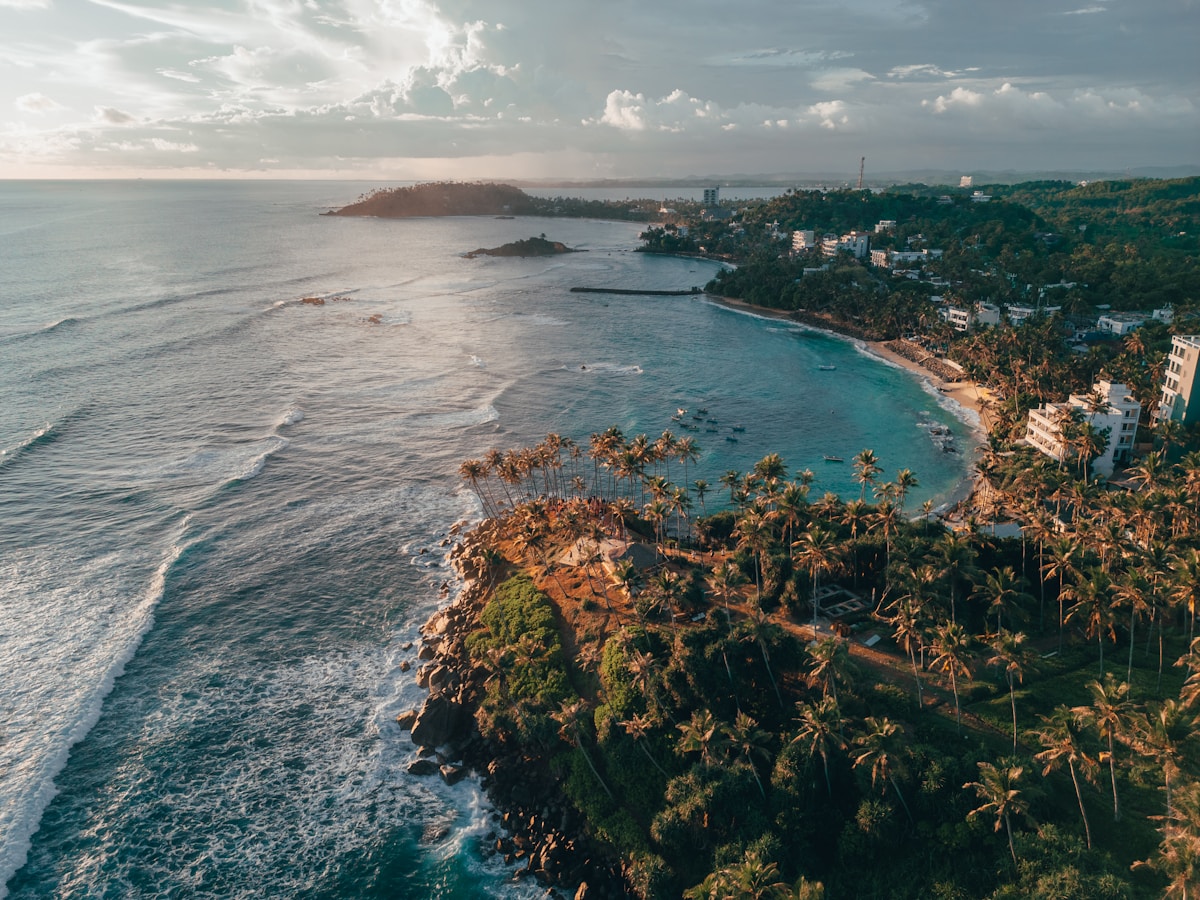
Mirissa’s blue whale watching season opens in November, and with Sri Lanka tracking close to 1.7 million international arrivals in 2026 (well ahead of last year’s pace), demand for boat departures is higher than usual. If you are planning a south coast trip between November and March, booking a whale watching slot in advance is now standard practice rather than optional.
When the Season Runs
The deep-water channel off the southern tip of Sri Lanka draws blue whales year-round, but sightings from Mirissa are most reliable between November and April. The peak for blue whale encounters is typically December through March, when calm seas make the 20-30 km offshore run more comfortable and the whales surface with greater frequency. Sperm whale sightings increase from December onwards and are relatively common through February.
Boat departures typically leave Mirissa Harbour between 06:30 and 07:00, returning by midday. Most trips run four to five hours. The crossing to the whale watching area takes around 45-60 minutes depending on sea conditions.
November Specifics
Early November sits at the very start of the season. Sea conditions at this point are generally calm (the southwest monsoon has fully retreated) but visibility can vary. Some days in early November still see moderate swells in the deep-water zone. By mid-November conditions have usually settled into the reliable pattern that runs through the core season.
Operator availability in November is higher than in December and January, when departure slots fill most days. For visitors flexible on dates, the first two weeks of November can offer a less crowded experience than peak December.
Advance Booking
With overall arrivals up approximately 6 percent year-on-year through September 2026, the Mirissa whale watching fleet (around 20-30 permitted vessels) is under more pressure than in previous seasons. Anecdotal reports from operators suggest November slots are being taken two to four weeks in advance from UK and German source markets in particular, both of which show strong growth in 2026.
Booking through a licensed operator with Coast Guard-registered vessels is important for safety and to ensure departure times are realistic. Our whale watching guide for Mirissa lists what to look for when comparing operators and what the going rates are for 2026.
Getting to Mirissa
Mirissa is approximately 150 km south of Colombo. By train, take the coastal line from Colombo Fort to Weligama (nearest station, approximately 3 km from Mirissa), which takes around 2.5 to 3 hours. Alternatively, the expressway by car or tuk-tuk via Galle takes around 2.5 hours from Colombo.
Galle is 30 minutes further east on the same coastal road and makes a practical base for multi-day south coast trips that combine the whale watching with the fort town, Unawatuna, and the reef at Hikkaduwa. Accommodation in Mirissa itself is largely small guesthouses and boutique stays; booking at least a month ahead for November travel is advisable at this stage.
Peak Season Pricing
Hotel and guesthouse rates on the south coast typically step up in mid-November as the peak season establishes itself. Booking now for trips between November and January tends to secure better availability and earlier pricing tiers. Our best time to visit Sri Lanka guide breaks down the seasonal pricing patterns across both coasts and the hill country.