Search hotels in Sri Lanka on Booking.com
Hiring a private driver is one of the most practical decisions you can make in Sri Lanka. The road network between key destinations is good but sprawling - distances between Colombo, Kandy, Ella, and Galle are substantial, public buses and trains require advance planning and baggage handling, and having your own driver means you can stop at viewpoints, adjust timings, and ask questions about what you’re seeing. For a fixed-price airport pickup or city transfer, book a Sri Lanka airport transfer in advance - it removes the need to negotiate at the taxi desk after a long flight. If you prefer self-drive flexibility, car hire in Sri Lanka is an option for those comfortable driving on the left.
The market for drivers in Sri Lanka is mature and relatively transparent. What follows covers where to find drivers, what to pay, what is and isn’t included, and how to avoid the most common friction points.
How to Find a Driver
Hotel and guesthouse referrals remain the most reliable starting point. Accommodation owners work with drivers regularly and have an incentive to recommend people who won’t cause problems. The informal accountability is real - a driver who overcharges or takes guests to commission shops will lose the referral. Ask at check-in; most places can arrange something within a few hours.
PickMe is Sri Lanka’s most widely used ride-hailing app (available on iOS and Android). It covers major cities well and includes both tuk-tuks and cars. For full-day or multi-day hire it operates more like a booking platform - drivers quote a fixed price for the itinerary. The app shows driver ratings and adds a layer of accountability that street-hailed alternatives lack.
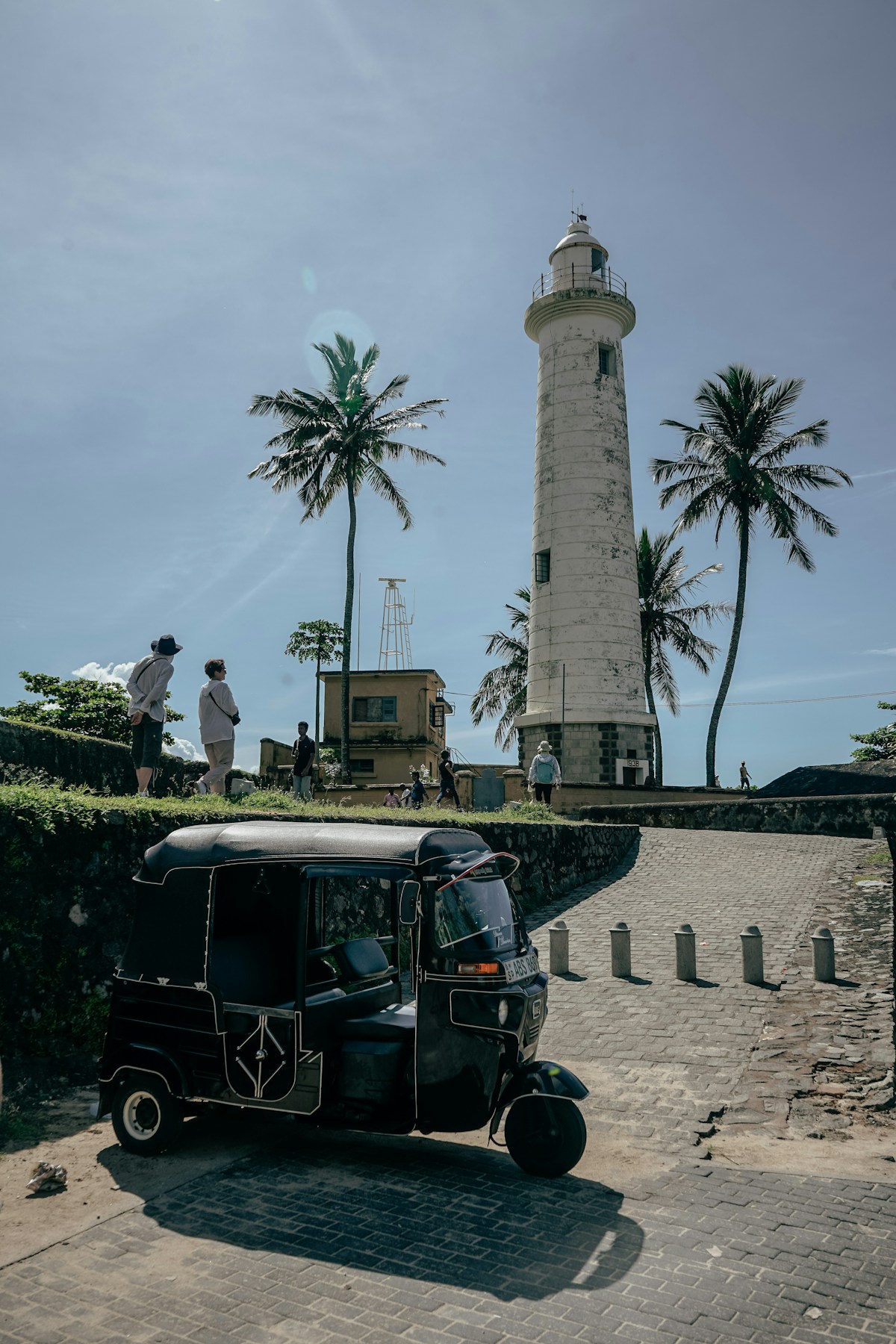
Tuk Lanka (tuklanka.com) specialises in tuk-tuk hire with English-speaking drivers for tourist itineraries. It suits shorter hops and day trips rather than multi-day circuits, and works particularly well if you want to cover the south coast without a full car.
Word of mouth at guesthouses and cafes - Sri Lanka’s backpacker trail is tight enough that other travellers regularly share driver contacts. If someone at your guesthouse has just finished a circuit, ask who drove them.
Approaching drivers directly at transport hubs and attractions is possible, but agree the price explicitly before you get in. Mismatched expectations on price are the most common cause of friction.
What Does It Cost?
Prices are broadly transparent in the tourist market as of 2026:
Standard air-conditioned car (Toyota Aqua, Nissan Leaf, or similar):
- Full day (8 hours / 100–150 km): approximately USD $55–75 (LKR 16,500–22,500)
- Half day (4 hours): approximately USD $30–40 (LKR 9,000–12,000)
Larger vehicle (van, Toyota KDH, or SUV) - needed for groups of 4+:
- Full day: approximately USD $80–120 (LKR 24,000–36,000)
Tuk-tuk for short distances:
- Within a town or to a nearby attraction: LKR 500–1,500 per trip, or negotiate a day rate of around LKR 3,000–6,000 ($10–20)
For multi-day circuits, drivers typically quote a flat rate for the full itinerary. The quoted rate includes overnight stays for the driver (he arranges his own accommodation - you’re not expected to cover this unless otherwise agreed, though some drivers ask for a small contribution of LKR 1,000–2,000/night).
What’s Included and What Isn’t
Typically included in the quoted daily rate:
- The driver’s time and fuel
- Local knowledge and navigation
Typically not included - paid separately:
- Expressway tolls: approximately LKR 350–1,500 per toll gate depending on route (the Southern Expressway to Galle involves several gates)
- Attraction entry fees - you pay your own entry to national parks, temples, and historical sites
- Driver’s meals - paying for the driver’s lunch when you stop is customary and appreciated, costing LKR 500–1,000 per meal at a roadside place
- Parking fees at attractions
Clarify tolls upfront, particularly if you’re travelling the E01 Southern Expressway from Colombo to Galle - the total toll cost each way can reach LKR 1,200–1,500, which adds up on a return trip.
Multi-Day Circuit Pricing
The Colombo–Kandy–Ella–South Coast–Colombo circuit is Sri Lanka’s most common private driver route. Here is a rough framework for a 7-day circuit as of 2026:
| Leg | Distance | Driver’s daily rate |
|---|---|---|
| Colombo → Kandy (+ Pinnawala) | ~120 km | USD $65–80 |
| Kandy → Sigiriya / Dambulla (day trips) | ~100 km | USD $65–80 |
| Kandy → Ella (via Nuwara Eliya) | ~145 km | USD $75–90 |
| Ella → Mirissa or Tangalle | ~160 km | USD $70–85 |
| South coast day (Galle + Unawatuna) | ~60–100 km | USD $55–70 |
| South coast → Colombo | ~145 km | USD $65–80 |
Full 6-day circuit total (driver only): approximately USD $395–485 (LKR 118,500–145,500), excluding tolls and meals. Negotiate the total as a single figure rather than day by day - most drivers are comfortable with this and it avoids daily renegotiation.
For a shorter 4-day Kandy–Ella–Galle circuit (without Colombo at each end), expect approximately USD $250–320 total.
English-Speaking Drivers
Virtually all drivers working the tourist circuit in Colombo, Kandy, Ella, and the south coast speak functional English. Drivers who work with tourists regularly have enough English to discuss routes, recommend restaurants and guesthouses (though treat these recommendations with some scepticism - commission arrangements exist), and navigate communication about timing and itinerary changes.
For the north (Jaffna and Mannar) and east coast (Trincomalee, Arugam Bay), English is less consistent - verify language ability when booking.
Tipping
Tipping is not mandatory but is the norm. A reasonable guide:
- Day trip: LKR 1,000–2,000 (USD $3–7)
- Multi-day circuit: LKR 5,000–10,000 total (USD $17–33), depending on the quality of service and length of trip
Give tips directly to the driver at the end of the trip, not through an agency.
Booking in Advance vs Arriving and Finding One
Peak season (December to February, July to August): book at least 2–3 weeks ahead. Reliable drivers with good reviews are booked solid during these periods.
Shoulder season (March–April, September–November): a week’s notice is usually sufficient.
Low season: you can often arrange a driver 24–48 hours in advance, though this gives you less time to check references.
For multi-day circuits, booking in advance also allows you to discuss the itinerary in detail - you can agree specific stops, adjust timings for early morning wildlife drives, and set expectations about how the day is structured.
Red Flags to Watch For
A few patterns that signal problems ahead:
- No agreed price before departure. Always fix the price in advance. “We’ll sort it at the end” creates space for dispute.
- Persistent recommendation of shops. Many drivers earn commission from gem shops, spice gardens, and batik outlets. A brief stop at one place is normal; being taken to several without being asked is a sign the driver’s incentives don’t align with yours. You’re entitled to say no.
- Vague answers about what the quote includes. If a driver can’t clearly tell you whether fuel and tolls are included, get a second quote from someone who can.
- No vehicle licence or poor vehicle condition. Check the vehicle briefly before agreeing - AC that doesn’t work, bald tyres, or no seatbelts in the back are worth knowing in advance.
Driver quality in Sri Lanka is generally high. The issues above are a minority experience, but setting clear expectations at the start eliminates most friction.
A Note on Tuk-Tuk Drivers for Longer Trips
Tuk-tuks are genuinely practical for short hops - within Galle Fort, from your guesthouse in Ella to Little Adam’s Peak, or touring the streets of Jaffna. For multi-day or long-distance travel, a car is more comfortable and more reliable on mountain roads. Some travellers hire a tuk-tuk for their entire island circuit, and it’s possible, but expect longer travel times and physically tiring stretches on the A9 north road or the hairpin sections of the Kandy–Ella route.
If you want the tuk-tuk experience specifically, Tuk Lanka and a few independent operators offer dedicated tuk-tuk touring packages with experienced drivers.